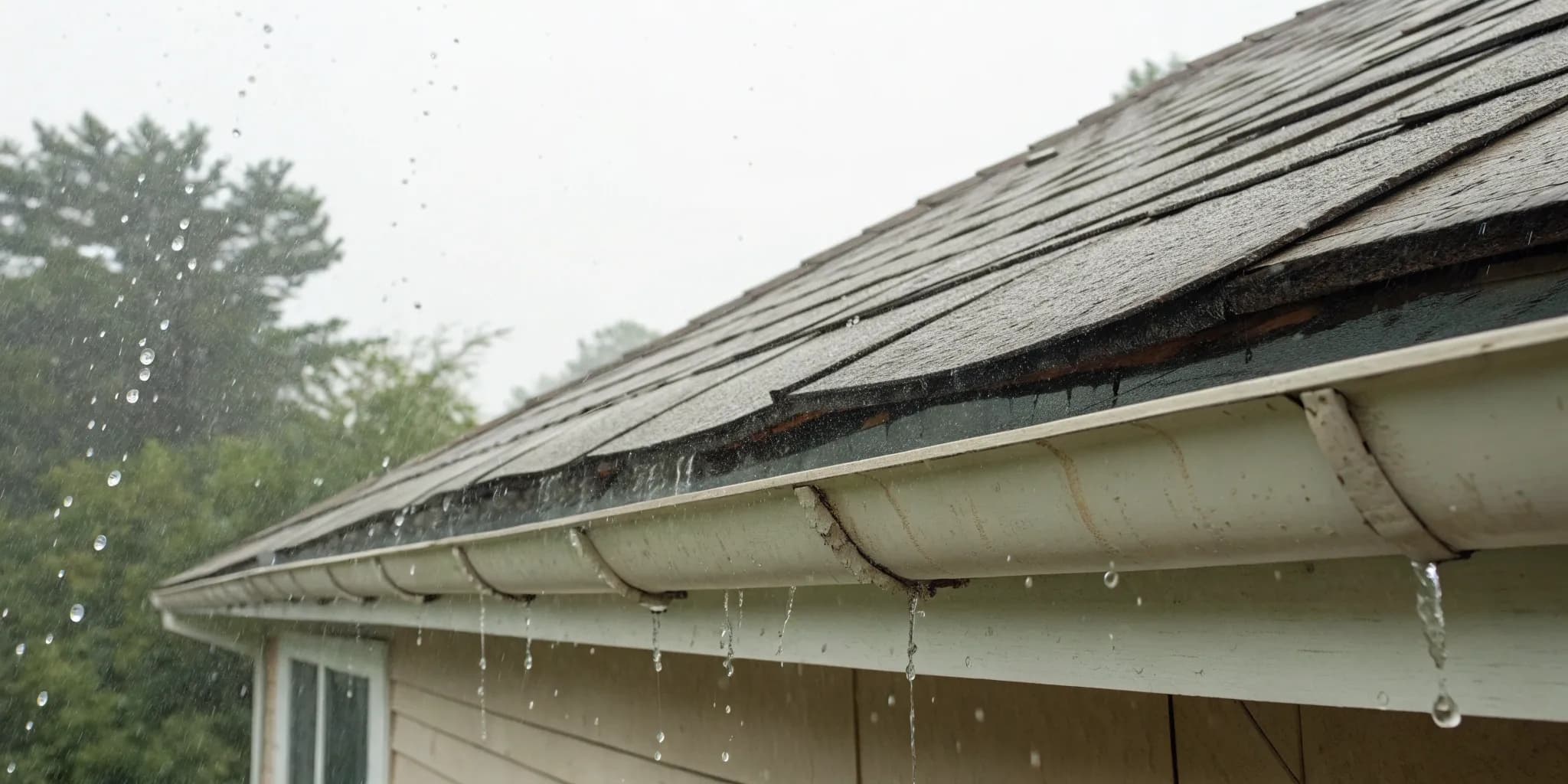
What a first meeting with your roofing contractor should cover
A meeting with your roofing contractor should answer three questions: what is wrong with the roof, what it will take to correct it, and what that will cost. A good meeting runs an hour or two and ends with you holding information you did not have that morning. A weak one ends with a number written on the back of a business card.
Here is what to expect, in the order it usually happens, and what to watch for at each step.
They listen before they climb
Expect a call or a text when the contractor is on the way. Expect questions before opinions:
- What is it about the roof that concerns you?
- When was the last repair or replacement, and who performed it?
- Has the stain or the drip moved, or grown, or changed with the season?
- How can I help?
Your answers narrow the search. A stain that appears after wind-driven rain points somewhere different than a stain that appears in every storm. A contractor who opens with a tear-off pitch before asking a single question is selling.
A prepared professional can also tell you what kind of roof you have, what systems are common on similar structures in your area, and the tradeoffs of each. Brochures and product sheets help. A willingness to say “that system is a poor fit for your slope” helps more.
They evaluate the roof
Budget 30 minutes to an hour for this part. Most contractors will get on the roof where it is safe to do so, and they will look at the places water actually gets in: flashings, pipe collars, valleys, drip edge, penetrations, and the transitions where two planes meet.
They will take measurements. They should look at your attic ventilation, because a roof that cannot breathe cooks its own materials from underneath.
Many will ask to get into the attic. Say yes. The underside of the deck tells a story the surface hides: old water staining, daylight at a flashing, damp insulation, soft sheathing. Water travels along framing before it drops, so the spot where it lands inside is rarely the spot where it entered.
When they come down, they should walk you through the findings in plain language and show you photographs. Sometimes the answer is small. Dried sealant, a split pipe boot, a lifted flashing, these maintenance failures account for a large share of leaks in roofs that still have years of service left.
They put it in writing
An estimate is a rough figure. A proposal is a written offer for defined work at a stated price. Ask which one you are getting.
A written proposal should arrive on the spot or within a business day. It should come with the contractor’s license number, proof of general liability insurance, and workers’ compensation status. Ask for all three, then verify the license with your state licensing board yourself. It takes two minutes.
Look for the scope written item by item, materials named by manufacturer and product rather than by category, an allowance for decking replacement if rot is found, and both warranties in writing: the manufacturer’s on the material and the contractor’s on the workmanship, with durations stated.
Some contractors present a single scope. Others present two or three options at different price points. Either approach can be honest. What matters is that everything sits in the document rather than in the conversation.
Expect a discussion about weather. Roofing is outdoor work, and a schedule that ignores your rainy season is a schedule that will slip.
Where an independent inspection fits
A contractor who will perform the work has an interest in the outcome. Independent verification is worth having when the stakes are high: a pending sale, an insurance claim, a disputed repair, or a quote large enough to change your year.
That is the work an NRCIA member does. A LeakFREE® Check is a five-zone inspection covering the interior, the attic, the exterior, the perimeter and the rooftop, documented in a LeakFREE® Roof Inspection Report. Where the roof meets the published criteria, the member can issue a LeakFREE® Roof Certification, generated and registered through InspectionPLUS®, recording the condition of that roof at that address on that date. Only NRCIA members can issue a LeakFREE® certification.
Across 6,460 member inspections nationwide, more than 66 percent of roofs either qualified for a LeakFREE® certification or could be repaired to qualify. A worn roof is often a repair list.
Before you sign anything
- Confirm the license number is active and matches the business name on the proposal.
- Read the change order language. Ask what happens when the deck comes up and something unexpected is underneath.
- Check the deposit against your state’s limit for home improvement contracts.
- Keep the report, the photographs and the proposal together. They become your record if anyone questions the work later.
NRCIA sets the standard and accredits the members. The members inspect the roofs.
Get an independent read
Find an accredited NRCIA inspector near you in the NRCIA member directory.
LeakFREE®, Forensic ROOF®, Mr. RoofCheck®, InspectionPLUS®, Today’s Inspection… Tomorrow’s Protection®, and Got Leaks?® are registered trademarks of Field Gate FLP, used by permission. RoofGUARD™, ForensicGUARD™, DisasterGUARD™, E3GUARD™, and Think Like a Raindrop™ are trademarks of Field Gate FLP.