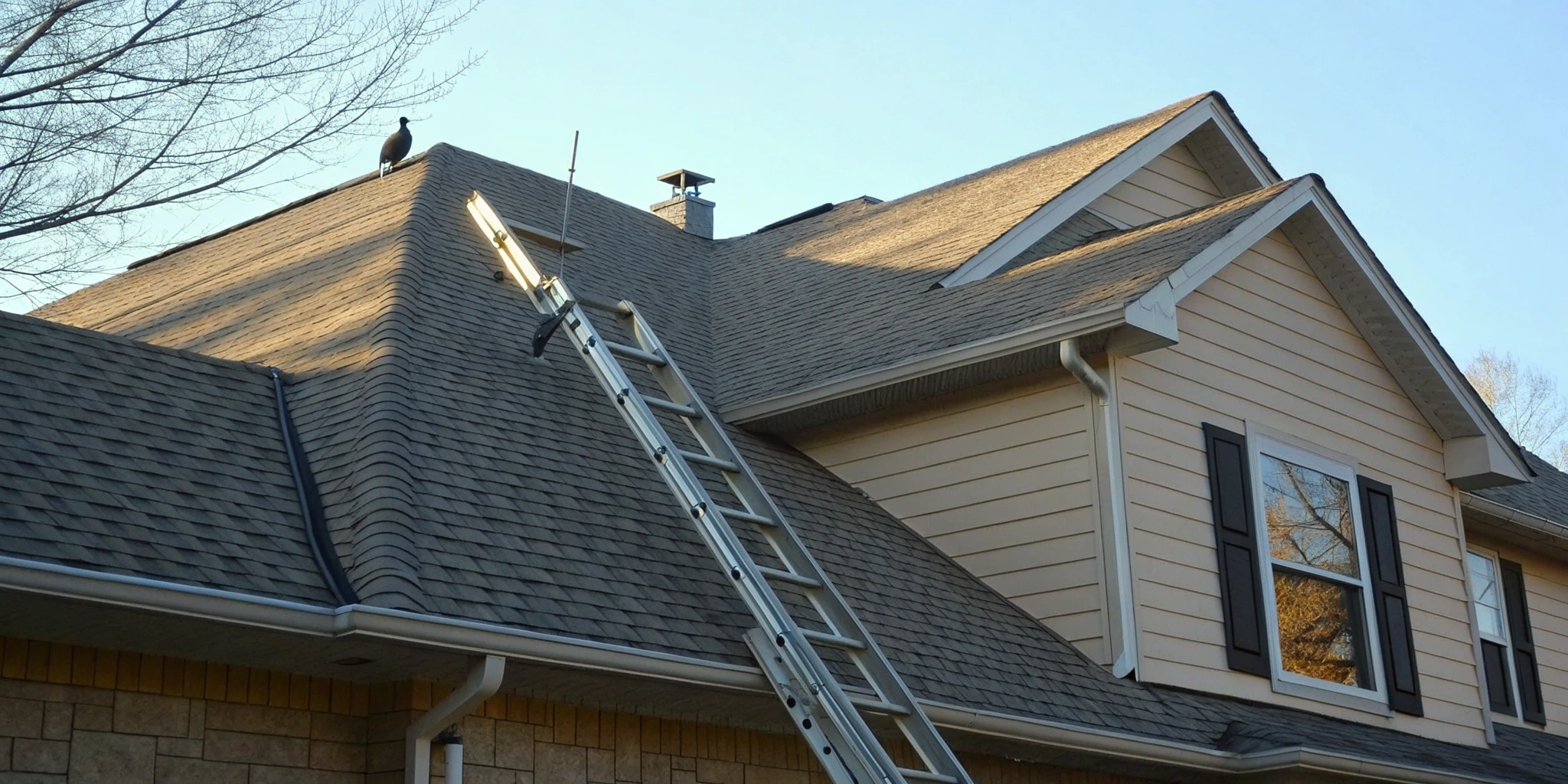
What a residential roof maintenance program is
A residential roof maintenance program is a scheduled service agreement. A qualified inspector visits on a fixed cadence, clears the roof and drainage, checks the components that fail early, corrects small items on the spot, and documents everything in a dated report.
The difference from calling a roofer after a leak is the timing. Water damage compounds. A pipe boot that has gone brittle is a cheap fix in March and a ceiling repair in November.
What a visit includes
- Debris cleared from the roof surface, valleys and low-slope sections
- Gutters and downspouts cleared and checked for pitch and attachment
- Every penetration examined: vents, chimneys, skylights, pipe boots, rooftop equipment
- Flashings and transitions checked for lifting, separation and failed sealant
- Covering checked for loose or damaged units, exposed fasteners and granule loss
- Minor corrections made during the visit, such as reseating a nail pop
- A written report with photographs, findings, and anything recommended for follow-up
How enrollment works
You sign up, usually on an annual basis, and choose a cadence. Annual and semi-annual are the common choices. The provider schedules the visit, performs the checklist, and sends the report. Work beyond routine maintenance is quoted separately, so you approve it before anything happens.
What you get out of it
Service life is the main one. Roofs rarely fail all at once. They fail at a detail, and the failure spreads while nobody is looking. Regular attention to flashings, drainage and penetrations keeps small problems small.
Warranty compliance is the second. Manufacturer material warranties and contractor workmanship warranties frequently require reasonable maintenance, and both can be voided by neglect. A dated file of professional visits is what answers that question if it is ever raised.
Third, documentation has value in a transaction. A buyer, an agent or an HOA board reading a five-year maintenance file is looking at a property that has been cared for, and pricing it accordingly.
What it costs
Providers price a maintenance program against the roof, not against a rate card. The variables are square footage, covering material, slope, complexity, access, your region and the roof’s current condition. Asphalt shingle, tile and metal all carry different service requirements, and a roof with four penetrations and two levels takes longer than a simple gable.
Ask for the quote in writing, and confirm what counts as included maintenance and what will be billed as a repair. That single question prevents most disputes.
Does your roof qualify?
Standard programs are usually written for asphalt shingle and metal roofs within a stated maximum slope, often around 6/12, since steeper work requires additional equipment and fall protection.
Specialty coverings such as slate, tile and wood shake often need a custom agreement rather than a standard plan. Pre-existing damage is the other common barrier. Maintenance programs are built for upkeep, so active leaks and deferred repairs generally have to be resolved before enrollment. A provider will inspect the roof before writing the agreement, and that visit tells you which path you are on.
Signs you should not wait
- Granules collecting in the gutters or at the base of downspouts
- Any staining on ceilings or upper walls, even if it looks old
- Daylight visible in the attic, or damp sheathing and a musty smell
- Lifted, curled or missing shingles seen from the ground
- Water standing on a flat section more than 48 hours after rain
- Sealant cracked or pulling away at a chimney or skylight
Any active leak needs a professional now, not a scheduled visit next quarter.
Choosing a provider
Check accreditation, not just years in business. There is no federal license for roof inspectors, so credentials come from training programs and the standards behind them. NRCIA accredits members through RoofGUARD™ and ForensicGUARD™, and members work a five-zone LeakFREE® Check covering interior, attic, exterior, perimeter and rooftop.
Ask five questions before you sign. What exactly is included in a visit. How often will you come. Do I get a written report with photographs every time. Are you carrying general liability and workers’ compensation. What is the notice period to cancel.
Where the roof meets the published criteria, an accredited member can issue a LeakFREE® Roof Certification through InspectionPLUS®, with a term set by the findings, the slope, the materials and the condition, to a maximum of ten years. That records the roof’s condition on a date. It is not insurance and not a promise about future weather, and it pairs naturally with a maintenance schedule that keeps the record current.
Get on a schedule
Search the NRCIA member directory and book your inspection.
LeakFREE®, Forensic ROOF®, Mr. RoofCheck®, InspectionPLUS®, Today’s Inspection… Tomorrow’s Protection®, and Got Leaks?® are registered trademarks of Field Gate FLP, used by permission. RoofGUARD™, ForensicGUARD™, DisasterGUARD™, E3GUARD™, and Think Like a Raindrop™ are trademarks of Field Gate FLP.