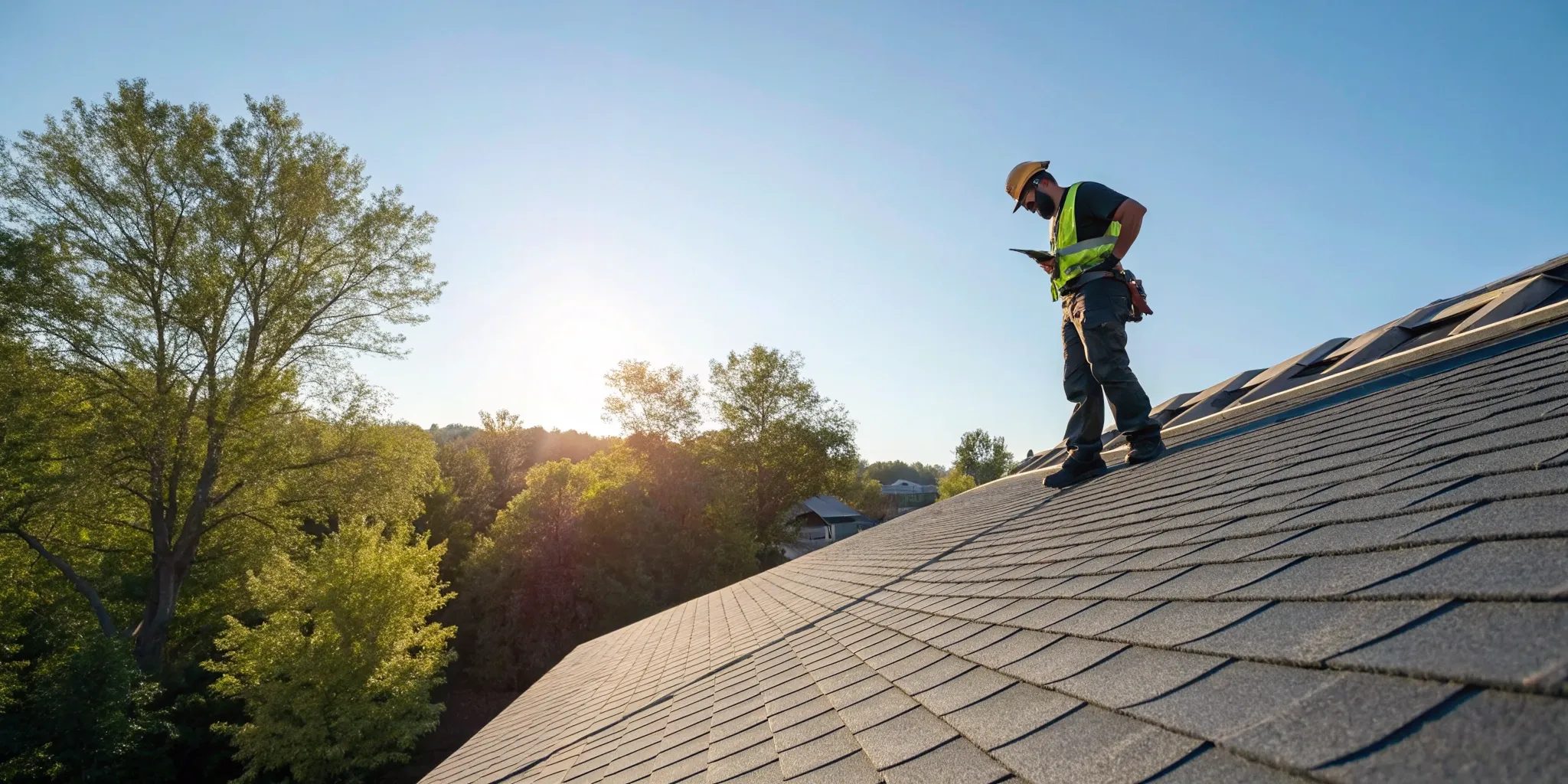
The benefits of regular roof inspections, stated plainly
The benefits of regular roof inspections come down to timing. Roof failures are slow at the start and fast at the end. A cracked pipe boot costs very little to replace in year six. The same boot, left alone, wets the deck, rots the sheathing, spreads into the insulation and eventually shows up as a stain on a bedroom ceiling. By then you are paying a carpenter and a remediation crew, not a roofer.
A scheduled inspection moves the discovery date forward. That is the whole mechanism. Everything else follows from it.
How often is often enough
Once a year is a reasonable baseline for most residential roofs. Twice a year makes sense in regions with hard freezes, heavy snow load or long wildfire seasons, and on any roof past the middle of its expected service life.
Add an inspection after any event that would make you look up: hail, sustained high wind, a fallen limb, a hard hailstorm two towns over that clipped your neighborhood. Add one before you list a property, and one before you buy. Storm-season inspections book out fast, so a spring or early fall appointment is easier to get than a call placed the morning after a squall line. Most of the benefits of regular roof inspections come from that scheduling discipline rather than from anything exotic in the method.
What a scheduled look actually finds
NRCIA members work a five-zone LeakFREE® Check: interior, attic, exterior, perimeter and rooftop. A roof is a system, and problems in one zone show up as symptoms in another.
- Flashing. The metal at chimneys, valleys, skylights and wall junctions moves with temperature. Sealant at those joints dries and splits long before the field of the roof wears out.
- Fasteners and penetrations. Backed-out nails, cracked vent boots and failed pipe collars are small, cheap and responsible for a large share of residential leaks.
- Attic ventilation. Blocked intake or missing exhaust traps heat and moisture under the deck. That bakes shingles from below in summer and condenses in winter.
- Drainage. Clogged gutters and undersized downspouts back water up under the bottom courses and into the fascia.
- Material condition. Curling, granule loss, cracked tile, ponding on low-slope sections, blistering on membrane.
Manufacturers rate most shingle systems in decades. That rating assumes the roof is maintained. Neglect does not extend a rating, and no inspection changes the weather. What an inspection changes is how early you know.
The benefits of regular roof inspections show up on paper
An inspection produces a document, and the document often matters as much as the visit.
Warranty compliance
Manufacturer and workmanship warranties typically require reasonable maintenance and reserve the right to ask for proof. A dated report showing the roof was looked at, and that recommended repairs were made, is that proof.
Insurance
Carriers scrutinize roof age and condition, particularly in severe weather regions. A report predating a storm establishes what the roof looked like beforehand, which is the single most useful piece of evidence in a claim built on sudden damage.
Sale and purchase
A documented history tells a buyer that the roof was managed rather than ignored. Where a roof meets the published criteria, the member who inspected it can issue a LeakFREE® Roof Certification through InspectionPLUS®, recording condition at a specific address on a specific date. The term is set by the findings, the slope, the materials and the condition, up to a maximum of ten years. The expiration prints as a date. A certification is not insurance, not a service contract, and not a statement about future performance.
Two ideas worth retiring
The idea that no visible leak means no problem. Slow moisture intrusion, failing ventilation and structural movement all progress without producing a drip you can see from the hallway. By the time drywall stains, the deck above it has usually been wet for months.
The idea that any ladder counts as an inspection. There is no federal license for roof inspectors, so the credential does the work. NRCIA trains and accredits individual inspectors, sets the method they follow, and maintains the directory where you can find them. The person who inspects is the person who signs.
How to get a useful visit
- Book a clear, dry day. Wet or windy conditions are unsafe and hide certain defects.
- Clear driveway and side-yard access and unlock gates. The inspector needs to walk the full perimeter and set a ladder safely.
- Write down what you have noticed: a stain, shingle grit in the gutters, a room that runs hot, a smell in the attic after rain.
- Have prior reports, repair invoices and warranty paperwork on hand.
- Read the report when it arrives, and act on the items marked urgent while they are still small.
An inspector assesses and reports. Repairs go to a qualified contractor. Keeping those two roles separate is what keeps the assessment honest, and it is why an inspection report reads differently from a free estimate. Weighed against a single emergency repair, the benefits of regular roof inspections are mostly arithmetic.
Find an accredited NRCIA inspector near you
LeakFREE®, Forensic ROOF®, Mr. RoofCheck®, InspectionPLUS®, Today’s Inspection… Tomorrow’s Protection®, and Got Leaks?® are registered trademarks of Field Gate FLP, used by permission. RoofGUARD™, ForensicGUARD™, DisasterGUARD™, E3GUARD™, and Think Like a Raindrop™ are trademarks of Field Gate FLP.