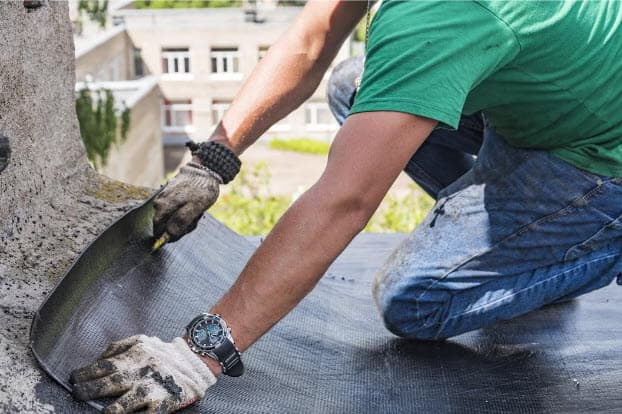
Roof maintenance starts before there is a problem
By the time a roof problem is visible from inside the house, water has usually been moving through the assembly for months. Roof maintenance is how you find it earlier. It is a small, repeatable set of tasks, and most of it comes down to looking at the right things on a schedule instead of waiting for a stain to appear on a ceiling.
Know what kind of roof you have
Different shapes fail in different places, so knowing your roof’s design tells you where to look.
Gable roofs are the most common residential shape. The gable ends and rake edges take the heaviest wind exposure, so check that the drip edge, the flashing and the shingles along those edges are intact and sealed.
Hip roofs shed wind load better but add hip and ridge lines, and every one of those lines is a seam. Cap shingles along them are the pieces that lift.
Low slope and flat roofs depend on drainage and membrane seams. Check the seams, the drains and the scuppers. If you have a rooftop deck, look at how the pavers or pedestals bear on the membrane and whether foot traffic has worn it.
Schedule a roof inspection at a set interval
You will not stumble across a roof problem. Roofs are the least accessible part of the house, and water routinely travels well away from the point of entry before it shows up on a ceiling.
Have the roof inspected every year or two, depending on your region and the age of the roof, and after any storm that brings hail or high wind. An inspector documents condition, flags what needs correction now, and tells you what to put in next year’s budget.
Clean the roof according to its material
Moss, algae and organic debris hold water against the roof surface. Removing them is worth doing. Doing it wrong takes years off the roof.
- Asphalt shingles. Do not pressure wash. The spray strips granules, and granules are the shingle’s UV protection. Use a low pressure rinse and a cleaning solution rated for asphalt.
- Wood shakes. Untreated wood absorbs water. Use a brush and a gentle solution, and let the roof dry fully.
- Tile. The tile is durable. The underlayment beneath it is the waterproofing, and it is not. Foot traffic during cleaning cracks tile and damages that layer.
- Metal. Rinse with water and a mild detergent. Avoid abrasive pads, which scratch the coating and start corrosion at the scratch.
If you cannot identify the material with confidence, ask a professional before touching it.
Keep the gutters working
Gutters are drainage, and drainage is most of roof maintenance. Clogged gutters back water up under the roof edge, saturate fascia and soffit, and in cold climates feed ice dams.
Clear them twice a year, more often under heavy tree cover. Check that they are pitched toward the downspout, that hangers are tight, and that downspouts discharge away from the foundation. Sections that have separated at the seams are worth replacing rather than resealing again.
Do not neglect the siding, soffit and frieze board
The roof does not end at the shingles. Several adjacent components decide whether water stays outside.
The soffit is the underside of the eave, and it carries the intake ventilation for the attic. Painted over or blocked soffit vents strangle attic airflow, which cooks shingles from below.
The frieze board is the trim at the top of the siding where it meets the soffit. It covers a transition, and transitions leak. Check the caulk joint and the paint film every year.
The siding at roof to wall intersections is where step flashing lives. Rot in the siding at those junctions usually means the flashing behind it has stopped doing its job.
Put the roof’s condition on record
Roof maintenance is worth far more when someone writes down what was found. NRCIA members perform the LeakFREE® Check, a five zone inspection covering interior, attic, exterior, perimeter and rooftop, and issue a LeakFREE® Roof Inspection Report.
Where the roof meets the published criteria, the accredited member who performed the inspection can issue a LeakFREE® Roof Certification through InspectionPLUS®. The term is set by the findings, the slope, the materials and the condition, to a maximum of ten years, and the expiration is printed as a date. LeakFREE® is our federally registered trademark. Only NRCIA members can issue a LeakFREE® certification.
Find an accredited NRCIA inspector near you in the NRCIA member directory.
LeakFREE®, Forensic ROOF®, Mr. RoofCheck®, InspectionPLUS®, Today’s Inspection… Tomorrow’s Protection®, and Got Leaks?® are registered trademarks of Field Gate FLP, used by permission. RoofGUARD™, ForensicGUARD™, DisasterGUARD™, E3GUARD™, and Think Like a Raindrop™ are trademarks of Field Gate FLP.