What Roof Energy Efficiency Actually Means
Roof energy efficiency describes how well the roof assembly keeps conditioned air where you paid to put it. Three things decide most of it: the insulation under the roof, the ventilation moving air through the attic, and the covering that absorbs or reflects sun. When any of the three is doing poorly, the heating and cooling system runs longer to hit the same thermostat setting, and the bill reflects it.
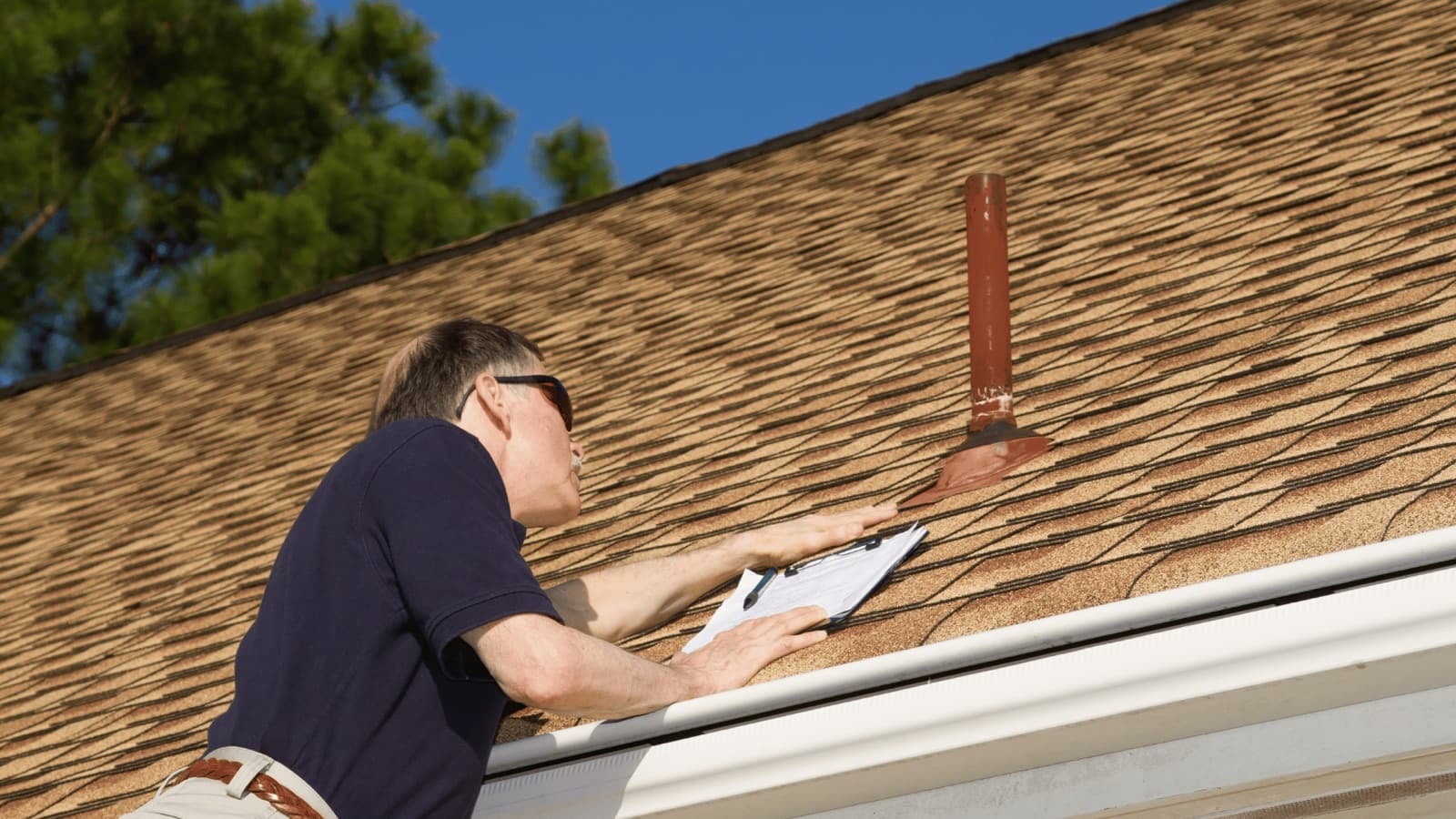
The attic is where this becomes visible. An accredited NRCIA member inspects it as one of the five zones in a LeakFREE® Check, alongside the interior, the exterior, the perimeter and the rooftop.
Insulation: Depth, Coverage and Condition
Insulation is usually the largest single factor, and it fails in ordinary ways. Batts get pushed aside by anyone who has crawled through the attic to run a wire. Blown insulation settles or gets thin at the eaves. Storage boxes compress it. A roof leak wets it, and wet insulation loses much of its value until it dries and often does not recover.
An inspector documents the depth, whether coverage reaches the perimeter, and whether the material shows moisture staining, rodent activity or compression. Those notes tell you where to add and where you have a water problem wearing an energy costume.
The U.S. Department of Energy publishes recommended attic insulation R values by climate zone, which is the reference point worth checking against what is actually up there.
Ventilation: Air Has to Move Through, Not Around
Attic ventilation works as a path. Air enters low, usually at soffit or eave vents, and exits high at ridge, gable or roof vents. Block either end and the system stops working even though every vent is technically present.
Common findings on an inspection include soffit vents buried under insulation, a ridge vent installed over a deck cut too narrow, a bathroom fan dumping humid air into the attic instead of outside, and mixed exhaust types that short circuit each other. Trapped hot air raises cooling load in summer. Trapped moist air in winter condenses on the underside of the sheathing, which is a roofing problem before it is an energy one.
Covering and Surface: How Much Heat the Roof Takes On
Roofing materials differ in how much solar energy they absorb. Reflective coatings, lighter surfaces and rated cool roof products absorb less than dark, aged, weathered surfaces do. Whether a change here pays back depends on your climate, your slope, how much attic insulation sits below, and what the roof is made of now. A tile roof over a ventilated air space behaves differently than asphalt shingles laid directly on a deck.
Condition matters as much as product choice. Curled shingles, open laps, failed sealant at penetrations and damaged flashing all let air and water move where they should not. Those are roofing defects that show up on the utility bill as a side effect.
What an Inspection Report Gives You
The member who performs the inspection issues a LeakFREE® Roof Inspection Report. It records what was observed in each zone, with photographs, in a format that a homeowner, a contractor or an insurer can all read. For roof energy efficiency questions, that means you get a written account of insulation depth and coverage, ventilation intake and exhaust, and the condition of the covering and its penetrations.
What you do with it is your call. Sometimes the fix is a set of soffit baffles and an afternoon. Sometimes it is added insulation. Sometimes the report shows active water intrusion, and the energy question waits until the roof is sound. Having it written down means you are spending money on the actual problem instead of the one a salesperson named.
Where a roof meets the published criteria, the accredited member can also issue a LeakFREE® Roof Certification generated through InspectionPLUS®. LeakFREE® is our federally registered trademark. Only NRCIA members can issue a LeakFREE® certification. A certification records the condition of one roof, at one address, on one date. It is not insurance, and it makes no promise about future leaks or future utility costs.
A Reasonable Order of Operations
- Have the roof and attic inspected before buying insulation, coatings or a new roof covering.
- Fix water intrusion and flashing defects before adding insulation, since wet insulation performs poorly.
- Clear and correct the ventilation path, intake and exhaust together.
- Bring insulation up to the recommended R value for your climate zone.
- Consider reflective surfacing at replacement time, when the cost is folded into work you are already doing.
Start With What the Roof Is Actually Doing
Think Like a Raindrop™. Water and air both find the weak spot, and the attic is where you can see the evidence of each. A documented multi-zone inspection turns guesswork about roof energy efficiency into a list you can act on in order.
Find an accredited inspector in the NRCIA member directory.
LeakFREE®, Forensic ROOF®, Mr. RoofCheck®, InspectionPLUS®, Today’s Inspection… Tomorrow’s Protection®, and Got Leaks?® are registered trademarks of Field Gate FLP, used by permission. RoofGUARD™, ForensicGUARD™, DisasterGUARD™, E3GUARD™, and Think Like a Raindrop™ are trademarks of Field Gate FLP.