Start Inside, Not on the Roof
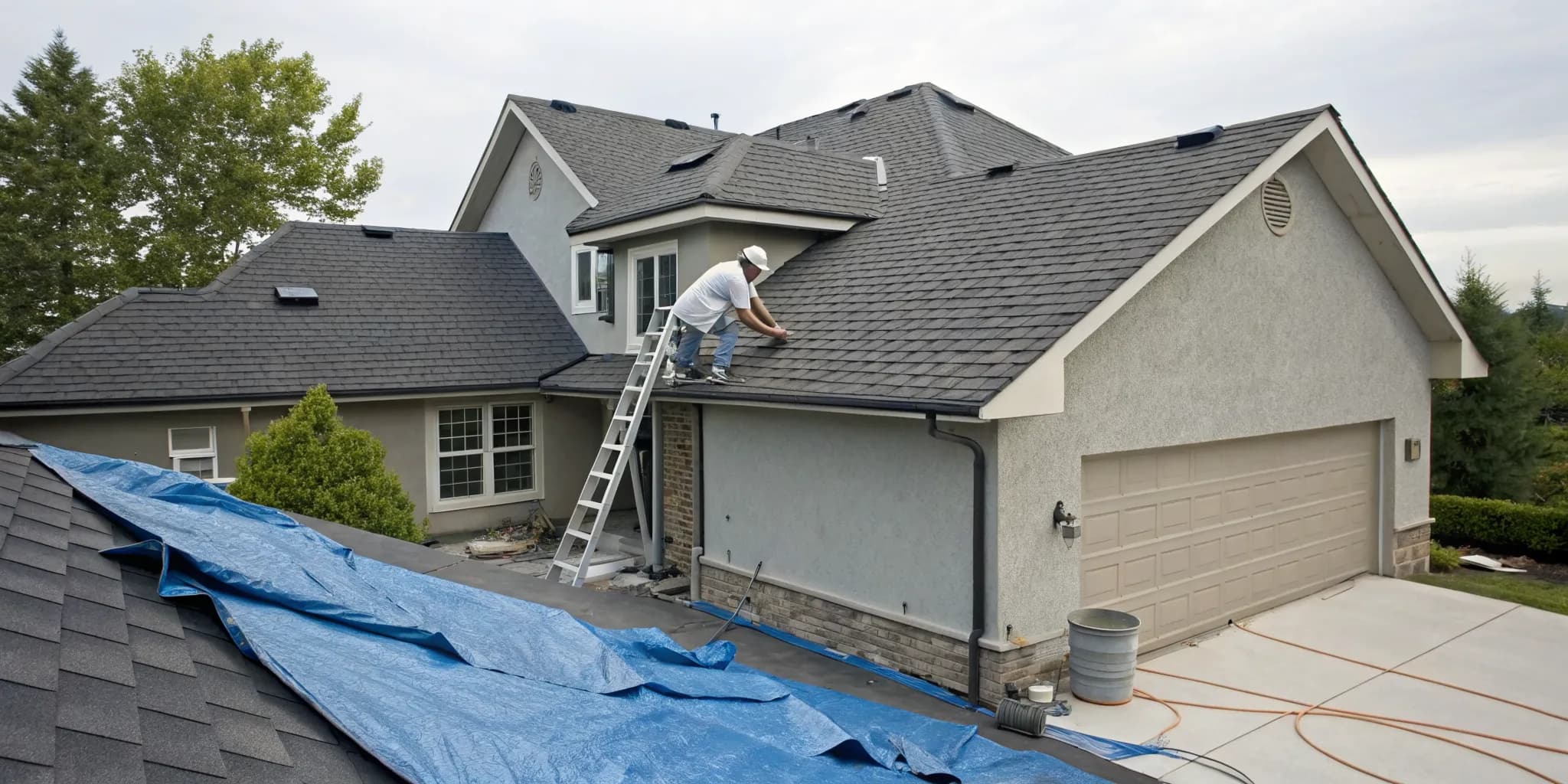
Deciding whether a roof needs replacement or repair starts with evidence, and most of the useful evidence is visible from the ground and from inside the house. You do not need to climb anything to gather it. Walking a roof is work for a trained professional with fall protection, and an untrained step on aged tile or brittle shingle causes damage that was not there before.
What follows is a walk-through you can do yourself in an hour, working from the inside out. Take photographs and note dates. If you later book an inspection, that record is worth a great deal to the inspector.
Interior: Stains on Ceilings and Walls
Check ceilings and walls before, during and after a rainstorm. Look inside closets, spare rooms and anywhere you rarely go.
Identify the wall material, because damage reads differently on each. On drywall, moisture shows as yellow or brown staining and delamination of the texture. On plaster, staining is often faint. Look instead for hairline cracking and efflorescence, the white salt deposits left behind as water passes through and evaporates.
Discoloration has other causes, plumbing among them. Still, a stain on a top-floor ceiling is one of the more reliable indicators that water is getting past the roof system.
Attic: Dark Staining and Daylight
Most attics have a single light, so bring a strong flashlight. Begin directly above any interior stain you found.
Look at the underside of the sheathing. Dark water staining that pronounces the grain of the wood suggests moisture has been arriving there repeatedly, and a wet stain suggests it is arriving now. Check the nail shanks for rust and the insulation for compression and dampness.
Then switch the flashlight off and let your eyes adjust. Daylight visible through the roof deck means an open path for water. That finding moves a roof from the maintenance list to the urgent list.
Exterior: The Perimeter and the Eaves
Walk the perimeter of the building and look up. Siding discoloration below the roof line often traces back to a roof problem rather than a siding problem.
Pay attention to the eaves. Water streaking on the shiplap or on the back side of the fascia board tells you water has been leaving the roof somewhere it should not. Check gutters for granule accumulation, which indicates the surface layer of asphalt shingles is wearing through.
Rooftop: Damaged and Missing Material
From a safe vantage point, look for cracked shingles, slipped or broken tiles, lifted seams, and bare spots where material is missing entirely.
Exposed fasteners are a common finding. Staples and nails securing roofing material should be covered or sealed. When they sit exposed, each one is an entry point.
Damage that is widespread rather than localized changes the calculation. Thermal cracking across a field of shingles, or granular loss over most of a slope, points to material at the end of its serviceable life. Localized damage in an otherwise sound field usually points to repair.
Flashings and Roof Penetrations
Flashing is the metal, typically lead, galvanized steel or aluminum, that seals where the roof is interrupted. Skylights, chimneys, exhaust vents and plumbing vents all need it, and penetrations are where a large share of leaks begin.
Debris collects around penetrations and acts as a dam. Water backs up, changes direction, and finds laps it was never meant to reach. Clearing debris so the roof drains as designed is basic maintenance that pays for itself.
NRCIA recommends that roof penetrations be resealed roughly every two years. The joint between the flashing and the penetration is a wear point, and keeping it sealed extends the serviceable life of the roof system.
Organic Growth
As roofing ages, algae and moss take hold. In the Northern Hemisphere the north-facing slopes go before the south-facing ones, since sun exposure keeps growth in check. Heavy tree cover can put growth across every slope.
Growth between roofing components matters more than growth on top of them. Like debris, it impedes drainage, holds moisture against the material, and can lead to dry rot in the deck below.
When the Roof Needs Replacement or Repair: Where the Line Falls
At some point reactive repairs stop being economical. An aged roof may no longer be in repairable condition, and patching a brittle field can open more than it closes.
Service life varies widely by material, by slope, by climate and by how well the roof has been maintained. Asphalt shingle, tile, metal and low-slope membrane all age differently, and on tile and metal roofs the moisture barrier underneath is hidden from view. Age alone does not decide it. Condition does.
Get a Documented Second Opinion
Your notes and photographs narrow the question. A trained inspector answers it.
NRCIA members perform a LeakFREE® Check across five zones, the interior, the attic, the exterior, the perimeter and the rooftop, and issue a photo-documented LeakFREE® Roof Inspection Report. Where storm damage is involved, look for a member accredited through ForensicGUARD™, the program built for cause-and-origin work.
Across 6,460 member inspections nationwide, more than 66 percent of roofs either qualified for a LeakFREE® Roof Certification or could be repaired to qualify. Replacement is often not the answer.
Find an accredited NRCIA inspector and get the roof documented before the next storm.
LeakFREE®, Forensic ROOF®, Mr. RoofCheck®, InspectionPLUS®, Today’s Inspection… Tomorrow’s Protection®, and Got Leaks?® are registered trademarks of Field Gate FLP, used by permission. RoofGUARD™, ForensicGUARD™, DisasterGUARD™, E3GUARD™, and Think Like a Raindrop™ are trademarks of Field Gate FLP.