
What a roof leak cause analysis report is
A roof leak cause analysis is an investigation into why a roof is letting water in, written up as a document you can act on. It traces the water from the stain you can see back to the opening you cannot, names the failure, and explains the mechanism that produced it.
That is a different exercise from a general condition inspection, and a very different exercise from a repair bid. A condition inspection describes the whole roof. A bid prices one proposed fix. A cause analysis answers a specific question: what failed here, and why did it fail.
Why the stain is almost never above the leak
Water enters at a defect, then follows whatever surface is available. On a sloped roof it runs down the underlayment, across the deck, along a rafter, and drops at the point where the path ends. That point can be well away from the entry.
Patching the ceiling and the shingles directly above it is a common and expensive mistake. The patch holds, the stain returns after the next storm, and the owner has paid for a repair that never touched the cause. Tracing that path is what a roof leak cause analysis is for.
What usually causes it
Flashing and sealant failure
Flashing at chimneys, valleys, skylights and wall junctions moves with temperature. Sealant at those joints dries, shrinks and splits. Inspectors find this on roofs that are otherwise in serviceable condition, which is why a leak does not always mean the roof is finished.
Penetrations
Vent boots crack. Pipe collars pull loose. Fasteners back out and lift the material around them. Each is a small defect with a direct path to the deck.
Drainage failure
Clogged gutters and undersized or blocked downspouts back water up under the bottom courses, wet the fascia and rot the deck edge. On low-slope roofs, ponding at a blocked drain does the same thing in the field.
Installation error
Fasteners driven high or overdriven, valleys cut wrong, underlayment lapped backward, flashing set over instead of under. These defects can sit quietly for years, then fail all at once under load.
Storm damage and age
Wind creases shingles and breaks the seal strip. Hail bruises the mat and displaces granules. Age brittles the material until it splits under normal thermal movement. Separating these three from one another is often the entire point of a roof leak cause analysis.
How a roof leak cause analysis is carried out
- Interior survey. The inspector documents where water is appearing, the shape and age of the staining, and what is directly above it structurally.
- Attic survey. Damp insulation, staining on the underside of the deck, rusted fasteners, daylight at penetrations, and the direction the water has been running.
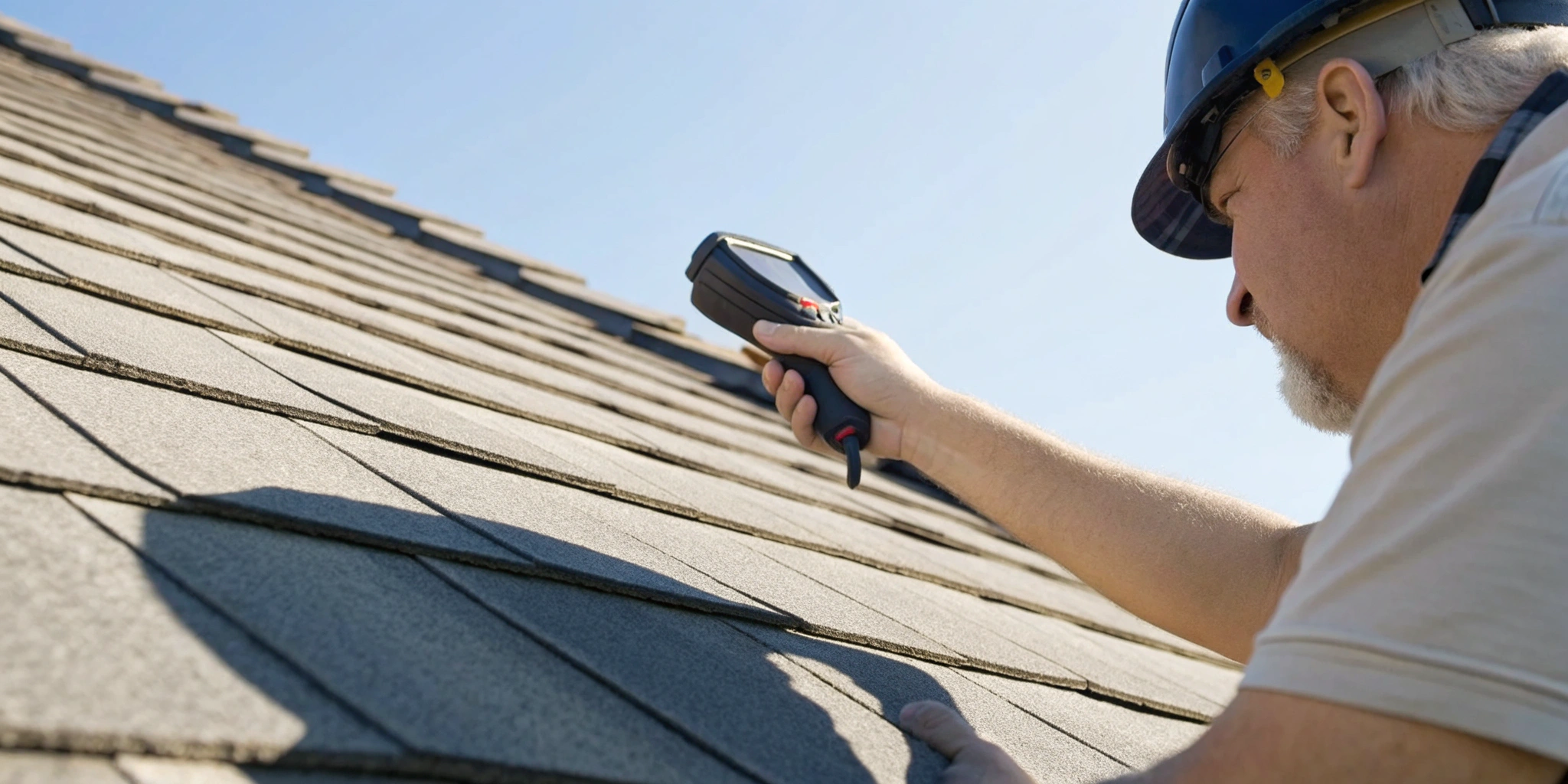
- Rooftop survey. Field condition, flashing, penetrations, valleys and terminations, worked back uphill from the suspected path.
- Instrumented checks. Moisture meters read dampness inside materials. Infrared imaging, used under the right conditions, shows temperature differences that indicate trapped water. Both are corroboration, not proof on their own.
- History. Age of the roof, prior repairs, warranty records, and the weather on the dates the owner noticed water.
- Documentation. Labeled photographs at every finding, wide shot and close shot, tied to the written conclusion.
Where the failure is contested, or where a claim or a dispute is likely to follow, this work belongs to a member accredited through ForensicGUARD™. Cause-and-origin findings get read by adjusters, attorneys and opposing experts, and the method has to hold up when someone is looking for a gap in it.
What the report should contain
- The property address, the inspection date, and the conditions on the day.
- Each finding described by location, with photographs labeled to match the text.
- A stated cause for each finding, and an explicit note where the cause cannot be determined from what is visible.
- Severity ranking, so urgent items separate from monitoring items.
- Reference to the applicable code or manufacturer instruction where installation is at issue.
- A prioritized repair scope, written so any qualified contractor can bid the same work.
That last item is what makes the report useful commercially. When three contractors bid from the same defined scope, the numbers are comparable. When each one writes their own scope, they are not.
What you can do with it
The report supports an insurance claim by putting a dated, independent, photo-documented account of cause on the file, which is what a carrier needs to separate sudden loss from gradual deterioration. It supports a construction defect or warranty dispute, because it identifies the failure and ties it to workmanship, material or event. It supports a purchase negotiation, because a buyer can price a defined repair instead of guessing.
It also gives you a baseline. Once the repairs are done, a roof that meets the published criteria can carry a LeakFREE® Roof Certification, issued through InspectionPLUS® by the accredited individual who inspected it. The certification records condition at that address on that date, with a term set by the findings, the slope, the materials and the condition, up to ten years. It is not insurance, not a service contract, and not a statement about future performance.
Reducing the odds of the next one
- Act on the urgent items in the report while they are still isolated.
- Schedule an inspection annually, and after any hail, high wind or heavy snow event.
- Keep gutters, downspouts and roof drains clear, and keep tree limbs off the surface.
- Photograph and date anything you notice: grit in the gutters, a lifted shingle, a musty attic after rain.
- Keep every report, invoice and warranty document in one place. Under the LeakFREE® system, repairs performed by anyone other than an NRCIA member trigger re-inspection.
Think Like a Raindrop™. Water finds every weakness. The job of a cause analysis is to find it sooner.
Find an accredited NRCIA inspector near you
LeakFREE®, Forensic ROOF®, Mr. RoofCheck®, InspectionPLUS®, Today’s Inspection… Tomorrow’s Protection®, and Got Leaks?® are registered trademarks of Field Gate FLP, used by permission. RoofGUARD™, ForensicGUARD™, DisasterGUARD™, E3GUARD™, and Think Like a Raindrop™ are trademarks of Field Gate FLP.
