
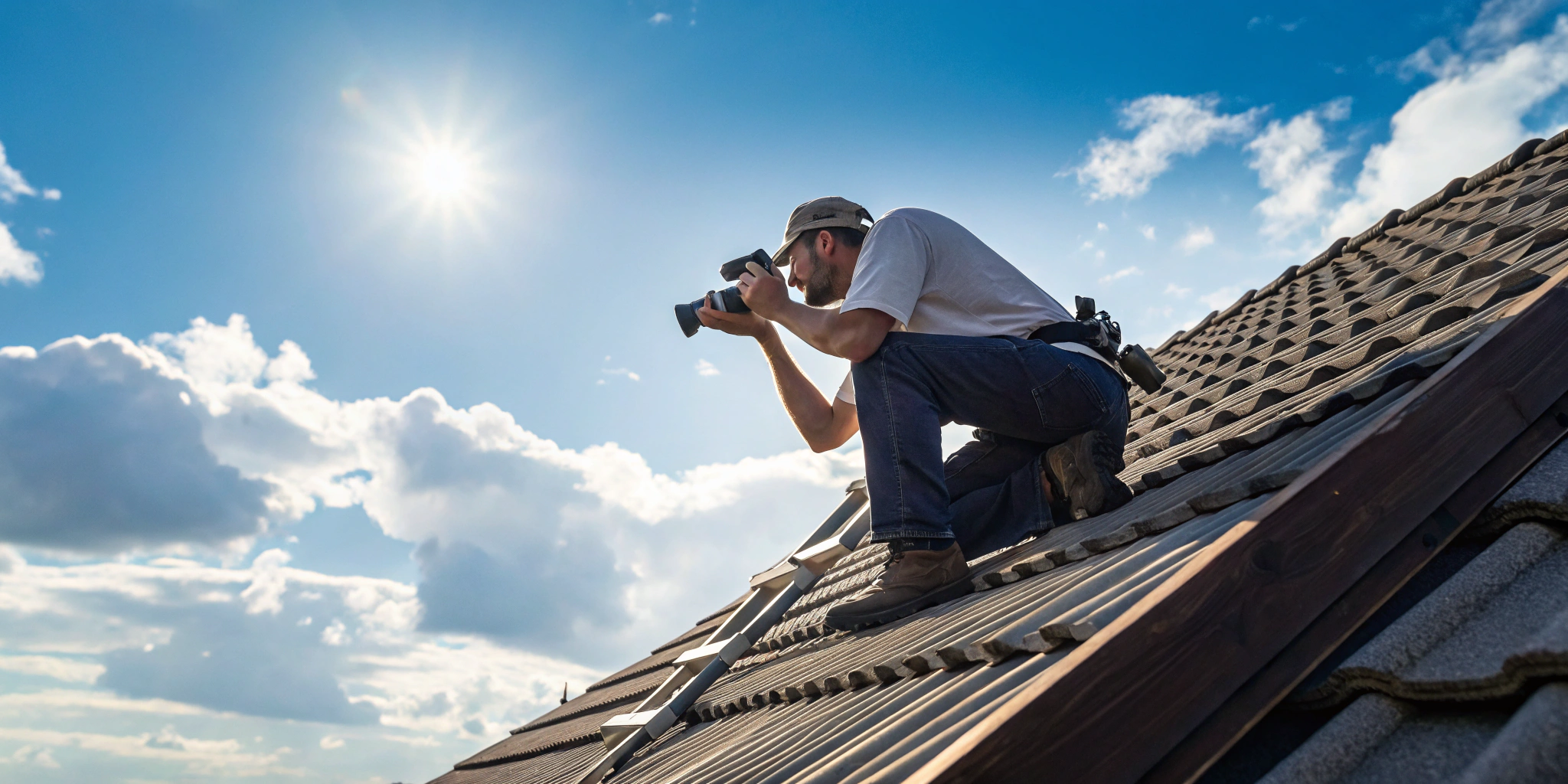
What a roof damage assessment has to do in a legal case
A roof damage assessment built for litigation answers a question a repair estimate never asks: why did this roof fail, and when. Cause and timing decide coverage disputes, construction defect claims and contractor negligence actions. By the time attorneys are involved, the condition of the roof is rarely in dispute. The reason for it almost always is.
That changes the nature of the work. A forensic assessment reviews the paper history, examines the system in a documented sequence, and states an opinion on causation that the inspector can explain and defend under questioning.
Where a contractor estimate falls short
An estimate prices a repair. It is a commercial document produced by a party who stands to perform the work, which is the exact point opposing counsel will raise. A forensic assessment comes from someone with no stake in the repair, and a well-written report says so on its face.
Insurance adjusters work for the carrier. That is their role, and stating it is not a criticism of anyone. An independent assessment gives you a second documented opinion from a professional whose obligation runs to the findings.
How the assessment runs
Document review before anyone climbs a ladder
Installation contracts. Permits. Manufacturer specifications. Maintenance records, prior repair invoices, earlier inspection reports. This establishes both the timeline and the standard the original work was supposed to meet. Defect claims frequently turn on a published specification that was ignored during installation.
The field inspection
NRCIA members work the LeakFREE® Check, a five-zone method covering the interior, attic, exterior, perimeter and rooftop. In forensic work the sequence matters as much as the findings, because a documented method is what allows a second inspector to walk the same path and arrive at the same place. Photographs are keyed to locations. Moisture findings are recorded with the instrument and the reading, never as an impression.
The report
The deliverable states the findings, the evidence behind each one, and an opinion on cause. It keeps what was observed separate from what was concluded. That line is the one tested in a deposition, and a report that blurs it creates work for the attorney who has to defend it.
Credentials that carry weight
There is no federal license for roof inspectors. In a legal setting that absence matters, because qualification has to be established through training, method and documented experience instead of a license number.
NRCIA accredits individuals through named programs. ForensicGUARD™ produces the NRCIA Forensic Roof Inspector (FRI), advancing to Senior (SFRI) and Master (MFRI) with experience. It is the flagship, built for findings a carrier, an arbitrator or a court will review. RoofGUARD™ produces the NRCIA Certified Roof Inspector (CRI) for standard inspection work. DisasterGUARD™ is an add-on for insurance-related evaluations and requires an active ForensicGUARD™ accreditation.
Accreditation belongs to the individual, never to a company. Ask for the designation by name, confirm it is current in the NRCIA member directory, and ask what the inspector has examined that resembles the roof in question. Licensed architects, professional engineers and experienced general contractors bring genuine qualifications as well. The question worth asking any of them is how much of their work has been on roofing systems specifically.
What to document yourself
- Photographs, dated, taken early. Wide shots for context, then close range on specific conditions. Before any tarping or temporary repair, where it is safe to do so.
- Weather records for the date in question, pulled from the National Weather Service or a comparable public source. Memory does not survive cross-examination.
- Every invoice. Tarping, emergency repair, the assessment itself. Mitigation costs belong in the record.
- A written timeline. When the damage appeared, when it was reported, who said what, and on which date.
What weakens a case
Three things, over and over.
Waiting. Evidence degrades. A second storm alters the surface, and the question of which event caused which condition becomes genuinely hard to answer. Delay also invites the argument that the loss grew because nobody acted.
Hiring the nearest available generalist. An assessment that cannot survive questions about its own method does more harm than no assessment at all, because by then it is in the record and cannot be withdrawn quietly.
Partial documentation. A file with photographs and no invoices, or invoices and no timeline, leaves gaps. The other side fills gaps.
Getting the roof damage assessment right the first time
Act while the evidence is fresh, hire for the specific expertise, and keep the file complete from day one. Those three habits do more for a case than any single document.
NRCIA sets the standard, trains and accredits members, and maintains the member directory. The inspection, the report and any testimony that follows are the work of the accredited member you retain. Accreditation does not determine how a court will rule on anything. What it does is put a documented method and a named individual behind the examination of your roof.
Find an accredited NRCIA inspector near you in the member directory.
LeakFREE®, Forensic ROOF®, Mr. RoofCheck®, InspectionPLUS®, Today’s Inspection… Tomorrow’s Protection®, and Got Leaks?® are registered trademarks of Field Gate FLP, used by permission. RoofGUARD™, ForensicGUARD™, DisasterGUARD™, E3GUARD™, and Think Like a Raindrop™ are trademarks of Field Gate FLP.
