
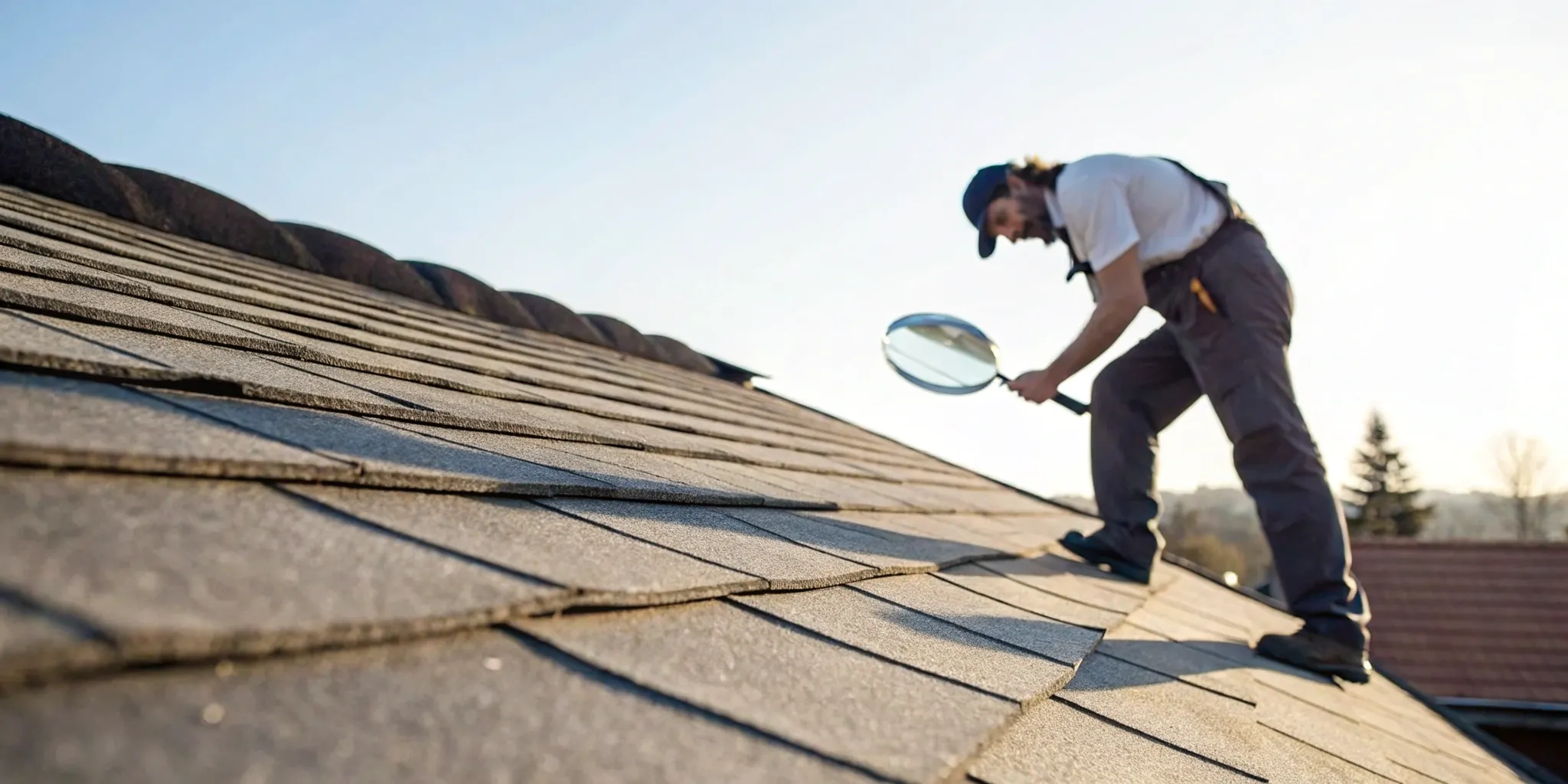
What roof failure analysis is
Roof failure analysis is a forensic investigation into why a roof stopped doing its job. A routine inspection asks how the roof is doing. A failure analysis asks what went wrong, when, and because of what. The difference shows up in the evidence: material sampling, assembly review, moisture mapping, maintenance history, weather records, and photographs tied to specific locations rather than general impressions.
That distinction has practical consequences. A patch applied to the wrong cause fails again, usually in the same rainy season. A claim built on “there is damage” invites dispute. A claim built on a documented cause and a documented date is far harder to argue with.
Think Like a Raindrop™. Water does not enter where it appears inside the building. It enters at a weakness, travels along framing or decking, and shows itself somewhere convenient. Failure analysis is the discipline of tracing that path backward.
When roof failure analysis is worth commissioning
Not every leak needs a forensic file. These situations usually do.
- A leak that has been repaired twice and returned.
- Widespread blistering, splitting, curling or sagging on a roof well short of its expected service life.
- A denied or underpaid insurance claim where cause is the point in dispute.
- A dispute with an installer, a manufacturer or a previous owner.
- Damage discovered during a transaction, where the buyer and seller disagree on what caused it.
- Any structural movement: a sagging ridge, a soft deck, ponding that will not drain.
What actually causes roofs to fail
Water that never left
Trapped moisture does quiet damage. Condensation in a poorly ventilated attic rots sheathing and corrodes fasteners without a drop ever appearing on a ceiling. By the time a stain arrives, the assembly underneath has been wet for seasons.
Installation and workmanship
Good material installed badly fails early. Wrong fastener, wrong pattern, reversed lap, flashing sealed with caulk instead of formed metal, valley cut too tight. These defects are invisible from the ground and obvious to a trained eye at the detail.
Weather load
Hail bruises. Wind lifts edges and works fasteners loose over repeated events rather than in one storm. Snow and ice add weight and force water uphill under the covering. Ultraviolet exposure makes membranes and sealants brittle over years.
Age and material breakdown
Every covering has a service life. Asphalt loses granules and curls. Metal corrodes at cut edges and fasteners. Tile survives the weather and the underlayment beneath it does not. Age alone is rarely the whole story, but it sets the context for everything else.
Design and structure
Some roofs were built to fail slowly. Insufficient slope for the covering used, drains placed where water does not go, a valley dumping onto a wall with no kickout flashing, a framing plan that never accounted for local snow load. These defects are original, and they keep producing symptoms no repair can settle.
Performance failure and structural failure
Performance failure means water is getting in. Leaks, splits, punctures, blistered membrane, failed seals. This is the common category and the one that quietly ruins interiors, insulation and framing while everyone waits to see whether it gets worse.
Structural failure means the roof’s ability to carry load is compromised. Wind uplift tearing assembly from deck, decking softened by long-term saturation, ponding weight on a low-slope roof, framing that has moved. This category is a safety matter and needs a qualified professional on site promptly.
The roof failure analysis process, step by step
1. Site assessment
The investigator documents conditions as found, inside and out. Interior evidence, attic evidence, exterior walls and penetrations, perimeter drainage, and the roof surface. Nothing is repaired or disturbed before it is photographed and located.
2. Assembly and material review
Next comes the layers: deck, underlayment or vapor retarder, insulation, covering, flashings and terminations. Fastener type and pattern are checked against the manufacturer’s published instructions and the applicable code. Where sampling is warranted, cut locations are recorded and repaired.
3. History and environment
Permits, invoices, prior reports, warranty documents, maintenance records and dated photographs. Alongside them, the weather record for the property: hail events, wind speeds, storm dates. A cause is far more persuasive when it can be tied to a date.
4. Diagnostic testing
Where visual evidence is not conclusive, the investigator may use infrared thermography to map trapped moisture, capacitance or nuclear moisture meters, electronic leak detection, or a controlled water test on a defined section. Testing turns an opinion into a measurement.
5. The report
The finished document states the cause, supports it with located photographs and test data, distinguishes conditions that are related to the failure from conditions that are not, and lays out recommended corrective work in priority order. It should be readable by a homeowner and defensible in front of an adjuster or an attorney.
Reading the report you receive
Specificity is the test. “There is hail damage” is an assertion. “Fourteen impact bruises with fractured mat on the west slope, consistent with the recorded hail event of March 14, mapped in figures 6 through 11” is evidence.
Check that the report separates cause from condition, prices nothing it has not observed, names its limitations, and gives you a prioritized scope of work rather than a single recommendation to replace everything. If a section is unclear, ask the investigator to walk you through it. A professional will expect the question.
Preventing the next failure
Most catastrophic outcomes were preventable at a much earlier stage. Have the roof inspected annually and after any significant storm. Keep gutters, drains and scuppers clear so water leaves the roof instead of standing on it; water that ponds beyond 48 hours degrades materials and adds weight. Keep every invoice, report and photograph, because a documented maintenance history is what separates a covered claim from a denied one.
NRCIA members perform the LeakFREE® Check across five zones: interior, attic, exterior, perimeter and rooftop. Across 6,460 member inspections nationwide, more than 66 percent of roofs either qualified for a LeakFREE® certification or could be repaired to qualify. Most roofs are salvageable if the problem is found early enough.
Why the credential behind the analysis matters
There is no federal license for roof inspectors in the United States. Anyone may print a business card and write a report, which is precisely why the standard behind the report carries the weight.
NRCIA sets that standard and accredits the members who apply it. The ForensicGUARD™ program trains members toward the NRCIA Forensic Roof Inspector designation and the senior and master designations above it, with the emphasis on cause determination, documentation and testimony. When a roof qualifies, an accredited member issues a LeakFREE® Roof Certification through InspectionPLUS®, recording that a specific roof at a specific address met the published criteria on a specific date. It is a record of condition against a standard. It is not insurance, not a service contract, and not a promise that the roof will never leak.
Find an accredited forensic inspector
Find an accredited NRCIA inspector near you and bring a documented cause to the table
LeakFREE®, Forensic ROOF®, Mr. RoofCheck®, InspectionPLUS®, Today’s Inspection… Tomorrow’s Protection®, and Got Leaks?® are registered trademarks of Field Gate FLP, used by permission. RoofGUARD™, ForensicGUARD™, DisasterGUARD™, E3GUARD™, and Think Like a Raindrop™ are trademarks of Field Gate FLP.
