
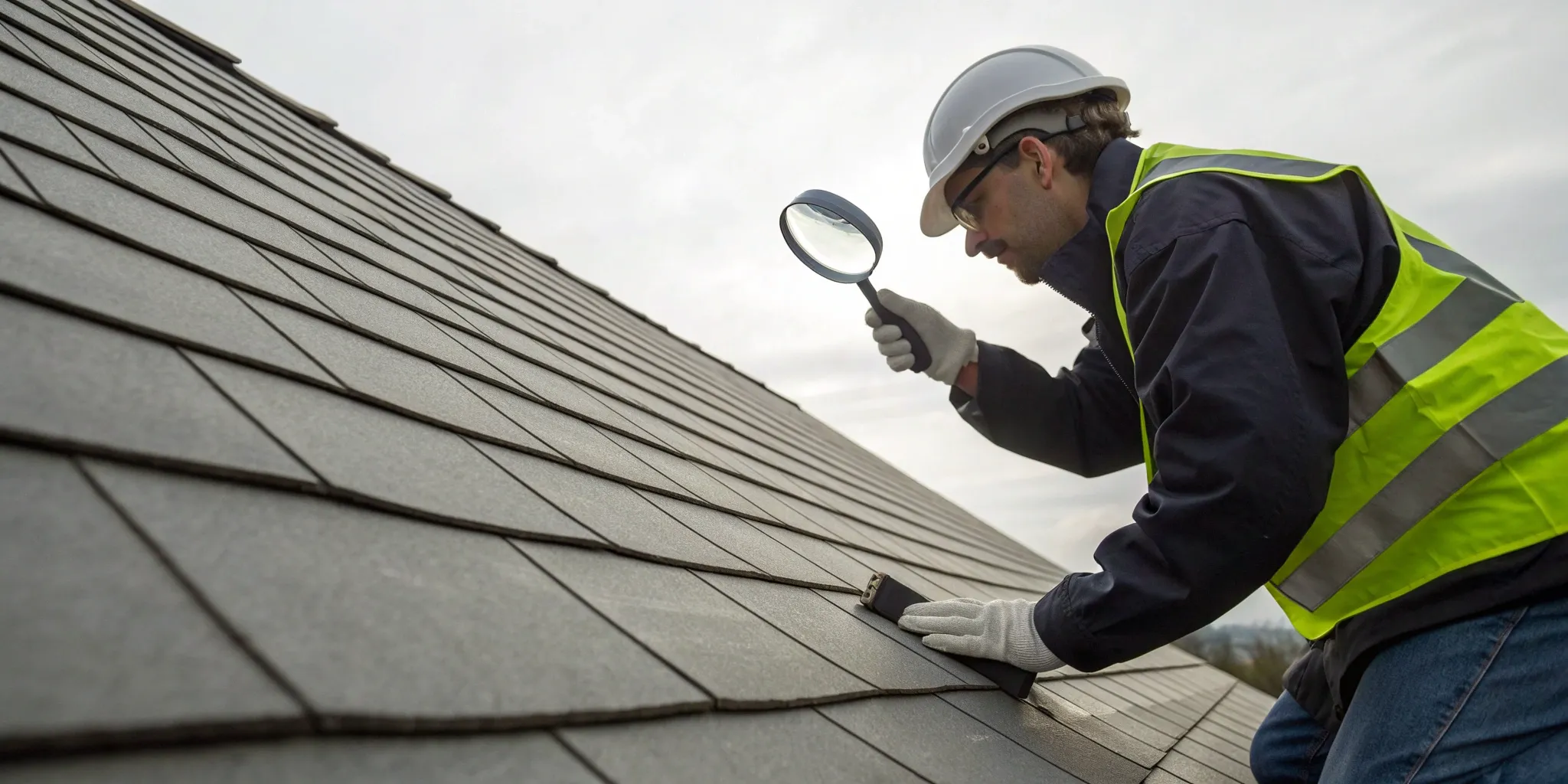
What a forensic roof investigation is
A standard inspection answers what is wrong with a roof. A forensic roof investigation answers why it went wrong, who is responsible, and what evidence supports that conclusion. The difference is the question, and the question changes the entire method.
A routine inspection is largely visual and produces a condition report. A forensic investigation gathers documents, tests materials, maps moisture, opens the assembly where necessary, and builds a chain of evidence that has to survive an adjuster, an opposing expert, or a deposition. It is slower, more invasive and considerably more thorough, because it is written for a dispute.
When the deeper investigation is warranted
Four situations justify it.
- A leak that keeps coming back. Three repairs at the same location means the repairs were aimed at the symptom. Water travels laterally along framing and membrane laps, so the entry point is frequently nowhere near the stain. Tracing it takes method, not more sealant.
- A new roof that is already failing. Premature failure usually comes down to specification, material or workmanship, and telling those apart is what determines whether you have a warranty claim, a contract claim, or neither.
- An insurance claim under challenge. Carriers separate storm damage from wear and deferred maintenance. That distinction is a technical argument, and it is won with dated evidence rather than assertion.
- Litigation, actual or likely. Construction defect, real estate non-disclosure, and contractor disputes all turn on causation. A forensic report is what a causation argument is built from.
How the investigation runs
Document review before anyone goes on the roof
The investigator collects plans, specifications, submittals, permits, the installation contract, maintenance and repair history, prior inspection reports, manufacturer warranties, and dated weather data for the property’s location. Half of the answer often exists on paper before the field work begins.
Field investigation
A systematic examination of the assembly, top to deck, including flashing, terminations, penetrations, drainage and the interior side. Infrared thermography reveals trapped moisture by the way wet material holds heat differently than dry material. Capacitance and impedance meters confirm and bound what the thermal image suggests. Drone imagery documents large or unsafe roof areas without putting anyone at risk. Water testing, run in controlled stages, reproduces the leak and proves the entry point.
Material sampling and analysis
Core samples cut through every layer, from surface to deck, and go to a laboratory. Analysis confirms what was actually installed against what was specified, measures moisture content, identifies degradation, and detects contaminants. This is the step that converts an opinion into a finding.
The report
The deliverable states the observed conditions, the testing performed, the analysis, a stated cause of failure, and remediation recommendations, all supported by photographs, laboratory results and document references. Written properly, it stands on its own in front of a carrier or a court.
What drives the cost and the timeline
Cost tracks scope. Roof size, complexity, access, the number of penetrations, the assembly type, and how much testing the question requires all move the number. A single residential leak is a different project from a systemic failure across a large low slope commercial roof with rooftop mechanical equipment and multiple drainage zones.
Timelines follow the same logic. Field work often takes a day or two. Laboratory analysis adds a week or more. A matter involving coordination with a structural engineer or counsel can run several weeks. Ask for a written scope and a milestone schedule before work starts, and ask what a change in scope will cost.
Weigh the fee against what the finding decides. When the answer determines whether a carrier pays, whether a contractor is liable, or whether a roof gets replaced rather than patched again, an evidence based conclusion is usually the cheaper path.
How to vet an investigator
Anyone can print a business card with the word forensic on it. Ask harder questions.
- What is your accreditation, who issued it, and what standard does it hold you to?
- How many failures like mine have you investigated, on this assembly type?
- Have you testified as an expert witness, and how often?
- What testing do you perform yourself, and what goes to a laboratory?
- May I see a redacted sample report?
That last request tells you the most. A sample report shows how the investigator reasons, how findings connect to evidence, and whether a non-technical reader can follow the argument.
Commercial experience is its own qualification. Low slope membrane systems, tapered insulation, internal drainage and dozens of mechanical penetrations fail in ways that steep slope residential work never prepares an inspector for. Match the investigator to the building.
Where NRCIA fits
NRCIA is the national standards body for roof inspection and certification, founded in 1995. We do not investigate roofs, write reports or testify. Our accredited members do that work, and we set the standard they are trained and held to.
Forensic work runs through our ForensicGUARD™ program, which produces the NRCIA Forensic Roof Inspector and advances through Senior and Master designations. DisasterGUARD™ is an add-on for members handling insurance related evaluations, and it requires active ForensicGUARD™ accreditation. Members generate their reports through InspectionPLUS®, so the documentation follows a consistent, registered format rather than whatever template an individual happens to use.
Water finds every weakness. Our members are trained to Think Like a Raindrop™, which in a forensic context means following the path backward until the evidence stops moving.
Get an evidence based answer
Find an accredited NRCIA inspector near you.
LeakFREE®, Forensic ROOF®, Mr. RoofCheck®, InspectionPLUS®, Today’s Inspection… Tomorrow’s Protection®, and Got Leaks?® are registered trademarks of Field Gate FLP, used by permission. RoofGUARD™, ForensicGUARD™, DisasterGUARD™, E3GUARD™, and Think Like a Raindrop™ are trademarks of Field Gate FLP.
