
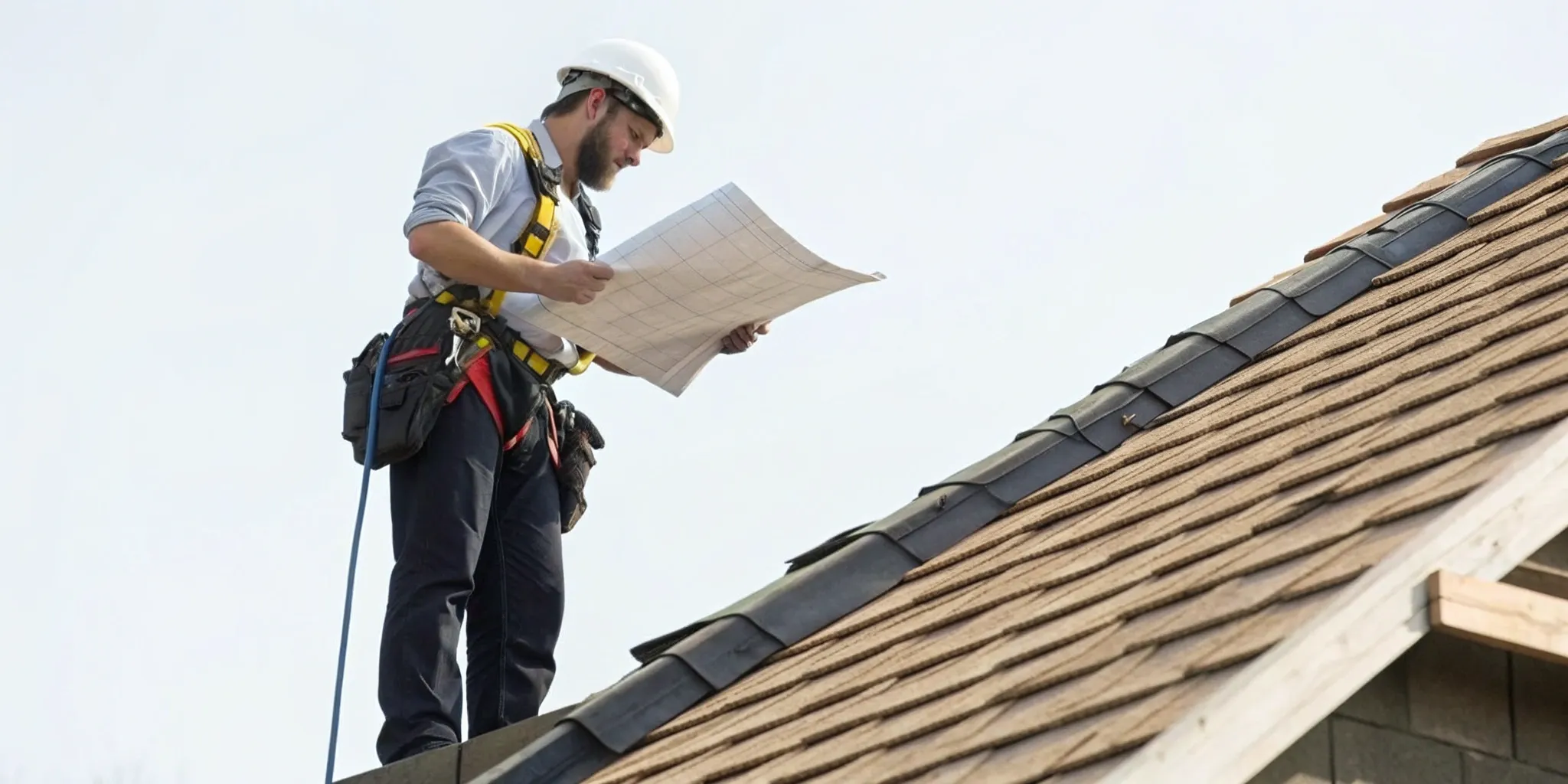
Roof expert witness qualifications start with a defensible method
Roof expert witness qualifications are not a list of credentials on a resume. A court admits testimony because the person offering it has knowledge the fact finder does not, and because the method behind the opinion can be examined. Everything else follows from that.
Under Federal Rule of Evidence 702, a witness may be qualified by knowledge, skill, experience, training or education. Those are alternatives. A roofer with twenty-five years of diagnosing failures can qualify where a degree holder with no field time cannot, provided the reasoning is documented and repeatable.
Education, and what stands in for it
Degrees in civil engineering, architectural engineering, architecture, building science or construction management give an expert the vocabulary of loads, moisture transport and material chemistry. That helps in a deposition, because opposing counsel will test whether you can explain why something failed and not merely that it did.
No degree is required. What matters is that your field knowledge has been formalized: training that teaches a documented inspection sequence, a defined vocabulary for conditions, and a report structure that separates observation from opinion. Experience that has never been organized into a method is difficult to defend on cross-examination.
Credentials that show a standard behind the opinion
Accreditation matters to a court for one reason. It shows your conclusions came from a process other people also follow, rather than from personal habit.
- ForensicGUARD™ is the NRCIA forensic program, built for failure analysis, litigation support and testimony. Designations run NRCIA Forensic Roof Inspector (FRI), Senior (SFRI) and Master (MFRI). It is the flagship program, and it is the natural track for anyone moving into legal work.
- RoofGUARD™ establishes the underlying inspection accreditation, with the NRCIA Certified Roof Inspector (CRI) designation advancing to SRI at 500 inspections and MRI at 1,000. Inspection counts are useful in voir dire because they are concrete.
- E3GUARD™ covers exterior elevated elements, which matters in balcony and walkway litigation, including the California CA-SB721 and CA-SB326 tracks.
- DisasterGUARD™ covers insurance-related evaluations, relevant where coverage and causation are both in dispute.
Credentials from other bodies also carry weight in their own subject areas, including HAAG for storm damage assessment and IICRC for water intrusion and restoration. Holding several is common in this field, and there is nothing wrong with saying so on the stand.
Check state licensing separately. Some jurisdictions expect an expert to hold a current contractor or engineering license in the state where the matter is heard. There is no federal license for roof inspectors, so this varies more than people assume. Verify it before you accept the engagement.
Field experience matched to the system in dispute
General roofing experience will not survive a challenge if the case concerns a system you have not worked on. Commercial low-slope membranes, single-ply and modified bitumen, behave nothing like a steep-slope tile assembly. Slate fails differently from standing seam metal.
Be specific about what you have inspected, installed and repaired, and be equally specific about what you have not. An expert who declines a case outside their range builds more credibility over a career than one who takes everything.
The value of volume is pattern recognition: telling hail bruising from mechanical damage, wind uplift from fastener failure, a manufacturing defect from an installation error. Those distinctions decide cases.
Technical skills the work demands
A repeatable inspection sequence
Work the same order every time and record it. The LeakFREE® Check covers five zones, which are interior, attic, exterior, perimeter and rooftop. A consistent sequence means the omission of anything is visible on the face of the report, to you before it is to anyone else.
Analysis tied to evidence
Moisture readings, thermal imaging, core samples where they are warranted, historical weather data from a named source, the building code in force on the date of construction, and the manufacturer specification for the product installed. Every conclusion should be traceable to one of those.
Report writing a non-specialist can follow
The report is often the most scrutinized thing you produce. It should state your qualifications, your methodology, your observations, and your opinions, in that order and clearly separated. A judge should be able to see exactly where description ends and inference begins. Confusing those two is the most common way a credible technical opinion loses its weight.
How courts test the opinion
In federal court and in states that have adopted the same approach, the Daubert analysis asks whether the method is reliable: can it be tested, has it been subject to peer review, is there a known error rate, and is it generally accepted in the field. Your answer is much easier when your method comes from published training rather than personal preference.
Rule 702 then asks whether the testimony will actually help the trier of fact, whether it rests on sufficient data, and whether you applied your method reliably to the facts of this case. Notice that all three questions are about process. Credentials get you to the door. Method gets you through it.
Staying current
Materials, codes and assembly practices change. An opinion built on training a decade old is an invitation on cross-examination. Track code cycles, follow manufacturer installation requirement updates, and keep your accreditations active. Continuing education is not a formality in this work, because the date of your last training is a fair question and you will be asked it.
Move into forensic work
NRCIA has set the standard for roof inspection and certification since 1995, and members carry that standard into the field and into the record. Review the ForensicGUARD™ program and start your accreditation.
LeakFREE®, Forensic ROOF®, Mr. RoofCheck®, InspectionPLUS®, Today’s Inspection… Tomorrow’s Protection®, and Got Leaks?® are registered trademarks of Field Gate FLP, used by permission. RoofGUARD™, ForensicGUARD™, DisasterGUARD™, E3GUARD™, and Think Like a Raindrop™ are trademarks of Field Gate FLP.
