What roof rejuvenation products are sold to do
Roof rejuvenation products are sprayed or rolled treatments marketed to owners of aging asphalt shingle roofs. The pitch is consistent: restore flexibility to shingles that have dried out, slow the loss of granules, and push a replacement further down the calendar.
The chemistry behind them is real. Asphalt shingles fail in large part because the asphalt loses volatile oils over time, goes brittle, and starts cracking under thermal movement. Treatments designed to re-introduce oils can restore some pliability in shingles that have dried but not yet failed structurally.
That is a narrower promise than most homeowners hear. It is worth understanding where the narrow version helps and where it does nothing at all.
Start with where your shingles are in their service life
Rejuvenation is a timing question before it is a product question. Manufacturers commonly rate asphalt shingles along these lines:
- 3-tab: roughly 15 to 20 years of service life
- Dimensional or architectural: roughly 25 to 30 years
- High-definition and luxury profiles: roughly 30 to 35 years
Actual performance moves around those numbers considerably. Climate, slope, ventilation, sun exposure and installation quality all shift them. A poorly ventilated attic in a hot region can take years off a shingle that would have lasted the full term elsewhere.
The practical read: a treatment applied in the back half of a shingle’s rated life, on a roof with no other defects, has something to work with. The same treatment on a roof that is past its term, or on a roof leaking at a flashing, does not address what is wrong.
Read the rejuvenation warranty before you read the brochure
This is where owners get surprised. A rejuvenation warranty typically runs about five years, and it typically covers shingle flexibility. It is a product performance document about the treatment, not a document about water entering your house.
Ask the seller three questions in writing:
- What condition does the warranty actually cover, and what is excluded?
- What happens to the shingle manufacturer’s remaining coverage once a third-party coating is applied? Some manufacturers treat aftermarket treatments as grounds to void what is left.
- Who honors the document if the applicator is no longer in business in year four?
None of that makes rejuvenation a bad product. It makes it a product with a defined job. Match the job to your roof rather than to the sales appointment.
Rejuvenation does nothing about the places roofs leak
Most water intrusion does not come through the field of the shingles. It comes in at penetrations, flashings, valleys, transitions and terminations. Chimney counterflashing, a cracked pipe boot, a valley that was cut short, a skylight curb, a satellite mount driven through the covering. A surface treatment does not correct any of it.
If a roof is actively leaking, or has stains in the attic, the sequence is inspection and repair. Coating over an unresolved defect buys nothing and hides the evidence.
What NRCIA field data shows about aging roofs
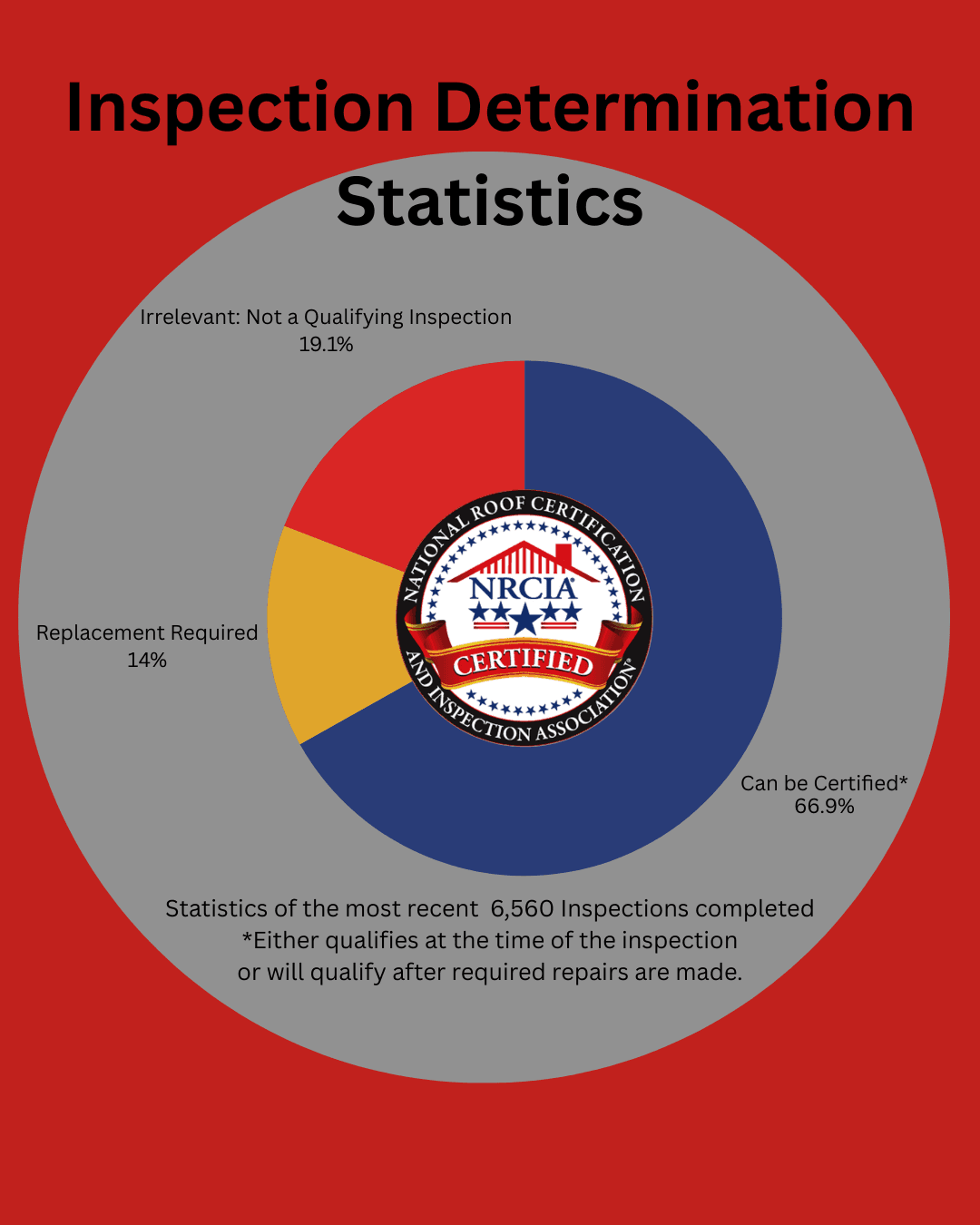
Across 6,460 member inspections nationwide, more than 66 percent of roofs either qualified for a LeakFREE® Roof Certification or could be repaired to qualify. That is the useful comparison for anyone weighing a treatment against a replacement, because it says most aging roofs are neither finished nor fine. They need a specific list of corrections and a record that the corrections were made.
One caveat on the number. Roughly 19 percent of the remaining inspections were performed for a different purpose entirely, such as confirming a roof was serviceable ahead of a solar installation, checking installation against manufacturer instructions and local code, or establishing proximate cause of loss on an insurance claim. Those were never certification inspections and should be read out of the comparison.
How to decide
Get an independent inspection before you buy anything. An accredited NRCIA member performs a five-zone LeakFREE® Check covering the interior, attic, exterior, perimeter and rooftop, and issues a LeakFREE® Roof Inspection Report naming the conditions found and what correcting them involves. Members do not sell rejuvenation products or roofing work, so the report reflects what is on the roof.
With that in hand the decision gets easy. If the shingles are sound and the defects are at the details, repair the details. If the shingles are drying out and everything else is in order, a treatment may be a reasonable way to hold the line. If the covering is past its term, money spent on a coating is money not spent on the replacement you will schedule anyway.
A LeakFREE® Roof Certification records that a specific roof, at a specific address, on a specific date, met the published LeakFREE® criteria. It is not a guarantee that the roof will not leak, and it is not insurance. It is a dated record of condition, which is what a buyer, a lender or an insurer can actually use. LeakFREE® is our federally registered trademark. Only NRCIA members can issue a LeakFREE® certification.
Get the roof looked at before you treat it
Find an accredited NRCIA inspector near you: /member-directory/
LeakFREE®, Forensic ROOF®, Mr. RoofCheck®, InspectionPLUS®, Today’s Inspection… Tomorrow’s Protection®, and Got Leaks?® are registered trademarks of Field Gate FLP, used by permission. RoofGUARD™, ForensicGUARD™, DisasterGUARD™, E3GUARD™, and Think Like a Raindrop™ are trademarks of Field Gate FLP.