
A hail storm can pass in ten minutes and leave a roof that looks almost the same from the driveway. The damage is often small and scattered, and it may not cause a leak for months. By then it can be hard to show when it happened, or whether it happened at all.
The first few weeks after a storm matter. What gets documented, who you let on the roof, and when you act all shape your repair options and any conversation with your insurance company. A careful hail damage roof inspection gives you a clear record of your roof’s condition while the evidence is fresh.
Why hail damage is easy to miss
NRCIA teaches inspectors to Think Like a Raindrop™. Water does not care how a roof looks. It follows the easiest path, and it finds the one weak spot.
Water doesn’t wait. Neither should you.
Hail creates those weak spots. A hailstone can knock loose the granules that protect a shingle (the sand-like coating on its surface), crack a tile, or split the seal around a vent. From the ground, none of that may show. On the next heavy rain, water lands on the damaged area, runs down the slope, and works its way under. The ceiling stain you notice next spring may trace back to a storm you had nearly forgotten.
For you, this means a roof without a leak today is not proof the roof came through the storm unharmed. Documentation made soon after the storm is the clearest record you will have.
Warning signs to look for from the ground
You do not need to climb onto your roof to spot clues. Please do not. A steep or wet roof is dangerous, and walking on damaged materials can make things worse. From the ground, look for:
- New dents in gutters, downspouts, roof vents, window trim or an outdoor air conditioning unit
- Sand-like granules collecting in gutters or at the bottom of downspouts
- Cracked, missing or displaced shingles or tiles you can see from the yard
- New water stains on ceilings, or damp spots in the attic if you can see in safely
- Neighbors having roofs looked at, or a reported hail storm in your area
Any one of these is a reason to have the roof looked at by a qualified inspector.
Common mistakes after a hail storm
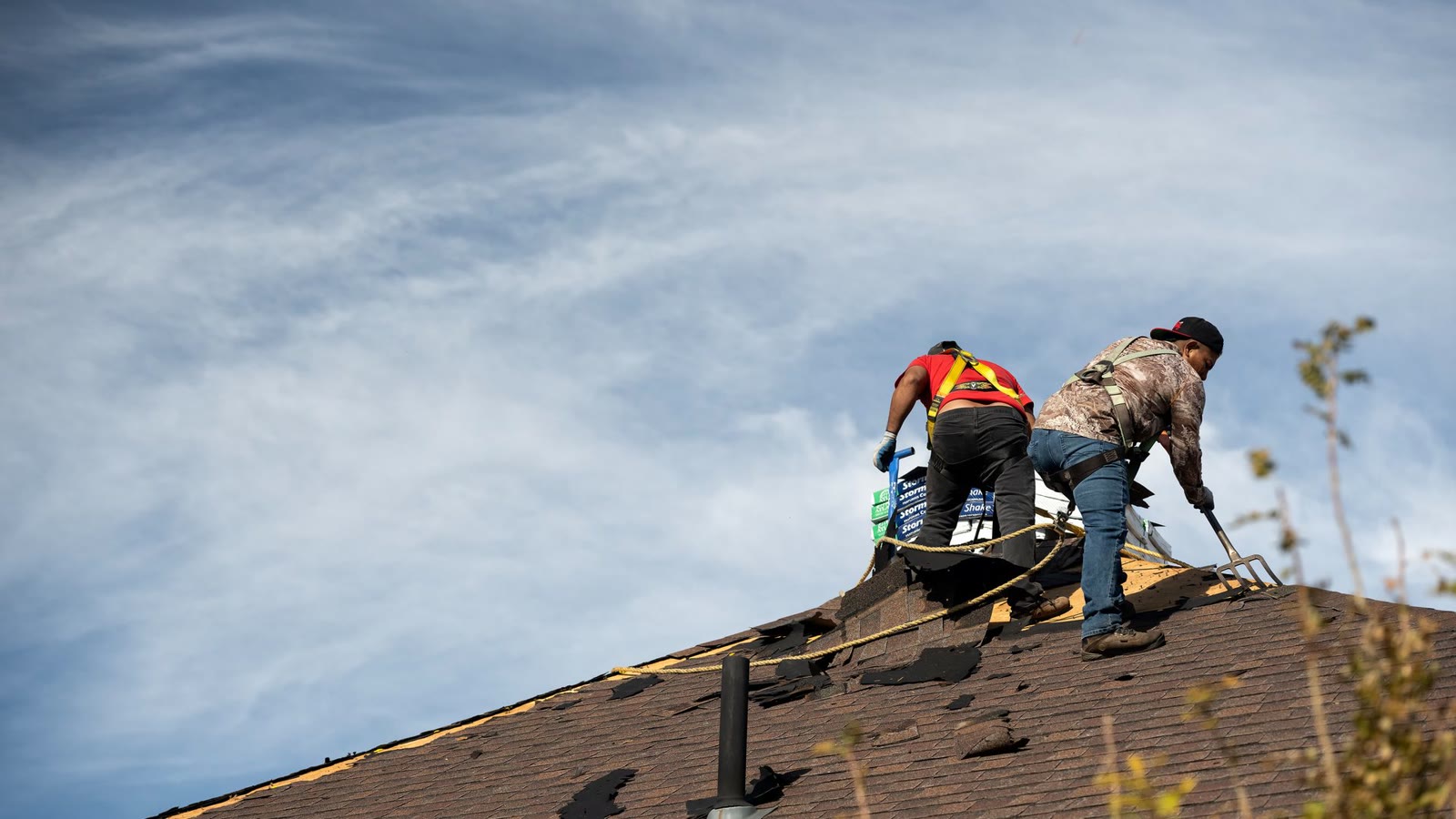
- Letting the first person who knocks on your door climb onto your roof before you know who they are or what they will do with what they find
- Assuming no leak means no damage
- Relying on a few quick photos taken from one corner of the roof
- Waiting months, when fresh evidence can fade and new weather can blur what the storm did
- Signing a repair contract before you have an independent record of the roof’s condition
- Trusting anyone who promises that your insurance claim will be paid. Only your insurance company decides that.
What a good inspection should give you
A careful report from an NRCIA member should let you check each of these, in this order:
- The report states the question it was hired to answer, stays within the scope written in your inspection agreement, and names the building codes and manufacturer requirements that apply to your roof.
- The inspector covered the whole roof system (the interior, attic, exterior, perimeter and rooftop, with the rooftop walked in person when it is safe), every photo is labeled with where it was taken, and anything the inspector could not reach is listed with the reason.
- It explains how water would travel across your roof, where hail damage could let it in, and what any water that already got in has reached inside.
- Each condition is marked as meeting the standard, failing it, or needing further evaluation, with a plain reason.
- It opens with a plain-language answer, states its limits, and is clear enough that someone who never saw your roof would reach the same conclusion.
A thorough inspection looks at the whole roof, including the slopes that look fine, and keeps the record separate from any repair bid or pricing.
If your roof was in a storm’s path, a StormCHECK™ inspection from an NRCIA member documents visible storm-related damage and the roof’s condition in a StormASSURANCE™ report, usually before or apart from any insurance claim. It is a record of what was found. It is not a repair bid, a warranty or a claim decision.
Where the inspection ends and your insurance company begins
An independent inspector documents the condition of your roof and, when the assignment calls for it, explains what physically caused the damage. Your insurance company decides coverage under your policy. An inspector should not promise payment, tell you what your policy means, or negotiate your claim unless they are properly licensed and authorized to do so. Licensing rules vary by state.
That separation protects you. A report that sticks to facts anyone can check is harder to dispute than one that argues a position. If you have questions about your policy, speak with your insurer or an appropriately licensed professional.
Questions to ask before anyone inspects your roof
- Who accredits you, and can I see your credentials?
- Will you walk the roof, and will you also look at the attic and interior?
- Will every photo be labeled with where it was taken?
- Will the report separate what you saw from what you think caused it?
- Will the report list anything you could not inspect, and why?
- Do you also do repairs? If so, how do you keep the inspection separate from any repair proposal?
Bring this list to the conversation. A qualified inspector will be glad to answer every question.
Your next step
If hail may have hit your roof, have it documented while the evidence is fresh, and before any repair work begins. NRCIA members are independent professionals trained and accredited to the NRCIA standard. Find an NRCIA inspector in your area.
LeakFREE®, Forensic ROOF®, Mr. RoofCheck®, InspectionPLUS®, Today’s Inspection… Tomorrow’s Protection®, and Got Leaks?® are registered trademarks of Field Gate FLP, used by permission. RoofGUARD™, ForensicGUARD™, DisasterGUARD™, E3GUARD™, and Think Like a Raindrop™ are trademarks of Field Gate FLP. StormCHECK™ and StormASSURANCE™ are trademarks of Field Gate FLP.