
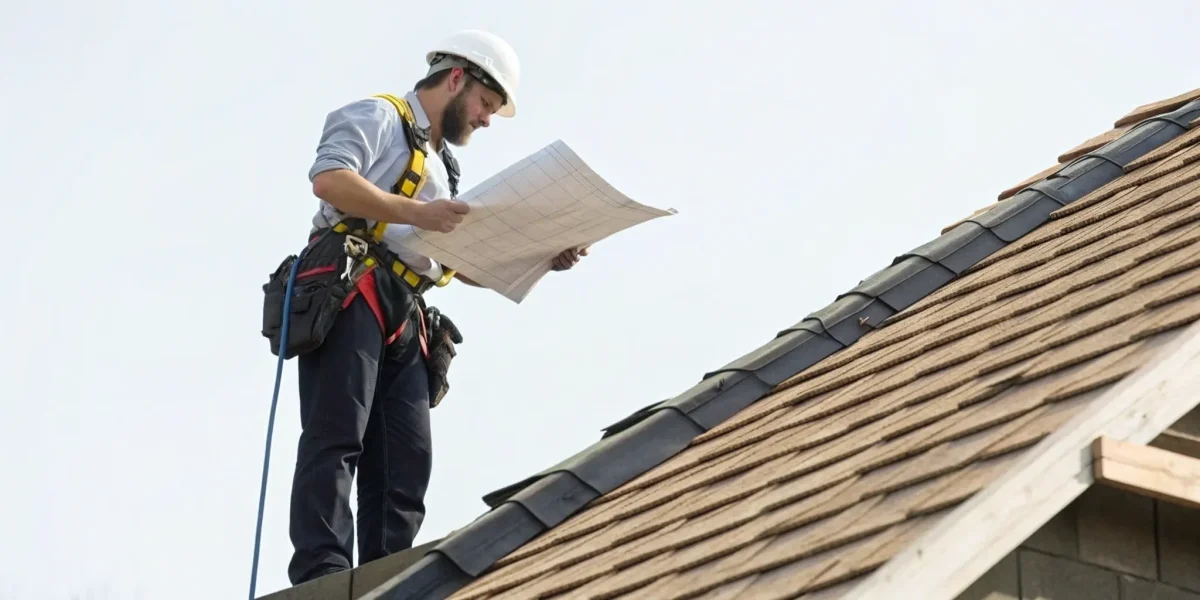
If you’ve spent years in the roofing industry, you possess a depth of knowledge that is incredibly valuable. You might be wondering how to leverage that expertise into a new professional path. Becoming a roof expert witness is a rewarding way to apply your skills, but it requires more than just field experience. Your practical wisdom needs to be backed by formal credentials that the legal system recognizes and respects. So, what qualifications does a roof expert witness need to make that transition successfully? This article is your roadmap, detailing the specific certifications, training programs, and communication skills that will formalize your expertise and prepare you to present your findings with confidence in a legal setting.
Key Takeaways
- Build a Foundation of Experience and Certification: Courts value real-world expertise as much as formal degrees. Your credibility is built on a powerful combination of hands-on experience and professional credentials, like those from the NRCIA, which prove your knowledge meets industry standards.
- Master the Art of Clear Communication: Your technical knowledge is only effective if a judge and jury can understand it. The best expert witnesses can translate complex roofing concepts into simple, clear language, presenting their findings objectively and confidently.
- Commit to Continuous Learning to Stay Relevant: The roofing industry is always changing. To remain a trusted authority, you must stay current with the latest building codes, manufacturer specifications, and industry best practices through ongoing education.
What Education Does a Roof Expert Witness Need?
When you think of an “expert witness,” you might picture someone with a long list of academic credentials. While a formal education is a common path into this field, it’s not the only one. The courts are looking for true expertise, which can come from a university, years of hands-on work, or a combination of both. The key is having a deep, verifiable understanding of roofing systems, materials, and installation practices.
A strong educational foundation provides the theoretical knowledge needed to explain complex roofing failures in a clear, logical way. It helps an expert understand the physics of water intrusion, the chemistry of material degradation, and the engineering principles behind a stable roof structure. However, real-world experience is what translates that theory into practical, defensible opinions. Ultimately, whether you have a Ph.D. or decades of experience on the job, your ability to communicate your knowledge effectively is what makes you a valuable expert witness.
Exploring Degrees in Engineering and Construction
Many of the most sought-after roofing expert witnesses hold a bachelor’s degree in a relevant field. Degrees in civil engineering, architectural engineering, or construction management are particularly valuable because they provide a solid foundation in structural design, materials science, and building practices. This formal education teaches you the “why” behind roofing standards and building codes. It equips you with the technical language and analytical skills to dissect a roofing issue, from calculating wind uplift forces to assessing the chemical composition of a failed membrane. This background gives your testimony a strong layer of academic credibility that can be very persuasive in a legal setting.
The Role of Architecture and Building Science
Beyond pure engineering, a background in architecture or building science offers a unique and crucial perspective. These disciplines focus on how a roof functions as part of an entire building system. An expert with this knowledge understands how the roof interacts with ventilation, insulation, and the building envelope to manage moisture and thermal performance. This holistic view is essential when a roofing problem might be caused by a design flaw or an issue with another part of the structure. Understanding the principles of building science allows an expert to identify root causes that others might miss, providing a more complete and accurate analysis for the court.
Succeeding Without a Formal Degree
Let’s be clear: you absolutely do not need a college degree to be a highly respected roofing expert witness. Courts recognize that true expertise is often built over years of dedicated, hands-on work. If you’ve spent decades installing, inspecting, and repairing roofs, you possess a depth of practical knowledge that can’t be learned in a classroom. This experience becomes legally recognized expertise when it’s backed by specialized training and certifications. Programs like the NRCIA’s inspector training are designed to formalize your field knowledge, teaching you how to document findings and present them in a professional, standardized way that holds up under legal scrutiny.
What Certifications Should a Roof Expert Witness Have?
While hands-on experience is irreplaceable, professional certifications are the formal proof of an expert’s knowledge. They show a commitment to ongoing education and a mastery of industry-recognized standards. For a roof expert witness, holding the right credentials can be the difference between being seen as a credible authority and having their testimony questioned. Certifications provide a clear, standardized benchmark of expertise that lawyers, judges, and juries can easily understand and trust. They signal that an expert has not only done the work but has also passed rigorous tests to validate their skills.
NRCIA Roof Inspector Certification
This certification is a cornerstone for any professional aiming to be a credible roof expert witness. The NRCIA’s training portfolio is designed to create true specialists in roof inspections and condition assessments. Holding this credential demonstrates that you have been trained to a national standard, capable of identifying everything from minor issues to critical failures with precision. In a courtroom setting, this certification validates your inspection methodology and reinforces the reliability of your findings. It tells the court that your opinions aren’t just based on experience, but on a systematic, industry-vetted process for evaluating roof systems and ensuring they are free of leaks.
HAAG Certification for Damage Assessment
When a case involves damage from hail, wind, or other weather events, credentials like the HAAG Certified Inspector designation are often considered the gold standard. HAAG-certified inspectors are trained to use scientific methods to assess the extent and cause of roof damage. This is incredibly valuable in legal disputes, as it allows you to present findings that are objective and evidence-based, rather than subjective opinions. Having this certification means you can confidently differentiate between storm damage, manufacturing defects, and normal wear and tear. This level of detailed analysis provides the clarity and authority needed to explain complex roofing issues in a way that is both defensible and easy for a non-expert to understand.
IICRC Restoration Certifications
Roofing issues rarely exist in a vacuum; they often lead to other problems, like water damage. This is where credentials from the Institute of Inspection, Cleaning and Restoration Certification (IICRC) become so important. An expert witness with an IICRC certification demonstrates a comprehensive understanding of how water intrusion affects a building’s structure and interior. This knowledge is critical when testifying about the full scope of damages resulting from a roof failure. It shows the court that your expertise extends beyond the roof itself to the consequences of its failure, making your assessment of the total damages more complete and authoritative.
Understanding State Licensing
Beyond professional certifications, it’s crucial to understand state-specific licensing requirements. While a certification proves what you know, a license grants you the legal authority to perform work in a particular state. Some courts may require an expert witness to hold a current contractor’s license in the state where the legal proceedings are taking place. This requirement can vary significantly, so it’s important to check with the relevant state licensing agencies. Before accepting a case, always verify the local rules and ensure your credentials meet the court’s standards. Failing to do so could jeopardize your ability to testify, regardless of how experienced or certified you are in your field.
How Important is Hands-On Experience?
While degrees and certifications build a strong foundation, nothing replaces the wisdom gained from years spent on a roof. Hands-on experience is the critical element that transforms a knowledgeable professional into a credible expert witness. It’s the difference between knowing the theory of a roof leak and understanding precisely how water travels through a specific type of flashing during a wind-driven rainstorm. In a legal setting, this practical knowledge is non-negotiable, as it forms the backbone of a defensible opinion.
Attorneys and judges look for an expert who can speak from a place of true authority—someone who has seen firsthand how different materials perform over time, in various climates, and under different installation conditions. This in-the-field experience allows an expert to diagnose complex problems, identify subtle clues that others might miss, and confidently explain their findings. It’s this practical application that gives weight to your testimony and helps a judge or jury understand the realities of a roofing issue. Without a solid history of hands-on work, an expert’s opinion is just that—an opinion. With it, their assessment becomes a trusted, authoritative analysis that can withstand intense scrutiny.
The Value of In-the-Field Experience
When you’re called to testify, your credibility is everything. A courtroom will only accept your expert opinion if you can demonstrate the right combination of knowledge, skill, and, most importantly, experience for the specific topic at hand. This means you need to prove you’ve dealt with the issue in the real world, not just in a classroom. Field experience is what allows you to confidently distinguish between storm damage, a manufacturing defect, or poor installation—nuances that are critical in a legal dispute. A seasoned expert witness can draw on hundreds of past inspections and repairs to support their conclusions, making their testimony far more compelling and difficult to challenge.
Specializing in Commercial vs. Residential Roofing
The worlds of commercial and residential roofing are vastly different, and your experience should reflect the area you claim as your expertise. Commercial projects often involve low-slope or flat roofs with complex drainage systems, single-ply membranes like TPO or EPDM, and considerations for heavy HVAC equipment. Residential roofing, on the other hand, typically focuses on steep-slope systems with materials like asphalt shingles, tile, or metal. While some roofing experts have a background in both, a court will want to see deep, specialized experience in the specific type of roof involved in the case. An expert who has spent their career on residential shingle roofs simply won’t have the same credibility when discussing a TPO failure on a large commercial building.
Understanding Different Roofing Systems
Beyond the broad categories of commercial and residential, a true expert needs hands-on experience with a wide variety of roofing materials and systems. The installation methods, common failure points, and repair techniques for a slate roof are completely different from those for a standing seam metal roof or a modified bitumen system. To be an effective witness, you must have direct, practical knowledge of the specific system in question. This is where your professional history becomes so important. Being able to say you’ve installed, inspected, and repaired the exact type of roof at the center of a legal case gives your testimony an unmatched level of authority and makes you an invaluable roofing expert witness.
Key Technical Skills Every Roof Expert Needs
Beyond degrees and time on the job, a truly effective roof expert witness possesses a specific set of technical skills. These are the practical abilities that allow them to thoroughly investigate an issue, analyze their findings, and communicate them in a way that holds up under scrutiny. Honing these skills is what transforms an experienced roofer into a trusted expert who can confidently take the stand.
Advanced Inspection Techniques
An expert witness inspection is far more detailed than a standard roof check. It requires a deep understanding of advanced methods to uncover evidence that isn’t visible at first glance. This means knowing how to safely and systematically examine every component of the roofing system, from the underlayment to the flashing. A credible expert must be well-versed in industry safety protocols and be able to justify their inspection process. This level of detail is crucial because it forms the foundation of their testimony. The ability to perform these comprehensive evaluations is a skill that can be sharpened through dedicated professional training.
Damage Assessment and Analysis
Once the inspection is complete, the real analytical work begins. This is where an expert acts like a detective, piecing together clues to understand the full story of the roof’s condition. It involves more than just taking photos; it means conducting specific tests, like checking for shingle brittleness or using thermal imaging to detect moisture. A top-tier expert will cross-reference their findings with historical weather data, local building codes, and manufacturer specifications to determine the root cause of damage. This meticulous process ensures their conclusions are based on solid evidence, not just a surface-level opinion.
Clear and Professional Report Writing
All the technical expertise in the world won’t matter if it can’t be communicated clearly. An expert witness’s written report is often the most critical piece of evidence they produce. This document must be structured, detailed, and easy for a non-expert—like a judge or jury—to understand. It needs to clearly outline the expert’s qualifications, the methods they used, their specific findings, and the logical conclusions they drew from the evidence. A poorly written or confusing report can undermine an expert’s credibility before they even speak. Joining a professional organization like the NRCIA helps members uphold these high standards of documentation.
Proficiency with Inspection Software
In today’s roofing industry, technology is a key part of the job. Proficiency with specialized software is no longer a bonus—it’s a necessity. Tools like Xactimate are standard for creating detailed cost estimates, while dedicated inspection platforms help streamline the entire process. Using professional inspection software ensures that every inspection is consistent, thorough, and documented in a clean, professional format. This not only improves efficiency and accuracy but also demonstrates a commitment to using the best tools available to deliver reliable, data-driven results for every client.
How Do Courts Vet an Expert Witness?
When a case goes to court, you can’t just call yourself an expert and have your opinion accepted as fact. The legal system has a rigorous process for determining whether an expert witness is qualified to testify. This process acts as a gatekeeper, ensuring that the testimony presented to a judge or jury is both relevant and reliable. The court’s goal is to filter out junk science and unsubstantiated opinions, allowing only testimony that is based on professional knowledge, skill, and sound methodology.
For a roofing professional, this means your findings will be scrutinized. The court will examine your qualifications, the principles behind your conclusions, and how you applied those principles to the specific facts of the case. They want to know that your assessment of roof damage isn’t just a guess, but the result of a systematic, repeatable process. This is why having a foundation built on standardized training and certification is so important. It demonstrates that your methods aren’t just personal habits but are aligned with recognized industry standards, making your testimony much more likely to be admitted and respected.
Understanding the Daubert Standard
Think of the Daubert Standard as a checklist that federal courts use to evaluate the reliability of an expert’s testimony. It’s not about whether the judge personally agrees with your conclusion, but whether the method you used to get there is scientifically valid. The court will consider several factors, asking questions like: Can your inspection technique be tested and repeated by others? Has your methodology been subject to peer review or publication? Is there a known error rate for your process? And finally, is your approach generally accepted by other experts in the roofing industry? Your testimony needs to be built on a solid, defensible foundation to pass this critical test.
Evaluating Reliability and Methodology
Beyond the Daubert Standard, courts look closely at the expert’s overall reliability and methodology under the Federal Rules of Evidence. The core question is: Will your specialized knowledge help the judge or jury understand the evidence and determine a fact in the case? It’s not enough to simply have impressive credentials; you must be able to apply your expertise to the specific details of the dispute. The court will want to see that you followed a logical process to arrive at your conclusions. This is where standardized procedures, like those taught in NRCIA’s training portfolio, become invaluable. They show the court you used a consistent and reliable framework for your analysis.
Common Myths About Expert Qualifications
One of the biggest myths about becoming an expert witness is that you need a long list of academic degrees. While a formal education in engineering or architecture can certainly be helpful, it is not a requirement. The law recognizes that expertise can be built through years of hands-on work, specialized training, and practical skill. A seasoned roofer with decades of experience diagnosing complex failures in specific roofing systems has a depth of knowledge that can’t be replicated in a classroom. Courts value this real-world experience, so don’t let a lack of a college degree stop you from considering this path if you have the skills and experience to back it up.
Why Ongoing Education Matters
A roof expert witness’s qualifications aren’t a one-and-done deal. The roofing industry is constantly changing, with new materials, installation techniques, and safety protocols emerging all the time. What was considered best practice five years ago might be outdated today. This is why a commitment to ongoing education is non-negotiable for anyone who wants to maintain their credibility and provide truly expert testimony.
Think of it this way: a court relies on an expert to provide an opinion based on the most current and accepted industry knowledge. If an expert’s training is a decade old, their insights might not hold up under scrutiny. Continuous learning ensures that an expert witness can speak confidently about the latest technologies, from advanced inspection drones to new synthetic underlayments. It also means they are familiar with evolving standards for things like wind resistance and energy efficiency. This dedication to staying current is what truly separates a qualified expert from a genuine authority in the field. It demonstrates a professional commitment to excellence that both attorneys and juries can trust.
Keeping Up with Industry Standards
To be effective, a roof expert witness must be qualified by their current “knowledge, skill, experience, training, or education.” The key word here is current. Industry standards for everything from proper flashing techniques to attic ventilation are always being refined. An expert who isn’t up-to-date on these standards can be easily challenged during cross-examination, potentially damaging their credibility and the case itself. Participating in a comprehensive training portfolio ensures that an expert’s knowledge base is solid, defensible, and aligned with today’s best practices, making their testimony much more powerful.
The Role of Manufacturer Training
Roofing materials are not one-size-fits-all, and neither are their installation requirements. Manufacturers provide specific training on how to properly install, maintain, and repair their products to ensure they perform as designed. For an expert witness, this training is invaluable. It allows them to determine if a roof failure was caused by a product defect, an installation error, or another issue entirely. Understanding the nuances of different systems is critical for providing an accurate assessment, especially when warranties and liability are on the line. This specialized knowledge is a cornerstone of creating truly LeakFREE® roofs that stand the test of time.
Staying on Top of Code Updates
Building codes are not static; they change regularly in response to new research, weather patterns, and safety concerns. An expert witness must be fluent in the specific local, state, and national codes relevant to a case. This includes knowing not only the current code but also the code that was in effect when the roof was built or repaired. Whether it’s a specific requirement for wind uplift in a hurricane-prone area or regulations for elevated exterior elements, like those covered in California SB 721 inspections, a deep understanding of building codes is essential. This knowledge ensures their analysis is accurate and their testimony is legally sound.
Essential Communication and Professional Skills
Technical expertise is the foundation for a roof expert witness, but it’s only half the battle. To be truly effective, you also need a strong set of communication and professional skills. Your ability to convey your findings clearly and maintain credibility can make or break a case. It’s not just about what you know; it’s about how well you can share that knowledge with people who don’t have a roofing background, like a judge or jury.
Presenting with Clarity in Court
Stepping into a courtroom means stepping onto a stage where your audience knows very little about your craft. Your job is to be a teacher. You need to explain complex roofing concepts in a way that is both engaging and easy to follow. Think of it as telling a story based on facts. You must break down technical jargon, use relatable analogies, and present your findings in a logical sequence. A confident and calm demeanor is crucial; it shows the court you are sure of your analysis. The most brilliant expert is ineffective if the jury can’t understand their testimony.
Making Technical Details Easy to Understand
Your primary role as an expert witness is to be an impartial and objective source of information. Your opinions must be rooted firmly in the facts and your professional knowledge, not in who hired you. This objectivity is the bedrock of your credibility. When you write your report or speak in court, your goal is to translate complex data into a straightforward narrative. You need to connect the dots for the jury, explaining how a specific type of damage occurred or why a certain installation method failed, all without getting lost in overly technical details. Your ability to remain unbiased is what makes you a trusted expert rather than just another voice in the argument.
The Value of Professional Memberships
Holding certifications is essential, but being an active member of professional organizations takes your credibility a step further. Memberships in groups like the National Roof Certification and Inspection Association (NRCIA) or state-level roofing contractor associations signal a deep commitment to your profession. They show that you are dedicated to upholding high industry standards and are actively engaged in continuing education. These affiliations demonstrate to a court that you are not just a contractor but a professional who invests in staying current with the latest materials, techniques, and best practices. This involvement reinforces your status as a true authority in the field.
How to Verify an Expert’s Qualifications
Choosing a roof expert witness is a critical decision, but you don’t have to make it blindly. Vetting an expert is a straightforward process when you know which questions to ask and where to look for answers. A truly qualified professional will have a transparent record of their training, experience, and specialized skills. By taking the time to review their background, you can feel confident that you’re bringing in someone who can provide a clear, credible, and defensible opinion. The key is to look for a combination of formal credentials, a solid professional history, and deep, specific knowledge of roofing systems.
Check Their Certifications and Licenses
Start by looking at an expert’s credentials. Certifications are more than just pieces of paper; they show a commitment to upholding industry standards and staying current with best practices. Look for credentials from respected organizations like the NRCIA, which offers comprehensive training to become a certified roof inspector. Other valuable qualifications include HAAG certifications for residential or commercial roof damage assessment and any state-specific roofing contractor licenses. An expert’s ability to demonstrate their qualifications through these programs is a strong indicator of their professionalism and dedication to their craft. These credentials provide a baseline of trust and prove the expert has been tested and approved by a third-party authority.
Review Their Professional History
An expert’s resume should tell a clear story of their experience in the roofing industry. A court will only accept testimony from someone with a proven background of knowledge, skill, and training relevant to the case. Look into their work history, the types of cases they’ve been involved in, and any articles or reports they may have published. Have they consistently worked with homeowners, real estate professionals, or insurance companies? A strong professional history shows that others have trusted their judgment and that they have practical, hands-on experience to support their opinions. This track record is one of the most reliable predictors of how they will perform for you.
Assess Their Specialized Knowledge
Beyond general experience, a great expert witness possesses deep, specialized knowledge. Their role is to help a judge or jury understand complex technical details, so they must be able to explain roofing issues clearly and accurately. Do they have expertise in the specific type of roofing system involved in your case, whether it’s TPO on a commercial building or asphalt shingles on a home? They should also be proficient with tools of the trade, including advanced inspection software that allows for precise documentation and analysis. This specialized knowledge is what separates a true expert from someone who just has a general understanding of the industry.
Related Articles
- Expert Witness Roof Inspection: The Ultimate Guide
- Cost of a Roof Expert Witness Report: A 2025 Guide
- Expert Roof Damage Assessment for Legal Cases
Frequently Asked Questions
Do I really need a college degree to be a roof expert witness? Not at all. While a degree in engineering or construction science provides a great theoretical foundation, courts place immense value on real-world, hands-on experience. Decades spent installing, inspecting, and repairing roofs gives you a depth of practical knowledge that can’t be learned in a classroom. The key is to formalize that experience with professional training and certifications that prove your expertise is based on recognized industry standards.
Which is more important: years of experience or a professional certification? It’s not a matter of one being more important than the other; they work together. Your years of hands-on experience give you the wisdom to accurately diagnose complex roofing issues. A professional certification, like one from the NRCIA, validates that wisdom. It shows a court that your methods are based on a standardized, industry-accepted process, which makes your opinion much more credible and defensible.
What’s the biggest difference between a regular roof inspection and one for a legal case? A standard inspection focuses on identifying current and potential problems for a property owner. An inspection for a legal case goes much deeper. You are essentially a detective building a case based on evidence. It requires meticulous documentation, a clear and repeatable methodology, and the ability to connect your findings directly to the cause of failure. Your final report must be so clear and logical that a judge or jury with no roofing knowledge can understand exactly how you reached your conclusions.
How do I know if my testimony will be accepted by a court? Courts use standards to ensure an expert’s opinion is reliable and based on more than just a hunch. This means you must be able to explain the process you used to arrive at your conclusion. Was your inspection method systematic? Did you use accepted industry practices to analyze the damage? As long as your opinion is grounded in a logical, evidence-based methodology that other professionals in the field would recognize as valid, it is far more likely to be accepted.
I have years of roofing experience. What’s the best first step to becoming an expert witness? The best first step is to seek out specialized training designed for expert-level inspections. Even with decades of experience, you need to learn how to apply your knowledge in a legal context. Programs like the NRCIA’s inspector training teach you how to perform inspections, document your findings, and write reports in a way that will stand up to legal scrutiny. This formalizes your existing skills and gives you the specific tools needed for this specialized role.
