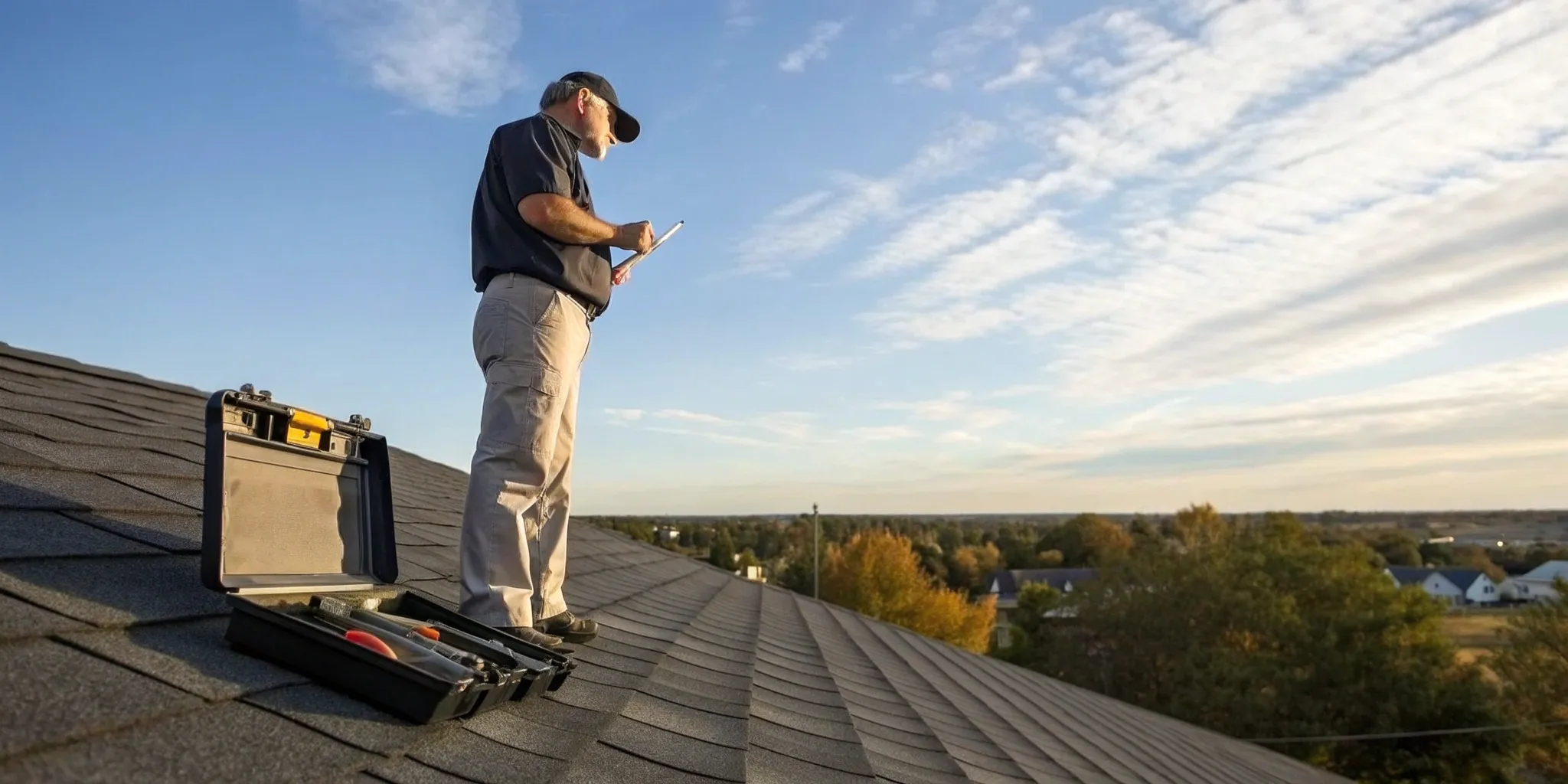
Where Certified Roof Inspections Are Heading
The market for certified roof inspections has changed shape over the past few years, and the direction is steady enough to plan around. Buyers want documentation. Insurers want documentation. California now requires documented condition assessments on parts of the building envelope that went unexamined for decades, and other states are watching how it goes. An inspector who can produce a defensible written record is in a different business than one who offers a verbal opinion from the driveway.
Here is what NRCIA sees driving that shift, and what a working inspector can do about it.
Client Expectations Keep Rising, and They Travel
California homeowners, agents and insurance professionals have expected formal roof documentation for years, largely because their transactions and their claims demanded it. As people move out of California, those expectations move with them. An agent who ran ten transactions with a written roof report attached is going to ask for one in Boise or Nashville too.
The practical effect is that markets which ran on informal inspection are getting formal fast, and the inspector who already works to a published standard picks up that work without changing anything.
State Law Is Setting the Floor
California legislation is the clearest example, and it has already moved from proposal to enforced deadline.
- SB 721 covers rental buildings with three or more units. The initial inspection deadline was January 1, 2026, and it has passed. Re-inspection runs every six years. Qualified inspectors include a licensed architect, a civil or structural engineer, an A, B or C-5 licensed contractor with five years of multistory wood frame experience, or a certified building inspector.
- SB 326 covers condominium and homeowner association buildings. That deadline was January 1, 2025, and it has also passed. Re-inspection runs every nine years, and Civil Code 5551 draws the professional pool more narrowly.
Penalties are commonly cited in the range of 100 to 500 dollars per day, with a possible building safety lien on top. Other states watch what California does, learn from the rollout, and write their own version. Inspectors elsewhere have a window to get trained before that happens locally instead of scrambling after a bill passes.
NRCIA built the E3GUARD™ program for exactly this work. Exterior elevated elements, meaning decks, balconies, walkways, patios and staircases, sit under state tracks named for the statute they follow, such as CA-SB721 and CA-SB326. There is no prerequisite program for E3GUARD™.
Demand Is Shifting Toward Certified Roof Inspections
There is no federal license for roof inspectors. Anyone in most of the country can print a card and call themselves one. In a small town it has long been normal for a handyman who knows construction to look at a roof and give a verdict.
That arrangement holds until money is at stake. When a sale, a claim or a lawsuit turns on the condition of a roof, the question becomes who inspected it, to what standard, and what did they write down. Accreditation answers all three. Across 6,460 member inspections nationwide, more than 66 percent of roofs either qualified for a LeakFREE® certification or could be repaired to qualify, which tells you most of this work ends in a documented, workable outcome rather than a replacement quote.
Three Moves That Keep You Ahead
Keep the Training Current
Materials change, codes change, and the failure patterns you learned five years ago are not the whole list. NRCIA offers online coursework and ride-along opportunities, and continuing accreditation keeps the designation meaningful. Volume counts too: an NRCIA Certified Roof Inspector advances to Senior at 500 inspections and Master at 1,000.
Add a Specialization
ForensicGUARD™ is the flagship program and it opens the work that pays for depth: cause and origin, construction defect, litigation support and expert witness engagements. Studying for it also makes you better on ordinary inspections, because forensic training teaches you to read a roof as a system with a history. DisasterGUARD™ sits on top of an active ForensicGUARD™ accreditation for members handling insurance related evaluations.
Stay Connected to Other Inspectors
Peers tell you what is changing before the trade press does. Industry events, member discussion groups and referral relationships all feed the same result. The inspector who hears about a new statute or a failing product line early is the one who is ready when the calls start.
The Standard Behind the Work
NRCIA does not inspect roofs. We set the standard, train and accredit members, administer the LeakFREE® certification system through InspectionPLUS®, and maintain the member directory the public searches. Accredited members perform the LeakFREE® Check across five zones, write the report, and issue the certification when a roof meets the published criteria. LeakFREE® is our federally registered trademark. Only NRCIA members can issue a LeakFREE® certification.
A certification records a specific roof, at a specific address, on a specific date. Term is set by the findings, the slope, the materials and the condition, to a maximum of ten years, and the expiration prints as a date. It is not insurance and not a promise about future performance. It is a record, which is exactly what the market is now asking for.
Get Accredited Before the Demand Arrives
The inspectors who did well in California were the ones already trained when the law caught up. The same window is open in most of the country right now.
Join NRCIA and start your accreditation.
LeakFREE®, Forensic ROOF®, Mr. RoofCheck®, InspectionPLUS®, Today’s Inspection… Tomorrow’s Protection®, and Got Leaks?® are registered trademarks of Field Gate FLP, used by permission. RoofGUARD™, ForensicGUARD™, DisasterGUARD™, E3GUARD™, and Think Like a Raindrop™ are trademarks of Field Gate FLP.