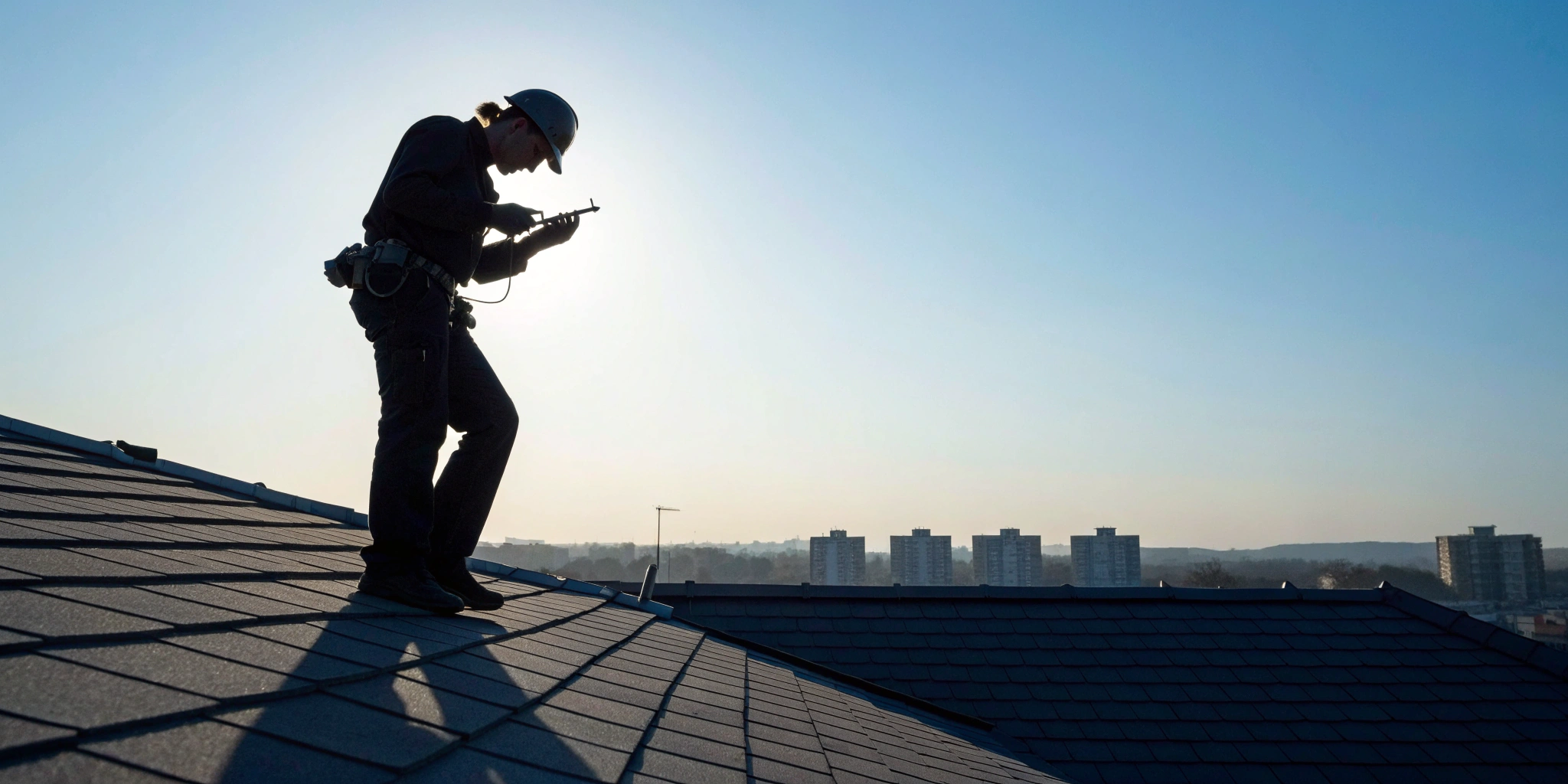
What roof inspector certification requirements actually cover
Roof inspector certification requirements differ sharply depending on who issues the credential, and those differences matter more than most candidates expect. Some programs test general building knowledge with a roofing section attached. Others train one discipline to a published standard and hold you to it every year. Before you spend a dollar, understand what the credential proves and who accepts it.
Nearly every serious program asks for four things: structured training, a passing exam, documented field work, and continuing education to stay current. What changes between programs is the depth of each piece and the scrutiny behind it.
There is no federal license for roof inspectors
This surprises people. No federal agency licenses roof inspectors. Some states fold roof work into contractor licensing, and some municipalities add their own rules, but there is no national license to hold and no federal registry to check.
That gap is why your credential carries weight. Insurers, attorneys, agents and property managers want a documented standard sitting behind your report. Certification is how you show them one exists.
The main credentials, compared
NRCIA
The National Roof Certification and Inspection Association has set inspection standards since 1995. NRCIA trains and accredits individual inspectors, publishes the criteria they work to, and administers the LeakFREE® certification system. Accreditation is built for professionals who want a defined method, a report format that holds up under review, and access to work that generalists rarely see.
InterNACHI
The International Association of Certified Home Inspectors offers a roof inspection course inside a broad home inspection curriculum. Membership comes before the course. It suits generalists adding roof competence to a whole-house practice.
HAAG Engineering
HAAG runs intensive, science-based training focused on damage assessment. Adjusters and carriers recognize it. If your work centers on hail, wind and storm claims, it is a strong fit.
ICC
The International Code Council certifies building inspectors against the model codes most jurisdictions adopt. It is code enforcement work rather than roof diagnostics, and the two skill sets overlap less than the titles suggest.
State and local rules
Check your state contractor board and your city building department before you enroll anywhere. California is the clearest example: SB 721 and SB 326 define who may inspect exterior elevated elements, and a general roof credential does not satisfy either statute on its own.
How NRCIA accreditation is structured
Membership has two parts. A Program is the training accreditation you earn. A Package is the annual benefits tier you choose: Silver, Gold, Platinum or Enterprise.
| Program | What you earn |
|---|---|
| RoofGUARD™ | NRCIA Certified Roof Inspector (CRI), advancing to Senior (SRI) at 500 inspections and Master (MRI) at 1,000 |
| ForensicGUARD™ | NRCIA Forensic Roof Inspector (FRI), advancing to SFRI and MFRI. The flagship program for expert witness and defect work. |
| E3GUARD™ | NRCIA E3GUARD™ Accredited Specialist for exterior elevated elements: decks, balconies, walkways, patios and staircases. No prerequisite program, and state tracks such as CA-SB721 and CA-SB326. |
| DisasterGUARD™ | NRCIA DisasterGUARD™ Accredited Specialist for insurance-related evaluations. An add-on that requires active ForensicGUARD™, or E3GUARD™ for members already doing disaster work. |
Accreditation belongs to the person, never to the company. A LeakFREE® Roof Certification is issued by the accredited individual who performed the inspection, generated and registered through InspectionPLUS®. A certificate produced outside that platform is not valid.
What the investment looks like
Program fees, exam fees and renewal cycles are published by each certifying body, and they move. Ask for current figures in writing before you commit, and ask what the number includes: materials, exam attempts, software access, renewal.
Budget for equipment separately. A working kit runs to an extension ladder, fall protection, proper footwear, a good camera, a moisture meter, and a reporting platform that produces a consistent document every time. Candidates with construction or roofing backgrounds typically move through training faster than career changers, though field time is the part nobody can compress.
Staying accredited
Earning the credential starts the clock. NRCIA members renew annually and complete continuing education, because materials, codes and inspection technology keep moving. Missing a renewal deadline is an avoidable way to lose standing, so put the date in your calendar the day you pass.
Three misconceptions worth clearing up
A certification is not a promise about the future. A LeakFREE® Roof Certification records that a specific roof, at a specific address, on a specific date, met the published LeakFREE® criteria. Term is set by the findings, the slope, the materials and the condition, to a maximum of ten years, and the expiration prints as a date. It is not insurance and not a service contract.
Experience is not a credential. Twenty years on roofs teaches you installation. Inspection is diagnostics: failure patterns, water paths, documentation that survives cross-examination. Training closes that gap deliberately.
A new roof still needs an inspection. Installation errors and shipping damage show up on day one. Catching them while the installer is still responsible is far cheaper than finding them after a wet winter.
Choosing the program that fits your work
Start with the work you want, then pick backwards. Real estate transactions and homeowner maintenance point toward RoofGUARD™. Litigation, construction defect and expert witness work point toward ForensicGUARD™. Multifamily and HOA compliance in California points toward E3GUARD™ and its state tracks. Carrier and adjuster work points toward DisasterGUARD™ on top of ForensicGUARD™.
Ask any program three questions before you enroll. Who accepts this credential in my market? What does the reporting deliverable look like? What happens to my standing if I stop taking continuing education? Clear answers tell you a great deal about the standard behind the certificate.
Review the NRCIA programs and start accreditation
LeakFREE®, Forensic ROOF®, Mr. RoofCheck®, InspectionPLUS®, Today’s Inspection… Tomorrow’s Protection®, and Got Leaks?® are registered trademarks of Field Gate FLP, used by permission. RoofGUARD™, ForensicGUARD™, DisasterGUARD™, E3GUARD™, and Think Like a Raindrop™ are trademarks of Field Gate FLP.