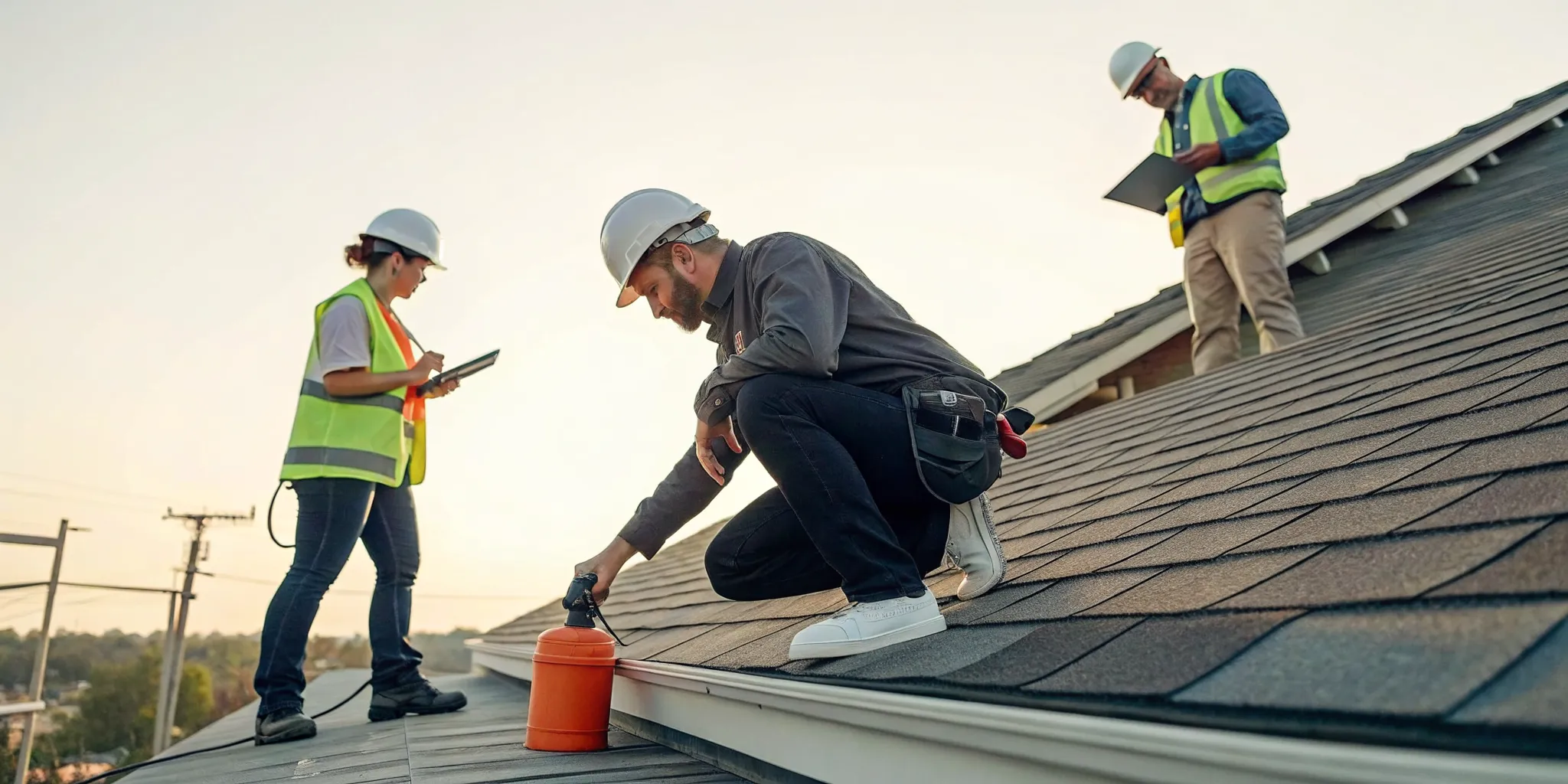
Why roof inspection training matters
Roof inspection training turns an opinion into an assessment. Anyone can point at a missing shingle. A trained inspector explains what caused it, what that cause implies about the rest of the system, and what the owner should do about it and when. That difference is the whole profession.
It matters more than most trades because there is no federal license for roof inspectors. No national exam stands between an untrained person and a homeowner’s roof. State contractor licensing tests business and installation competence, not diagnostic skill. Training and accreditation are what fill the gap, and they are what a lender, an adjuster or an attorney looks for when they weigh whose report to believe.
What you need before you start
You do not need a four-year degree. A background in roofing or construction helps a great deal, because you already understand how the assemblies go together and where installers cut corners.
Beyond that, the job asks for a specific mix:
- Physical capability. Carrying and setting ladders, comfort at height, sure footing on varied pitches and surfaces.
- Attention to detail. Most roofs fail at penetrations, transitions and terminations, which are small areas that reward patience.
- Plain communication. You will explain the same finding to a worried homeowner, a busy agent and a skeptical adjuster, and each needs a different version of the truth without the truth changing.
- Tolerance for documentation. The report is the product. If you dislike writing things down, this is the wrong trade.
Budget for the tools as well as the coursework: a good ladder, fall protection, footwear, a camera, a moisture meter, and the reporting platform your program requires.
What roof inspection training covers
A complete program moves through four areas.
Systems and materials
Asphalt shingle, wood shake, tile, metal, slate, built-up, modified bitumen and single-ply membrane. Each has its own aging pattern, its own failure points and its own inspection method. Checking a metal roof for fastener backout and rust is nothing like reading a tile field for cracked and slipped pieces.
Safety
Ladder placement, harness use, hazard assessment before you step onto the deck, and the judgment to decide a roof cannot be walked. Refusing a roof is a professional skill, not a failure.
Codes and installation standards
Local code and manufacturer installation instructions are what let you say a roof was or was not installed correctly. Without that reference, a finding is just a preference.
Documentation
Photo evidence, consistent terminology, and a written conclusion that separates observation from inference. A report that survives review is what gets you hired again.
Accreditation and the designation ladder
NRCIA is a national standards body for roof inspection and certification, founded in 1995. We do not inspect roofs or issue reports. We set the standard, train and accredit members, administer the LeakFREE® certification system, and maintain the member directory. Members do the work.
Membership pairs a program, the training accreditation, with a package: Silver, Gold, Platinum or Enterprise.
- RoofGUARD™ earns the NRCIA Certified Roof Inspector (CRI) designation. It advances to Senior Roof Inspector (SRI) at 500 inspections and Master Roof Inspector (MRI) at 1,000. The ladder is measured in completed work, not in years.
- ForensicGUARD™ earns the NRCIA Forensic Roof Inspector (FRI) designation, our flagship program, for cause and origin analysis and expert-witness work.
- E3GUARD™ covers exterior elevated elements: decks, balconies, walkways, patios and staircases. It has no prerequisite program and includes state tracks such as CA-SB721 and CA-SB326.
- DisasterGUARD™ adds insurance-related evaluations to an active ForensicGUARD™ accreditation, or to E3GUARD™ for members already working disaster claims.
The inspection type is the LeakFREE® Check, covering five zones: interior, attic, exterior, perimeter and rooftop. The deliverable is a LeakFREE® Roof Inspection Report. Where a roof meets the published criteria, the accredited individual who performed the inspection issues a LeakFREE® Roof Certification through InspectionPLUS®, for a term set by the findings, slope, materials and condition, to a maximum of ten years.
LeakFREE® is our federally registered trademark. Only NRCIA members can issue a LeakFREE® certification. It records a roof’s condition against published criteria on a given date. It is not insurance, not a service contract, and not a promise that a roof will never leak.
Turning training into a career
Volume builds judgment faster than coursework does. Many inspectors start with an established firm or shadow a senior inspector before working for themselves. Others add inspection to an existing contracting business and keep the two roles clearly separated, which matters because impartiality is what clients are buying.
The findings themselves shape the work. Across 6,460 member inspections nationwide, more than 66 percent of roofs either qualified for a LeakFREE® certification or could be repaired to qualify. Most roofs are not replacement candidates. Being the professional who documents that, with a defensible standard behind the conclusion, is what turns a single job into a referral stream from agents, property managers and adjusters.
Begin your accreditation
Review the RoofGUARD™ program and start accreditation at nrcia.org/programs/roofguard/. If balconies and decks drive demand in your market, E3GUARD™ stands on its own with no prerequisite.
LeakFREE®, Forensic ROOF®, Mr. RoofCheck®, InspectionPLUS®, Today’s Inspection… Tomorrow’s Protection®, and Got Leaks?® are registered trademarks of Field Gate FLP, used by permission. RoofGUARD™, ForensicGUARD™, DisasterGUARD™, E3GUARD™, and Think Like a Raindrop™ are trademarks of Field Gate FLP.