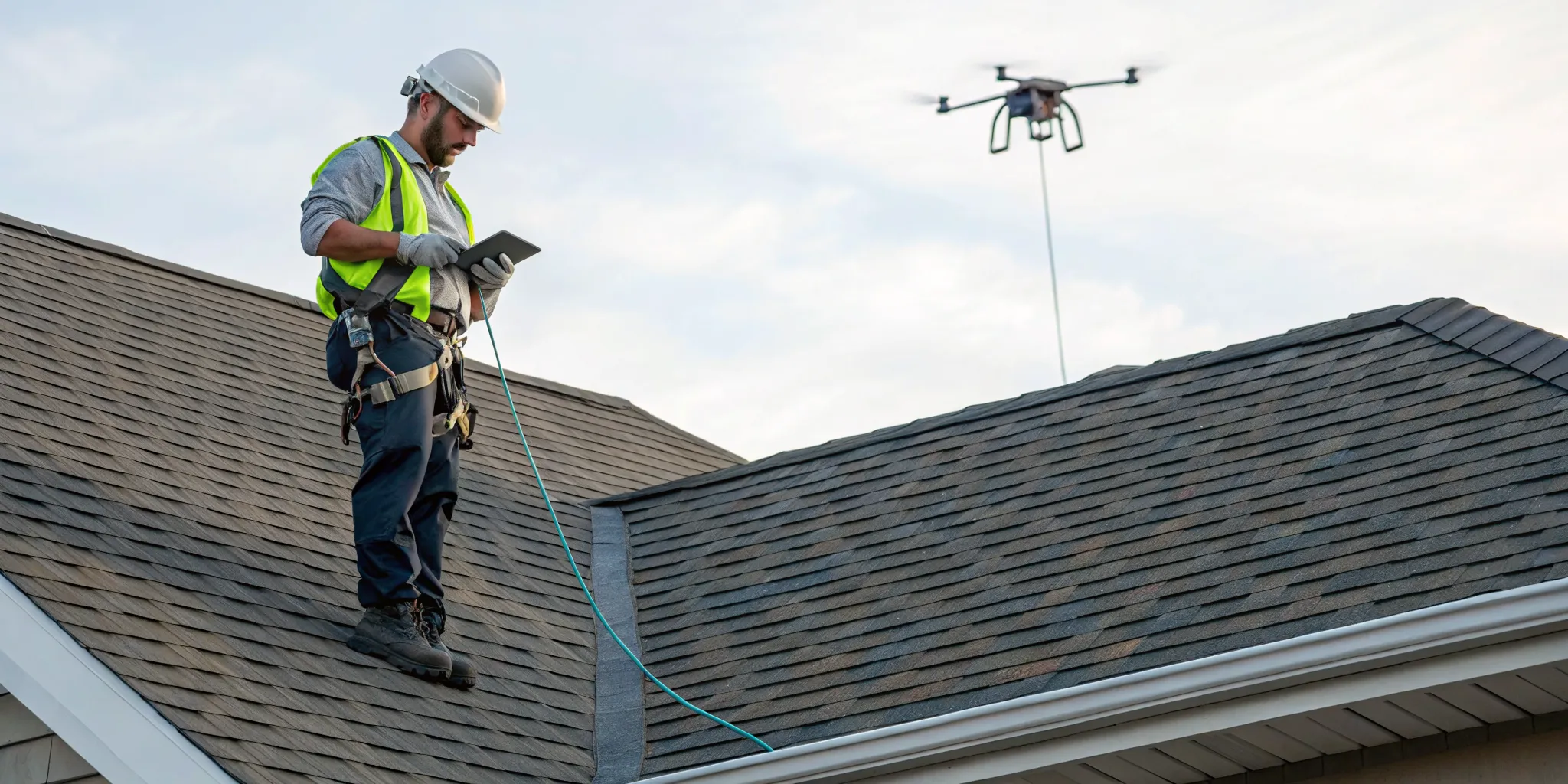
What roof inspector certification proves
Roof inspector certification is documentation that a person trained to a published standard, was tested against it, and can be held to it. It records a repeatable process, which is what a homeowner, an agent, a carrier or a court can actually rely on.
Start with a fact worth knowing before you spend money on any program: there is no federal license for roof inspectors. State requirements vary, and across much of the country nothing stops an untrained person from using the title. Accreditation is what fills that gap.
How to earn roof inspector certification
Start with what you already have
A high school diploma or equivalent is the usual entry point. Time in roofing, general construction, engineering or home inspection shortens the learning curve because you already know how assemblies go together and where they fail. None of it is required. Plenty of accredited members came from other trades entirely.
Complete the coursework
Training should cover roofing systems by material and slope, water behavior, common installation defects, the inspection sequence, report writing, and safety on residential and low-slope roofs. Ask any program you are considering for the syllabus. If it will not show you one, keep looking.
NRCIA delivers its training through the RoofGUARD™ program, which leads to the NRCIA Certified Roof Inspector designation. Members advance to Senior Roof Inspector at 500 completed inspections and Master Roof Inspector at 1,000.
Inspect under review
Classroom work does not survive contact with a real roof until you have done one and had it graded. NRCIA onboarding includes a practice inspection followed by a review with an instructor who reads your report the way a client would, then tells you where the reasoning is thin.
Keep it current
Materials change. Codes change. Insurance documentation standards change. Continuing education is what keeps a credential meaningful three years after you earned it.
How programs compare
Home inspection organizations such as InterNACHI offer roof modules inside a general home inspection curriculum. Those courses give a working overview of the roof as one system among many, which suits a generalist who inspects the whole house and refers out when something looks wrong.
NRCIA trains specialists. Every hour of the curriculum is about the roof, and the accreditation structure reflects that. Membership combines a program with a package. The program is the training accreditation. The package, offered as Silver, Gold, Platinum or Enterprise, sets the annual benefits.
Four programs are available:
- RoofGUARD™ for the core roof inspection accreditation
- ForensicGUARD™, the flagship, for cause-and-origin analysis and expert testimony
- E3GUARD™ for exterior elevated elements, meaning decks, balconies, walkways, patios and staircases, with state tracks including CA-SB721 and CA-SB326
- DisasterGUARD™ for insurance-related evaluations, added on top of an active ForensicGUARD or E3GUARD accreditation
The five-zone inspection
Members trained to the standard perform the LeakFREE® Check, which covers five zones: the interior, the attic, the exterior, the perimeter and the rooftop. Working all five in sequence is what separates an inspection from a look. Interior staining tells you a leak has happened. The attic tells you where water entered the deck. The perimeter and the exterior tell you how the roof meets the walls and where the water goes. The rooftop tells you the condition of the field, the flashing and the penetrations.
The deliverable is the LeakFREE® Roof Inspection Report, with photographs supporting each finding.
What a LeakFREE® certification is, and what it is not
Where a roof meets the published criteria, the accredited individual who performed the inspection can issue a LeakFREE® Roof Certification, generated and registered through InspectionPLUS®. A certificate produced outside that platform is not valid. It is issued by the person, never by a company.
The certification records that a specific roof, at a specific address, on a specific date, met the published LeakFREE® criteria. The term is set by the findings, the slope, the materials and the condition, to a maximum of ten years, and the expiration is printed as a date. It is never extended to close a sale. If repairs are performed by anyone other than an NRCIA member, re-inspection is required.
It is not insurance. It is not a service contract, and it does not promise that a roof will never leak. LeakFREE® is our federally registered trademark. Only NRCIA members can issue a LeakFREE® certification.
Across 6,460 member inspections nationwide, more than 66 percent of roofs either qualified for a LeakFREE® certification or could be repaired to qualify. That is the working reality of the credential: most roofs are in better shape than their owners fear, and the report says so in writing.
Review the RoofGUARD program and start accreditation
LeakFREE®, Forensic ROOF®, Mr. RoofCheck®, InspectionPLUS®, Today’s Inspection… Tomorrow’s Protection®, and Got Leaks?® are registered trademarks of Field Gate FLP, used by permission. RoofGUARD™, ForensicGUARD™, DisasterGUARD™, E3GUARD™, and Think Like a Raindrop™ are trademarks of Field Gate FLP.