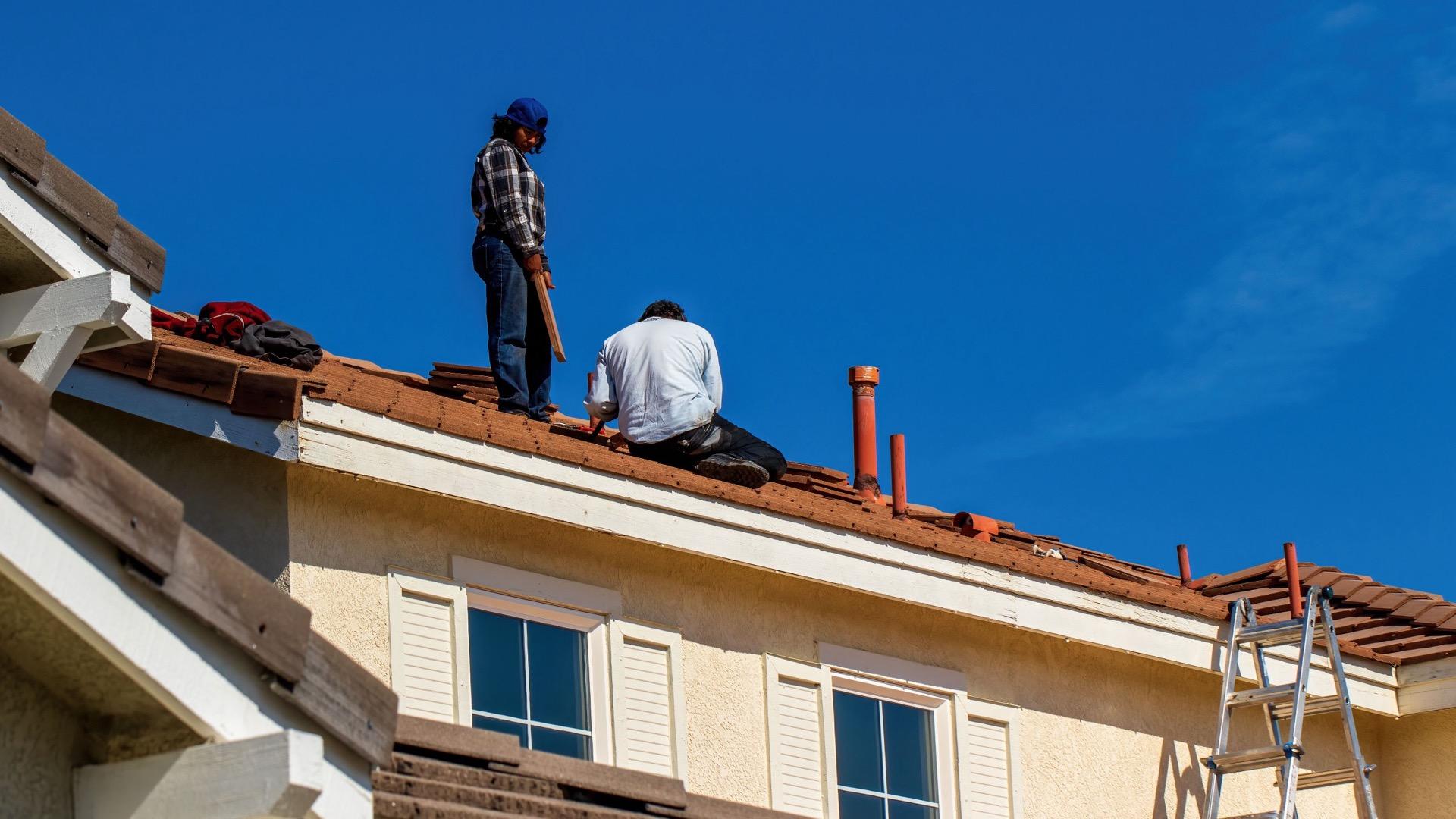
After a strong wind or rain storm, roof damage often shows up as something small and obvious. A few tiles are out of place. A cap piece from the top of the roof is lying halfway down the slope. A row of shingles has lifted. The natural move is to call a roofer and ask what it costs to fix what you can see.
For a property owner or a property manager watching costs, that feels efficient, but a storm damage roof inspection usually belongs first. The trouble is that a bid can only price the damage someone has already found, and the piece you can see from the driveway is rarely the whole story. The inspection answers a different question: what happened to this roof, and what does it need now? Once you have that answer in writing, every bid you collect is pricing the same problem.
Why the roof should be evaluated first
A bid is a price for a scope of work. An inspection is how the scope gets set. Take a tile roof where the wind lifted a few pieces and tossed them across the slope. Nobody knows yet whether tiles underneath are cracked, whether the underlayment is torn, or whether water has already reached the wood along the roof edge. Underlayment is the waterproof layer beneath the tiles or shingles, and on many roofs it is what actually keeps the water out. If the bid only covers resetting the loose tiles, damage below them can stay hidden until the next rain finds it.
NRCIA trains inspectors to Think Like a Raindrop™. That means following the water instead of stopping at the spot that caught your eye. Rain lands on the opening the wind created, runs downhill under the surrounding tiles, collects at the edge of the roof, and can reach the trim boards, the eaves, and eventually the walls or ceiling below. A good inspection follows that path from where the water lands to what it could damage, and it records each step along the way.
Water finds every weakness. We find it first™.
Timing matters too. Documentation made soon after a storm records what was there before weather, foot traffic, or a quick patch changes it. If you are thinking about an insurance claim, a one-page repair price lists the work someone wants to do. It does not describe the conditions, where they are, or what the photos show. Keep in mind that your insurance company decides coverage under your policy. An inspection report does not make that decision, and no inspector or contractor should promise you a claim outcome.
Common mistakes after a storm
- Approving a repair from a couple of phone photos. Pictures taken from the ground or sent by a tenant show the surface. They rarely show what is under it.
- Patching before anything is documented. If water is coming in, protecting the property comes first. Take photos and write down the storm date before temporary repairs go on, and tell the inspector about any tarp or patch so it is noted in the report.
- Waiting for a ceiling stain. By the time a stain shows, water has usually been traveling for a while. The stain also may not sit directly below the opening, because water moves along the roof and the framing before it shows up inside.
- Climbing up to look for yourself. Storm-damaged roofs can be slick, loose, and fragile. Leave the climbing to a trained professional.
- Treating every visit as the same service. A free look from a salesperson, a repair estimate, and a documented inspection are three different things. Ask which one you are getting.
What a good inspection report gives you
You do not need to know inspection techniques to judge the result. A useful inspection report gives you:
- A clear statement of the question the inspection answers and what it does and does not cover, agreed in writing before the visit.
- Photos labeled by location, so you and anyone you share the report with can see exactly where each condition is.
- A list of areas the inspector could not reach, and why, such as safety, access, or weather.
- An explanation of where water could travel through the damaged area and what it could reach.
- For each condition, whether it meets the standard the inspection is measured against or needs further evaluation.
- A plain-language summary that someone with no roofing background could read and reach the same conclusion.
How far a report goes depends on the type of inspection, so ask up front what yours will include.
NRCIA members who hold the required accreditation offer StormCHECK™, a non-invasive inspection that documents visible conditions and storm-related damage, usually before or apart from an insurance claim. The results come in a photo-based StormASSURANCE™ report you can share with your property manager, another contractor, or your insurance company. A StormCHECK is not a full roof inspection, a certification, a warranty, or a coverage decision. If you already have a leak inside, or you need to know what caused a condition, ask the member whether a more complete inspection fits your situation better. A full roof inspection under the NRCIA standard covers five zones: the interior, the attic, the exterior, the perimeter, and the rooftop, with the rooftop physically walked.
That consistency is the point of a documented standard. Two members inspecting the same storm-damaged roof should cover the same ground and explain what they found the same way. The inspector provides the expertise. The standard provides the anchor.
When the inspector also does repairs
Many NRCIA members also run roofing companies, and that is allowed. What protects you is how it is handled. A good professional tells you, before the inspection, if their company could be hired for the repair work. They finish the inspection before talking about repairs, and they keep sales language out of the report. You stay free to share the report with other contractors and compare prices. If someone pushes you to sign for repairs before you have seen the findings, slow down.
Questions to ask before authorizing work
Bring this list to the first phone call. A professional will be glad you asked.
- What question will this inspection answer, and will the scope be in writing before you arrive?
- Will you look beyond the obvious damage, including the roof edges and, if it is safe and accessible, the attic?
- Will the photos in the report be labeled by location?
- Will the report list any areas you could not reach and explain why?
- Could your company be hired for the repairs, and will you tell me that in writing before the inspection?
- Is a storm inspection the right fit for my situation, or do I need a more complete inspection because of a leak or a question about cause?
- Will the report explain the findings in plain language I can share with my insurance company, my property manager, or another contractor?
Your next step
If a storm has just passed and you can see damage, start with three things. First, write down the storm date and take photos from the ground. Second, if water is getting in, arrange temporary protection and keep a record of it. Third, schedule an inspection before you collect repair bids, so every price you receive is based on the same documented findings.
The sooner the roof is inspected, the more of the story the report can capture. Find an NRCIA member in your area and ask the questions above before you authorize any work.
LeakFREE®, Forensic ROOF®, Mr. RoofCHECK®, InspectionPLUS®, and Got Leaks?® are registered trademarks of Field Gate FLP, used by permission. RoofGUARD™, ForensicGUARD™, DisasterGUARD™, E3GUARD™, Think Like a Raindrop™, and Today’s Inspection Tomorrow’s Protection™ are trademarks of Field Gate FLP. StormCHECK™ and StormASSURANCE™ are trademarks of Field Gate FLP.
