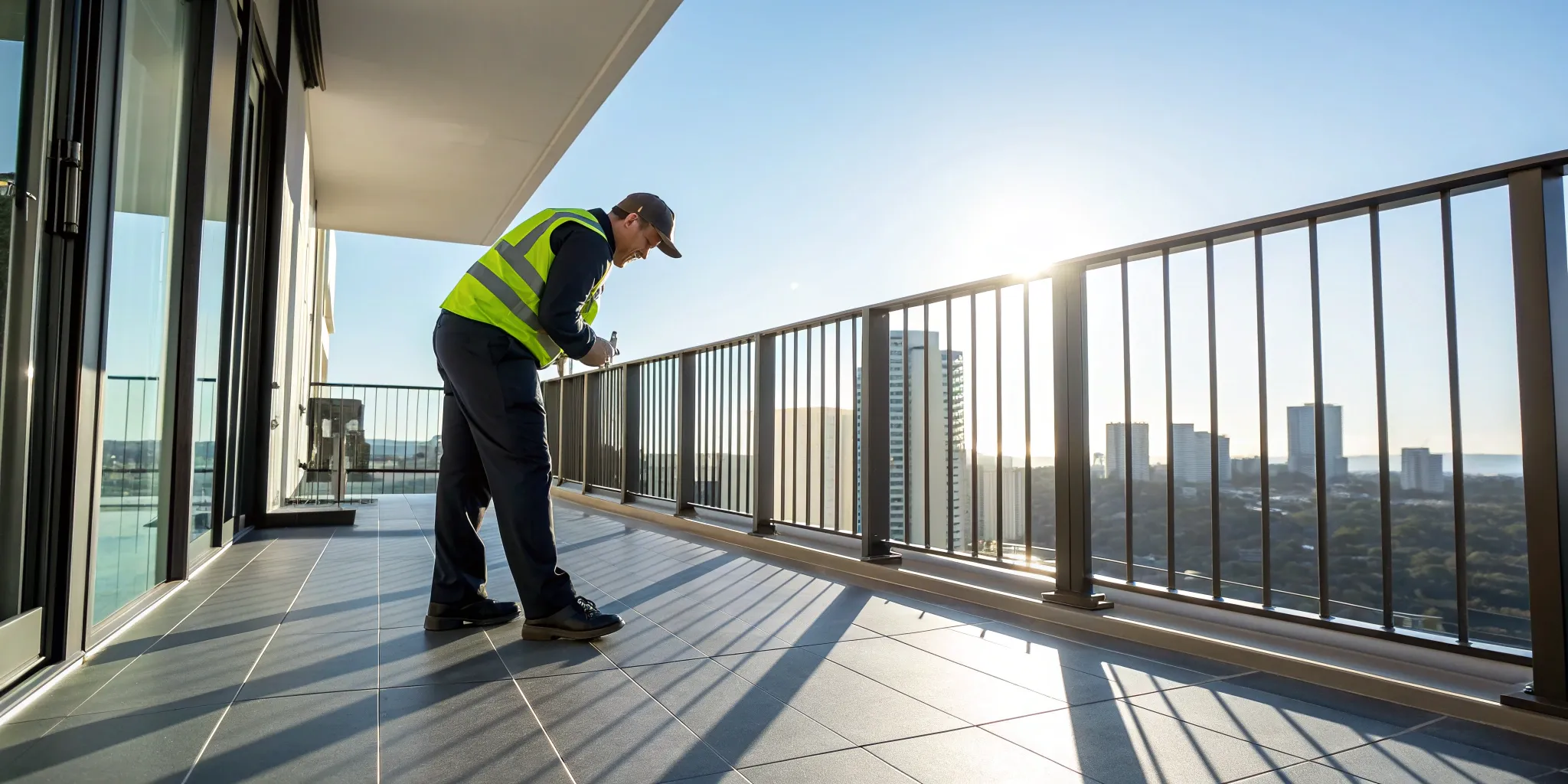
What SB 721 balcony inspections require
California SB 721 became law in 2018. It applies to buildings with three or more multifamily dwelling units and covers exterior elevated elements: balconies, decks, porches, stairways, walkways and entry structures that extend beyond the exterior walls, sit more than six feet above ground level, and rely in whole or substantial part on wood or wood-based products for structural support.
The inspector examines a statistically significant sample of those elements, evaluates load-bearing components and the waterproofing that protects them, and produces a written report for the building owner.
The deadline has passed
The initial inspection deadline was January 1, 2026. Re-inspection follows every six years.
If your building was not inspected by that date, the position now is straightforward: complete the inspection, complete any repairs identified, and get the report on file. Local enforcement agencies commonly cite penalties in the range of 100 to 500 dollars per day, and an unresolved case can result in a building safety lien. Neither improves with waiting.
Owners who did meet the deadline should diary the six-year date now, along with the repair records, because the next cycle will ask what happened in between.
Who is qualified to perform the inspection
SB 721 names four categories of qualified inspector:
- A licensed architect
- A licensed civil or structural engineer
- A contractor holding an A, B or C-5 license with a minimum of five years of experience on multistory wood-frame buildings
- A certified building inspector
Confirm the credential before you book. A general roofing or handyman qualification does not satisfy the statute, and an inspection performed by someone outside those categories does not close your obligation.
How SB 326 differs
SB 326 covers condominium and HOA properties under Civil Code section 5551. Its initial deadline was January 1, 2025, and its re-inspection cycle is nine years rather than six. The pool of professionals permitted to perform it is narrower.
Boards and managers running mixed portfolios should map which statute applies to which property before scheduling anything. The two are frequently confused, and an inspection performed to the wrong standard satisfies neither.
What happens when repairs are needed
Plan the calendar backwards from the report, not forwards from good intentions. Documenting findings, applying for permits and completing the work are three sequential processes, each with its own queue, and permit timelines vary widely between jurisdictions. Buildings likely to need structural repair should begin the cycle well ahead of their next deadline rather than at it.
For inspectors
NRCIA trains and accredits members through E3GUARD™, the program covering exterior elevated elements: decks, balconies, walkways, patios and staircases. It carries state tracks including CA-SB721 and CA-SB326, and it requires no prerequisite program. Members who already hold roofing accreditation add it as an adjacent discipline. Members coming from architecture, engineering or qualifying contractor backgrounds add the method and the reporting standard.
Demand did not end with the deadline. Six-year and nine-year cycles turn this into recurring work across a very large California housing stock, and buildings that missed the initial date still need inspecting.
Find an accredited NRCIA inspector near you for an exterior elevated element inspection: /member-directory/
LeakFREE®, Forensic ROOF®, Mr. RoofCheck®, InspectionPLUS®, Today’s Inspection… Tomorrow’s Protection®, and Got Leaks?® are registered trademarks of Field Gate FLP, used by permission. RoofGUARD™, ForensicGUARD™, DisasterGUARD™, E3GUARD™, and Think Like a Raindrop™ are trademarks of Field Gate FLP.