What the Law Requires
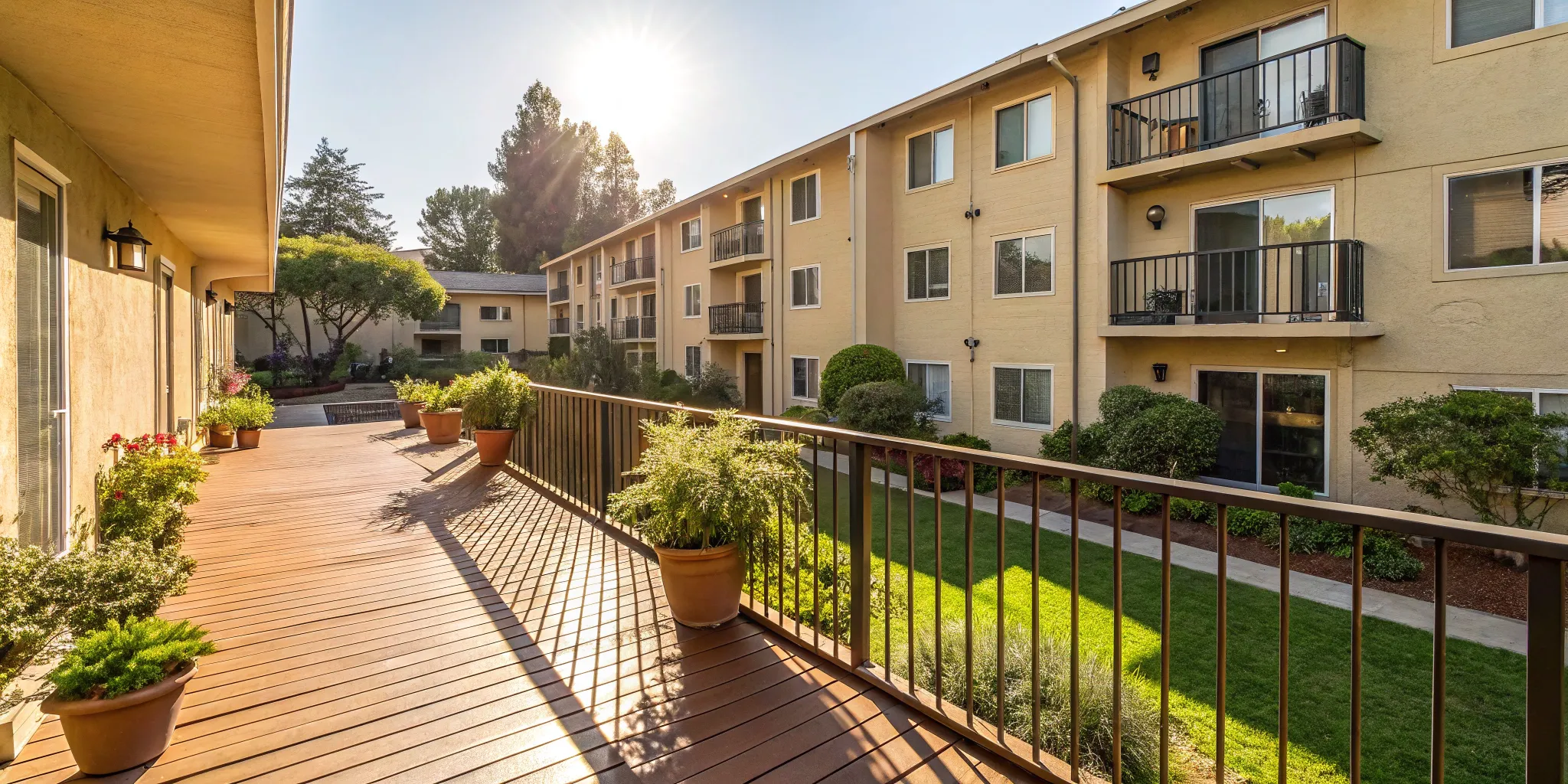
A deck can look sound from the courtyard and be failing at the wall. Water tracks behind the ledger, sits against untreated framing, and takes years to show itself. By the time a board feels soft underfoot, the connection holding the structure to the building has usually been compromised for a long while. A deck inspection for apartments is the process that finds that condition before anyone else does.
In California, this is a legal duty with dates attached. Elsewhere it lives in local building code and in your obligation to keep common areas safe. Either way, the exposure runs to the owner.
SB 721: rental properties with three or more units
Senate Bill 721 covers exterior elevated elements on multifamily rental buildings with three or more units: balconies, decks, walkways, stairways, and landings more than six feet above ground that rely on wood framing.
The initial inspection deadline was January 1, 2026. That date has passed. If a building in your portfolio has never been inspected, it is out of compliance today, and the correct response is to schedule the assessment now rather than wait for a complaint or a claim.
After the initial inspection, re-inspection runs on a six-year cycle. Once a report is delivered, the law allows 120 days to obtain proposals and pull a permit for any required repair, then 120 days from permit issuance to complete the work. Emergency conditions have to be addressed immediately, including restricting access.
SB 326: condominium and HOA properties
Senate Bill 326 governs common interest developments. Its initial deadline was January 1, 2025, also passed, and re-inspection runs on a nine-year cycle tied to the association’s reserve study. The professional pool under Civil Code 5551 is narrower than SB 721’s, and the report goes to the association board.
Who is allowed to perform the inspection
SB 721 names a defined set of qualified inspectors. Any of the following may perform the assessment:
- A licensed architect
- A licensed civil or structural engineer
- A contractor holding an A, B, or C-5 license with at least five years of experience constructing multistory wood-frame buildings
- A certified building inspector, credentialed through a recognized program
A maintenance technician’s walkthrough, however diligent, does not satisfy the statute. Neither does a general handyman’s note. Confirm the credential before the visit, and keep a copy of it with the report.
What happens if you do not
Penalties are commonly cited at 100 to 500 dollars per day until the required repairs are completed, and a building safety lien may be recorded against the property with its associated costs. The larger exposure is civil. An injury on an element you were required to inspect and did not is a difficult case to defend.
What a Deck Inspection for Apartments Examines
A structural assessment works from the connection outward. Your on-site team can use the same sequence for routine checks between formal inspections.
The load path
Start under the deck. The ledger board is the component that fails most often and most catastrophically. It should be through-bolted or lagged, never nailed, with flashing above it and no staining, softness, or rust bleed at the fasteners. Check posts for plumb, proper anchorage to footings, and decay at the base where they meet concrete or soil. Check joists and beams for splits, sagging, and crushing at bearing points. Then walk the surface and feel for give.
Guardrails and stairs
Railings and stairs generate most of the injury claims. Take hold of each guardrail and push. Meaningful movement is a repair, not a note for next quarter. Verify that balusters are secure and spaced to prevent a fall through. On stairs, check tread level, riser consistency, and handrail attachment along the full run.
Signs of active deterioration
Look for discoloration, splintering, mold, and mildew. Probe suspect wood with a screwdriver. If it goes in easily or the fibers crumble, you have rot. Inspect every metal connector, screw, and nail for corrosion, particularly on coastal properties. Small holes and fine sawdust point to insects. Standing water and trapped debris are the conditions that create all of the above, so note them even when nothing has failed yet.
How Often to Inspect
Statutory cycles are a floor rather than a maintenance plan. Six years is a long time in a wet climate.
- Statutory: six years for SB 721 properties, nine years for SB 326 properties.
- Annual: a professional walkthrough, ideally in spring before heavy use.
- Quarterly: a documented visual check by your own staff against a fixed list.
- Event-driven: after significant storms, seismic activity, or any reported movement.
Structures past ten years of age deserve tighter intervals. So does anything that has already required repair.
Your Role as the Manager
You are not expected to perform structural engineering. You are expected to make the inspection happen, to give residents proper notice before an inspector needs access to a unit or balcony, and to act on what the report says.
Documentation is where most portfolios are weakest. Keep, for every elevated element: the inspection date, the inspector’s name and credential, the findings with photographs, the repairs performed, who performed them, and the completion date. That file is what demonstrates diligence if anything ever goes wrong. Inspection software makes the record easier to maintain and easier to produce years later.
When a routine check turns up a wobbly post, a stained ledger, or a cracked footing, stop assessing and call a qualified inspector. Restrict access to any element you suspect. Then budget honestly, treating inspection as a fixed annual operating cost and holding a reserve for the repairs that inspections find.
Where NRCIA Fits
NRCIA sets the standard and accredits the inspectors who apply it. The E3GUARD™ program covers exterior elevated elements, with state tracks including CA-SB721 and CA-SB326, so accredited members work to a published, consistent methodology across your portfolio.
Find an accredited NRCIA inspector and schedule your inspection.
LeakFREE®, Forensic ROOF®, Mr. RoofCheck®, InspectionPLUS®, Today’s Inspection… Tomorrow’s Protection®, and Got Leaks?® are registered trademarks of Field Gate FLP, used by permission. RoofGUARD™, ForensicGUARD™, DisasterGUARD™, E3GUARD™, and Think Like a Raindrop™ are trademarks of Field Gate FLP.