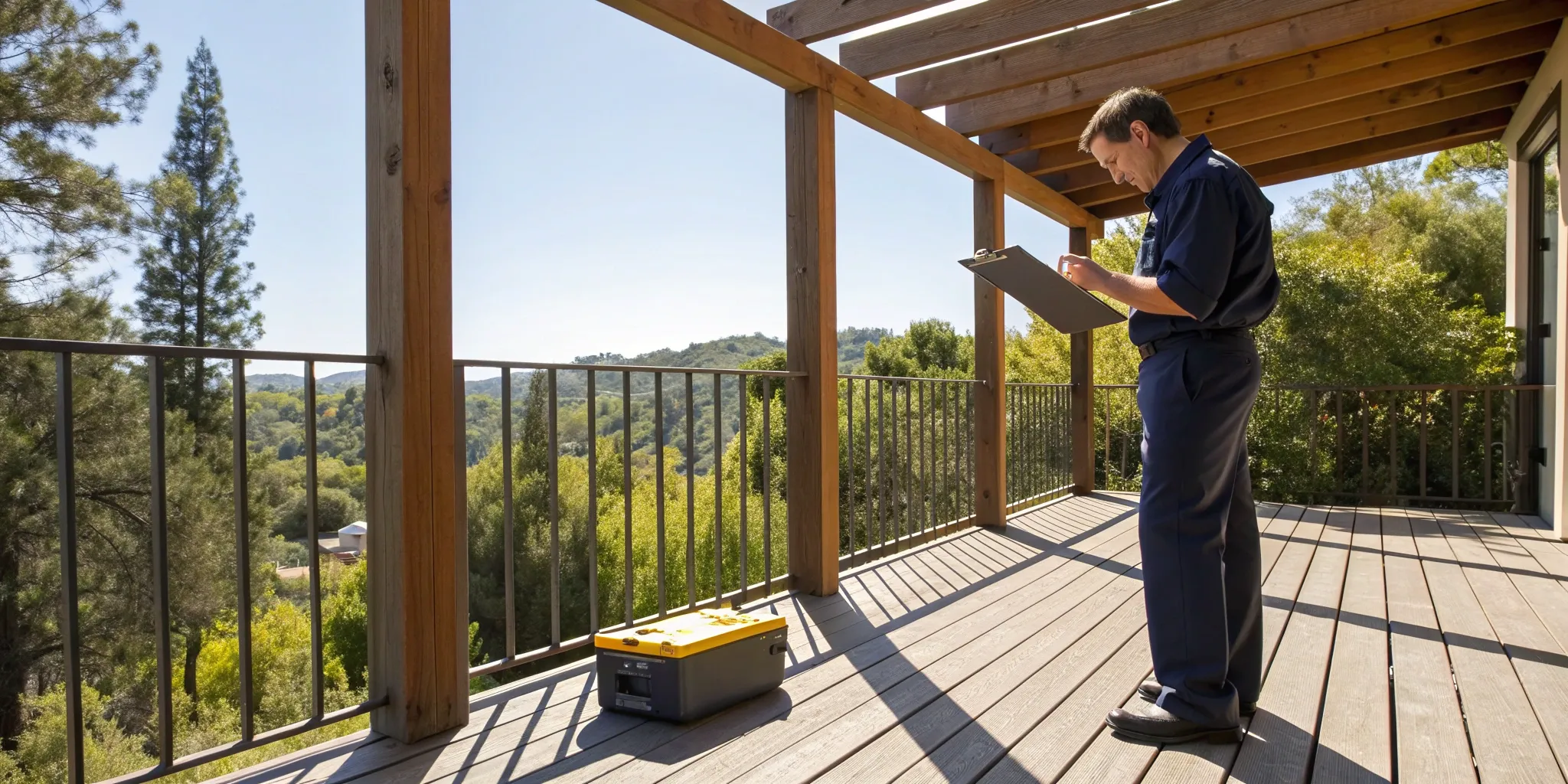
What California SB 721 requires
California SB 721 requires periodic safety inspections of exterior elevated elements on multifamily rental buildings with three or more dwelling units. A California SB 721 deck inspection covers balconies, decks, porches, stairways, walkways and entry structures that sit more than six feet above ground level and depend on wood framing for support. The inspector examines the load-bearing components and the waterproofing that protects them, then issues a written report to the owner.
The law came out of a 2015 balcony collapse in Berkeley that killed six people. The investigation traced the failure to dry rot in framing that had been taking on water for years behind an intact-looking surface. SB 721 exists so that hidden decay gets found on a schedule rather than during an occupancy.
The deadline has passed
The initial inspection deadline under SB 721 was January 1, 2026. That date is behind us. Buildings that have not been inspected are out of compliance now, and the clock on enforcement is already running.
After the initial inspection, the cycle repeats every six years. An owner who completed an inspection in 2025 is due again in 2031. An owner who has not started is not exempt and has no grace period to point to. The practical step is to schedule the inspection, get the report in hand, and begin the permit timeline on any corrective work it identifies.
SB 721 is frequently confused with SB 326, which is a separate law covering condominium and homeowner association buildings. SB 326 carried a January 1, 2025 deadline, repeats every nine years, and works through Civil Code section 5551 with a narrower pool of qualified professionals. If your building is a condominium association rather than a rental property, SB 326 governs. Owners of mixed portfolios end up managing both calendars.
Which buildings need a California SB 721 deck inspection
SB 721 reaches residential buildings with three or more multifamily dwelling units. Two conditions define a covered element:
- It extends beyond the exterior wall and is more than six feet above ground level.
- It is supported substantially by wood or wood-based products, and it carries human occupancy.
That takes in balconies, decks, porches, stairways, landings, elevated walkways and the railings attached to them. The waterproofing assembly is inspected alongside the structure, because moisture reaching the framing is what produces the failures the law was written to prevent. A concrete podium deck with no wood in the load path generally falls outside the definition, but that judgment belongs to the inspecting professional, not to a leasing office.
Who can perform a California SB 721 deck inspection
The statute limits the work to four categories of professional:
- A licensed architect
- A licensed civil or structural engineer
- A contractor holding an A, B or C-5 license with at least five years of experience in multistory wood-frame construction
- A certified building inspector credentialed by a recognized state, national or international association
A general handyman does not qualify, and neither does a contractor whose license class falls outside that list. The law also separates the two roles: the person who inspects the elements cannot be the person who performs the resulting repairs. That separation exists to keep the finding independent of the fee for fixing it.
Accreditation sits on top of the statutory license rather than replacing it. NRCIA trains and accredits members through E3GUARD™, its program for exterior elevated elements, which includes a CA-SB721 state track built around the specific requirements of this statute. A member who completes it holds the designation NRCIA E3GUARD™ Accredited Specialist. When you hire, confirm both things: the license category the statute demands, and the training that says the professional has studied this particular law.
What the report has to contain
The report from a California SB 721 deck inspection is the compliance record, and a thin one creates problems later. It should identify the elements inspected and the method used, including any destructive or invasive testing and where samples were taken. It should state the present condition of each element, describe the condition of the waterproofing, and give an expectation of remaining service life. Photographs belong with the findings. Where further evaluation is needed, the report should say so and say why.
Keep the report for twelve years, which covers two inspection cycles. Local code enforcement can ask for it, and a buyer or lender will ask for it during a sale or refinance. Filing it properly is the cheapest part of this entire process.
Repair timelines after the report
What happens next depends on the severity of the finding.
An immediate threat to safety
If the inspector identifies a condition that endangers occupants, the inspector must report it to the owner and to the local enforcement agency within 15 days. The owner then has to prevent access to the affected element right away and notify the residents who use it. Emergency repairs proceed under the local jurisdiction’s direction. Blocking a stairway or a balcony is disruptive, and it is far less disruptive than the alternative the law was written after.
A non-emergency finding
For conditions that need correction but pose no immediate danger, the owner has 120 days from receiving the report to apply for the necessary permits, and another 120 days from permit issuance to complete the work. Extensions are possible where the local agency grants them. Start collecting contractor quotes the week the report arrives, because the permit clock does not pause while you shop.
What non-compliance costs
Enforcement penalties are commonly cited at 100 to 500 dollars per day for each day a property remains out of compliance. Daily accrual is what makes this expensive. A problem deferred for a season becomes a five figure number without anyone deciding to spend it.
Beyond fines, a local jurisdiction can record a building safety lien against the property after a 30 day notice period if required repairs go unmade. A lien complicates a sale, a refinance and an insurance renewal, and it stays visible until it is cleared. The larger exposure is civil. An injury on an element that a required inspection would have flagged is a difficult case to defend.
How to prepare for a California SB 721 deck inspection
- Pull your records. Original construction drawings, permits for prior repairs, waterproofing and sealant history, and any earlier inspection reports.
- Walk the property yourself. Look for soft or spongy decking, staining below balconies, rust at connectors, separation where a deck meets the wall, loose railings, and standing water after rain.
- Clear the elements. Furniture, planters, storage and screening block access to the exact connections the inspector needs to reach.
- Notify residents. Written notice ahead of time reduces access problems on the day.
- Budget before the report lands. Set aside funds for corrective work now, so the 120 day permit window is a scheduling question rather than a financing one.
Water is what caused the failure behind this law, and water reaches the framing through joints, flashings and coatings that stopped shedding it. Think Like a Raindrop™. The same discipline that finds a roof leak finds a rotting ledger connection.
Schedule your inspection now
The California SB 721 deck inspection deadline has passed, and every additional day adds exposure. Find an accredited NRCIA inspector near you in the member directory and get your exterior elevated elements on the record.
LeakFREE®, Forensic ROOF®, Mr. RoofCheck®, InspectionPLUS®, Today’s Inspection… Tomorrow’s Protection®, and Got Leaks?® are registered trademarks of Field Gate FLP, used by permission. RoofGUARD™, ForensicGUARD™, DisasterGUARD™, E3GUARD™, and Think Like a Raindrop™ are trademarks of Field Gate FLP.