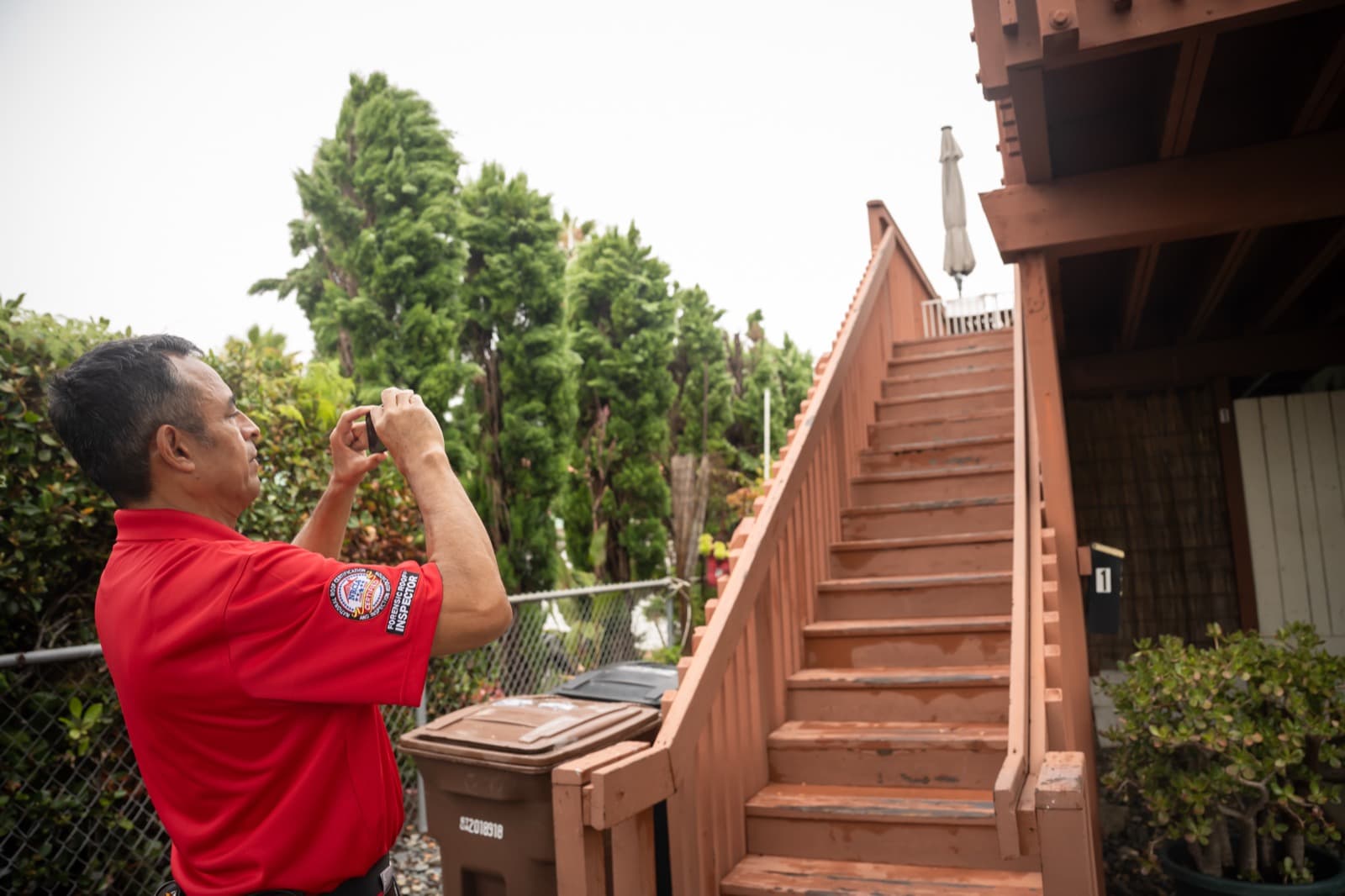
Where SB 721 compliance stands now
SB 721 compliance is no longer a date on the horizon. California required the initial inspection of exterior elevated elements on rental buildings of three or more units by January 1, 2026. AB 2579 pushed that date out by a year back in 2024, and it has now passed.
If your buildings were inspected, your next obligation is already on the clock. SB 721 requires re-inspection every six years from the date of the inspection. If they were not inspected, the exposure is live and the remedy is straightforward. Book the inspection, get the written report, put the repairs on a schedule.
What SB 721 actually covers
Exterior elevated elements are the parts of a building that people stand on above ground level and that rely on wood framing for support. Balconies. Decks. Landings. Stairways. Elevated walkways. The statute, California Health and Safety Code section 17973, focuses on load-bearing components and the waterproofing that protects them, because water is what turns a sound balcony into a failing one.
The inspection covers a representative sample of the elements on the property. The resulting report goes to the building owner with findings on condition, remaining useful life, and any repairs the inspector considers necessary.
Two timelines matter to owners and managers, and they are not the same law:
- SB 721 applies to rental buildings with three or more units. Initial inspection was due January 1, 2026. Re-inspection every six years.
- SB 326 applies to condominium and HOA properties under Civil Code section 5551. That deadline was January 1, 2025. Re-inspection every nine years, and the pool of professionals qualified to perform it is narrower.
Who is qualified to inspect
SB 721 names the professionals who may perform the inspection: a licensed architect, a licensed civil or structural engineer, a contractor holding an A, B or C-5 license with at least five years of experience in multistory wood-frame construction, or a certified building inspector. Credentials do not carry across from one statute to the other. Confirm the qualification in writing before you book.
What the amendments changed
The rules have shifted since SB 721 took effect in 2018, and the changes favor owners.
The inspector who performs the inspection is no longer barred from performing the restorative repairs that follow. Many inspectors do not offer repair work at all, so treat this as a possibility rather than an expectation. Where it is available, it removes a handoff and shortens the timeline between finding a problem and fixing it.
The compliance clock also reset once, through AB 2579. Planning your portfolio around a second extension is a poor bet.
What waiting costs
Local building departments can assess civil penalties commonly cited at 100 to 500 dollars per day for an uncorrected violation, and an unpaid assessment can attach to the property as a building safety lien. Those numbers accrue quietly and they accrue per building.
The practical costs land sooner. Qualified inspectors are a limited pool. Contractors who repair elevated elements are a smaller one. An owner who books in a slow month gets a schedule that works. An owner who books after a tenant complaint or an injury claim takes whatever is left.
There is a third cost that never shows up on an invoice. An unfound break in a balcony’s waterproofing keeps working. Water moves into the framing, the framing softens, and the repair that would have been a membrane replacement becomes a structural rebuild.
Building a compliance record you can defend
- Inventory the elements. Count the balconies, stairs, landings and walkways on every building in the portfolio. You cannot schedule what you have not listed.
- Confirm which statute applies. Rental buildings of three or more units fall under SB 721. Condominium associations fall under SB 326.
- Verify the inspector’s credentials against the statute before work begins, and keep that verification with the file.
- Keep the report. The written report is your compliance record. Store it where a lender, a buyer, an insurer or a city inspector can be handed it the same day it is requested.
- Calendar the next cycle. Six years for SB 721, nine for SB 326, counted from the inspection date, not from the deadline.
Where NRCIA fits
NRCIA sets the standard for exterior elevated element inspection through E3GUARD™, our accreditation program covering decks, balconies, walkways, patios and staircases. Accredited specialists train against state-specific tracks, including CA-SB721 and CA-SB326, so the inspection is scoped to the statute that governs the building rather than to a generic checklist.
NRCIA trains and accredits those members. The members perform the inspections and issue the reports. Think Like a Raindrop™ is how we teach them to look at an elevated element: water finds every weakness, so we find it first.
Book the inspection
Find an accredited NRCIA member who meets the SB 721 qualification standard in your area through the NRCIA member directory.
LeakFREE®, Forensic ROOF®, Mr. RoofCheck®, InspectionPLUS®, Today’s Inspection… Tomorrow’s Protection®, and Got Leaks?® are registered trademarks of Field Gate FLP, used by permission. RoofGUARD™, ForensicGUARD™, DisasterGUARD™, E3GUARD™, and Think Like a Raindrop™ are trademarks of Field Gate FLP.