
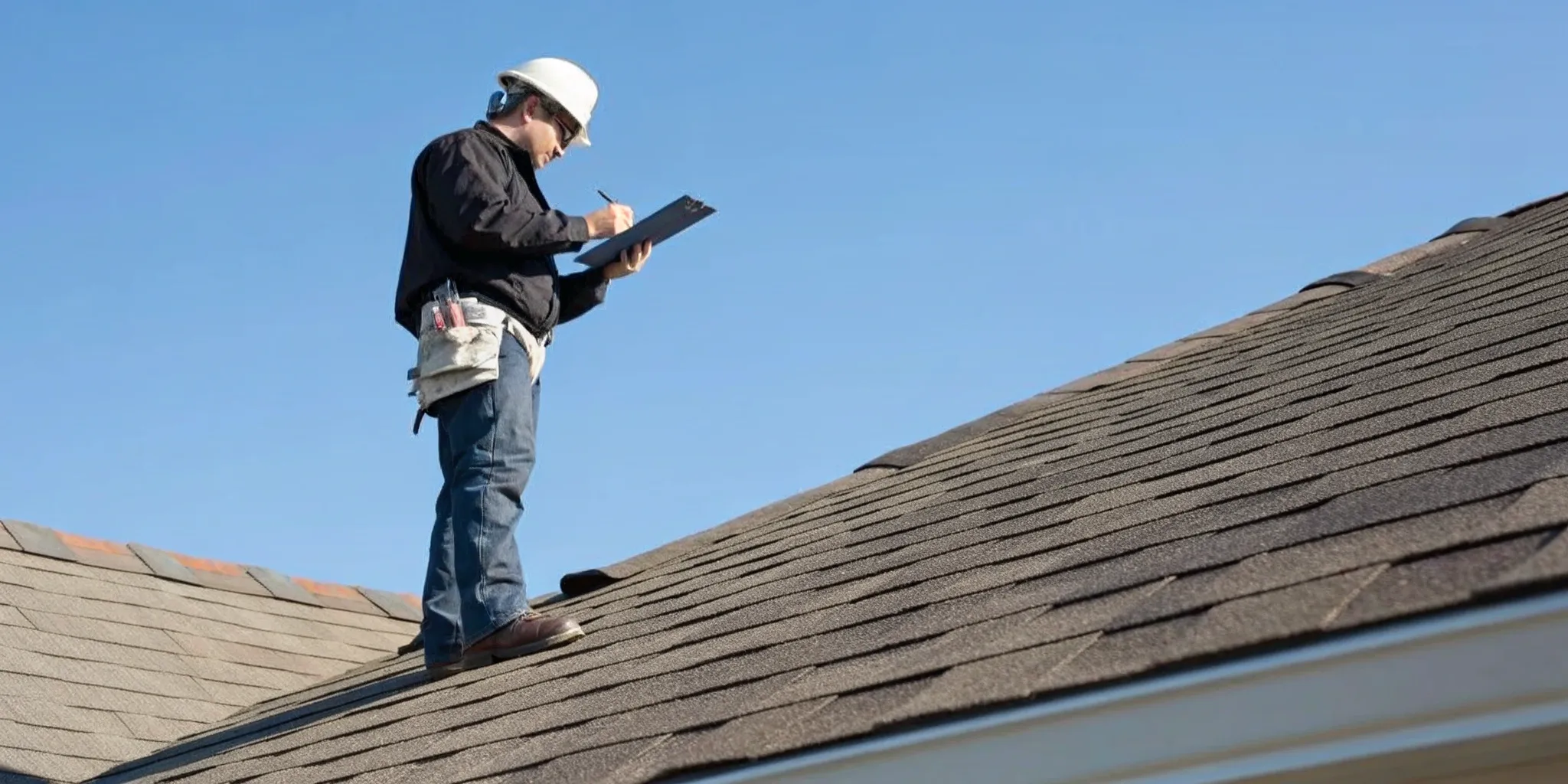
Roof inspection for insurance claim: what it has to prove
A roof inspection for insurance claim purposes has one job. It has to establish what failed, when it failed, and why. Your carrier will send an adjuster, and that adjuster works for the carrier. An independent inspection puts a dated, photo-backed record of the same roof alongside theirs, written by someone with no stake in the settlement figure.
Most denials turn on a single question. Was the damage caused by a covered event, or by age and deferred upkeep? A repair bid does not answer that question. A written inspection report does.
What an accredited inspector examines
NRCIA members work a five-zone LeakFREE® Check: interior, attic, exterior, perimeter and rooftop. Each zone answers something the others cannot.
- Interior. Ceiling and wall staining, the shape and spread of the stain, how recent it looks.
- Attic. Damp insulation, rusted fasteners, daylight at penetrations, staining on the underside of the deck.
- Exterior. Field condition of shingles, tile or membrane. Granule loss, bruising, cracking, lifted courses.
- Perimeter. Gutters, downspouts, drip edge, fascia, and the ground line where displaced granules collect.
- Rooftop. Flashing at chimneys, vents, skylights and valleys, plus every penetration and seal.
Walking all five zones is what lets an inspector connect a stain in a bedroom to a cracked vent boot forty feet away. Water travels. The entry point is rarely directly above the drip.
Telling storm damage from wear and tear
Adjusters are trained to separate sudden loss from gradual deterioration, because policies cover the one and exclude the other. An accredited inspector documents the same distinction.
Hail leaves circular bruising and displaced granules, usually with matching strikes on soft metals like vents, gutters and window wraps. Wind lifts and creases shingles along a consistent direction, breaking the seal strip. Age looks different. Brittle edges, even granule loss across a whole slope, split tabs with no impact pattern anywhere nearby.
Honest documentation of existing wear does not weaken your position. It makes the storm-related portion much harder to dispute.
What belongs in the report
A roof inspection for insurance claim purposes is judged entirely on the document it produces. At a minimum that document should carry:
- Date of inspection, date of the weather event, and the property address.
- Photographs labeled by location and by defect, wide shot and close shot.
- Damage described in measurable terms: strikes per test square, hail size where it can be determined, length of lifted course.
- A stated cause for each finding, and a plain note where cause cannot be determined.
- Roof type, approximate age, slope, and current service condition.
- Repair scope broken out by material, labor, permits and disposal.
A LeakFREE® Roof Inspection Report is built this way. If repairs bring the roof back to the published criteria, the member who performed the inspection can issue a LeakFREE® Roof Certification through InspectionPLUS®. That certification records the condition of a specific roof on a specific date. It is not insurance, and it makes no promise about how the roof will perform later.
Choosing someone you can put in front of an adjuster
There is no federal license for roof inspectors. A contractor license covers contracting work, not inspection method, so credentials do the sorting.
NRCIA accredits individuals, never companies. A Certified Roof Inspector has completed RoofGUARD™ training. Members who handle insurance-related evaluations hold DisasterGUARD™ accreditation on top of forensic training, and cause-and-origin work belongs to ForensicGUARD™ members. A roof inspection for insurance claim work sits closer to forensic practice than to a sales visit, so ask which accreditation is coming to your house.
Two things should end a conversation early. Anyone offering to absorb your deductible is proposing something illegal in most states. Anyone promising a covered outcome before walking the roof is selling, not inspecting.
If the claim comes back denied
Ask for the denial in writing with the specific policy language cited. Read what it actually says. Roof age, a named exclusion and lack of maintenance are the three usual grounds, and each is answered differently.
Then get a second set of eyes. An independent report from an accredited member gives you what the adjuster’s file does not have: a neutral third-party assessment with its own photographs and its own reasoning. Submit it as a supplement, with a short cover letter tying each finding to the language the carrier cited. Stay factual. Adjusters respond to documentation, not to volume.
What to have ready before anyone climbs a ladder
- Prior inspection reports and any existing certification.
- Dated receipts for maintenance and past repairs.
- Photographs of the roof from before the event, including phone photos from a listing or a family gathering.
- The date and time of the storm, plus any local weather reporting for it.
- Your declarations page, so you know your deductible and your exclusions going in.
A documented history is the cheapest advantage a property owner can hold. Across 6,460 member inspections nationwide, more than 66 percent of roofs either qualified for a LeakFREE® certification or could be repaired to qualify. Knowing which side of that line your roof sits on before a storm is worth more than any argument after one.
Find an accredited NRCIA inspector near you
LeakFREE®, Forensic ROOF®, Mr. RoofCheck®, InspectionPLUS®, Today’s Inspection… Tomorrow’s Protection®, and Got Leaks?® are registered trademarks of Field Gate FLP, used by permission. RoofGUARD™, ForensicGUARD™, DisasterGUARD™, E3GUARD™, and Think Like a Raindrop™ are trademarks of Field Gate FLP.

