
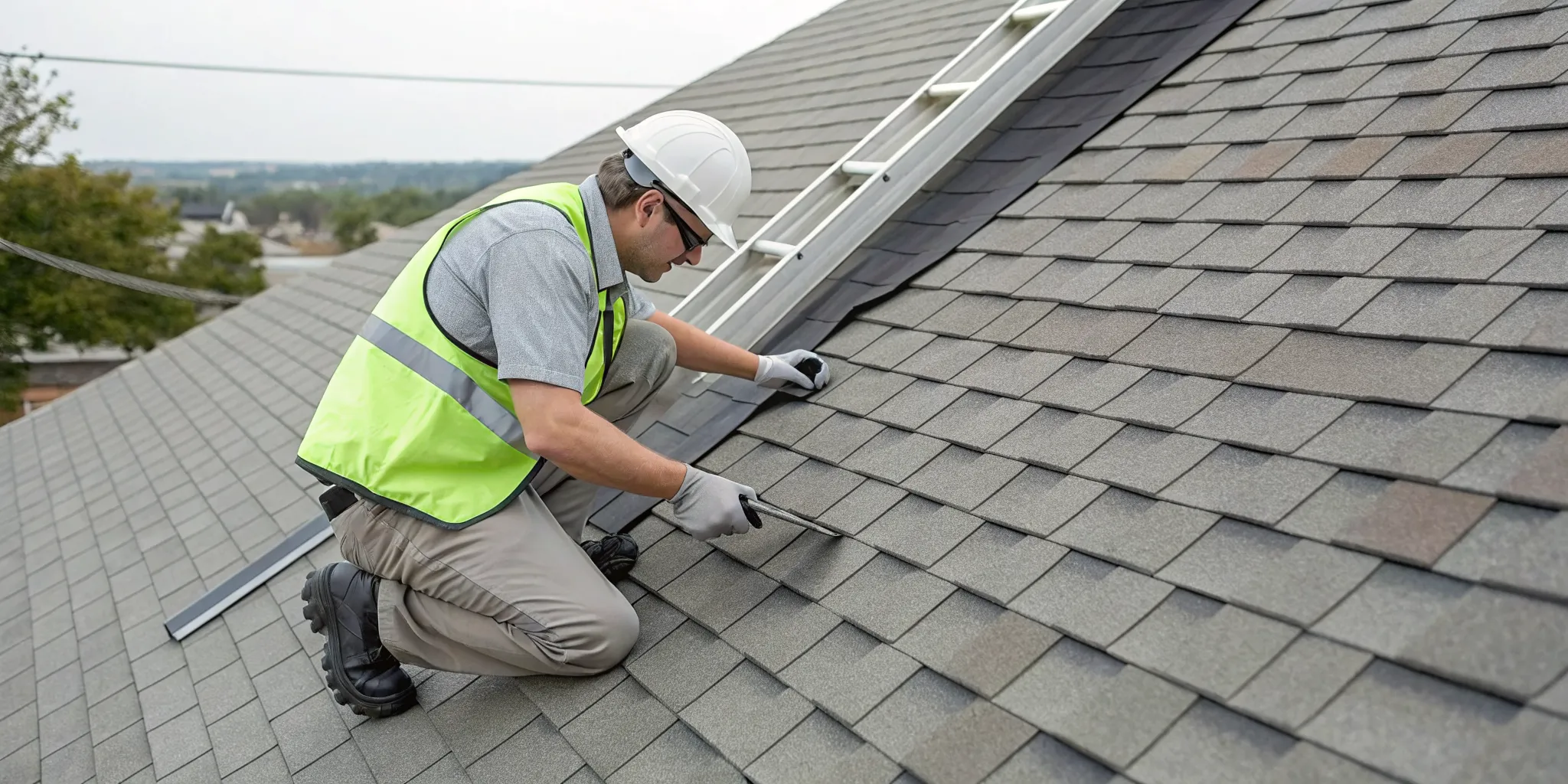
What a roof certification for insurance actually is
Your carrier asked for a document you may never have needed before. A roof certification for insurance is a dated record from a qualified inspector stating that a specific roof, at a specific address, on a specific day, met a published set of criteria. It names the materials, the condition, the repairs made to bring it up to standard, and a term.
That last part is where most confusion starts. A certification is a record of condition on a date. It is not coverage, and it does not replace your policy.
Why carriers ask for one
Insurance is the business of pricing risk, and the roof is the single component most likely to turn a rainstorm into a claim. Water gets into a wall cavity and the repair bill stops being a roof bill. It becomes drywall, insulation, flooring, framing and remediation.
So carriers want a current read on the roof before they write or renew, particularly once a roof passes fifteen years. Age alone is a blunt instrument. A well maintained twenty-year-old roof can be in better shape than a neglected eight-year-old one. A certification replaces the guess with a documented condition report from someone trained to produce it.
Some carriers ask for a certification. Some lenders do. Some do neither. Read your own renewal notice or loan conditions, and ask the underwriter what form they want, because the requirement is theirs and not a legal one.
What the inspection covers
NRCIA has set the standard for roof inspection and certification since 1995. NRCIA does not inspect roofs. Accredited members do, and they work a defined process rather than a walk-around.
An NRCIA member performs a LeakFREE® Check across five zones:
- Interior. Ceilings, walls and stains that point to water that already got in.
- Attic. Decking from below, insulation, ventilation, daylight where there should be none.
- Exterior. Field material, condition, granule loss, cracking, lifted or missing pieces.
- Perimeter. Edges, gutters, downspouts, drainage away from the structure.
- Rooftop. Flashings, penetrations, transitions, seams and every place two surfaces meet.
Findings go into a LeakFREE® Roof Inspection Report. Where the roof meets the published criteria, the accredited individual who performed the inspection issues a LeakFREE® Roof Certification, generated and registered through InspectionPLUS®. A certificate produced outside that platform is not valid. LeakFREE® is our federally registered trademark. Only NRCIA members can issue a LeakFREE® certification.
What the certification does not do
Be clear on the limits before you hand the document to anyone. A LeakFREE® Roof Certification is not insurance. It is not a service contract. It does not promise the roof will never leak, and no honest inspector will tell you otherwise. Weather does what it does, and a hailstorm three months after an inspection is a new event.
What the certification gives you is a defensible, dated, standardized record of condition, produced the same way in every state, by someone whose training was tested against a published standard.
How long it lasts
The term is set by the findings: the slope, the materials, the condition of the system. It runs to a maximum of ten years, and the expiration is printed as a date so nobody has to interpret it. A term is never stretched to help close a sale.
One trigger is worth writing down. If repairs are performed on the roof by anyone other than an NRCIA member, the roof needs to be re-inspected. Work done outside the standard cannot be assumed to meet it.
What it costs
NRCIA sets the standard and does not set member prices. What a certification inspection costs you depends on roof size, slope, complexity, the materials involved, your region, the term being considered, and the purpose behind the inspection. A steep tile roof with six transitions and three skylights is a different job from a single-plane composition roof on a ranch house.
Ask for the fee in writing, ask what the report includes, and ask whether a re-inspection after repairs is priced separately. Get that answer before the ladder comes off the truck.
If the roof does not qualify on the day
A roof that falls short is not a dead end. The report tells you exactly what is standing in the way, usually flashing, sealant, a handful of damaged pieces or a drainage problem. You hire whoever you want to make the corrections. Then the roof is re-inspected, and if it now meets the criteria, the certification is issued.
Most roofs get there. Across 6,460 member inspections nationwide, more than 66 percent of roofs either qualified for a LeakFREE® certification or could be repaired to qualify.
Getting ready for the appointment
- Clear the perimeter and unlock gates so the ladder can be set safely.
- Make sure the attic hatch is reachable and not blocked by storage.
- Pull your paperwork: installation date, permits, past repair invoices, any manufacturer warranty documents.
- Secure pets, and plan to be home so you can walk the findings at the end.
Have the report sent to you directly, not routed through anyone with something to sell you. An inspection whose purpose is a sales lead is a different product from a condition assessment.
Find an accredited NRCIA inspector near you in the member directory.
LeakFREE®, Forensic ROOF®, Mr. RoofCheck®, InspectionPLUS®, Today’s Inspection… Tomorrow’s Protection®, and Got Leaks?® are registered trademarks of Field Gate FLP, used by permission. RoofGUARD™, ForensicGUARD™, DisasterGUARD™, E3GUARD™, and Think Like a Raindrop™ are trademarks of Field Gate FLP.

