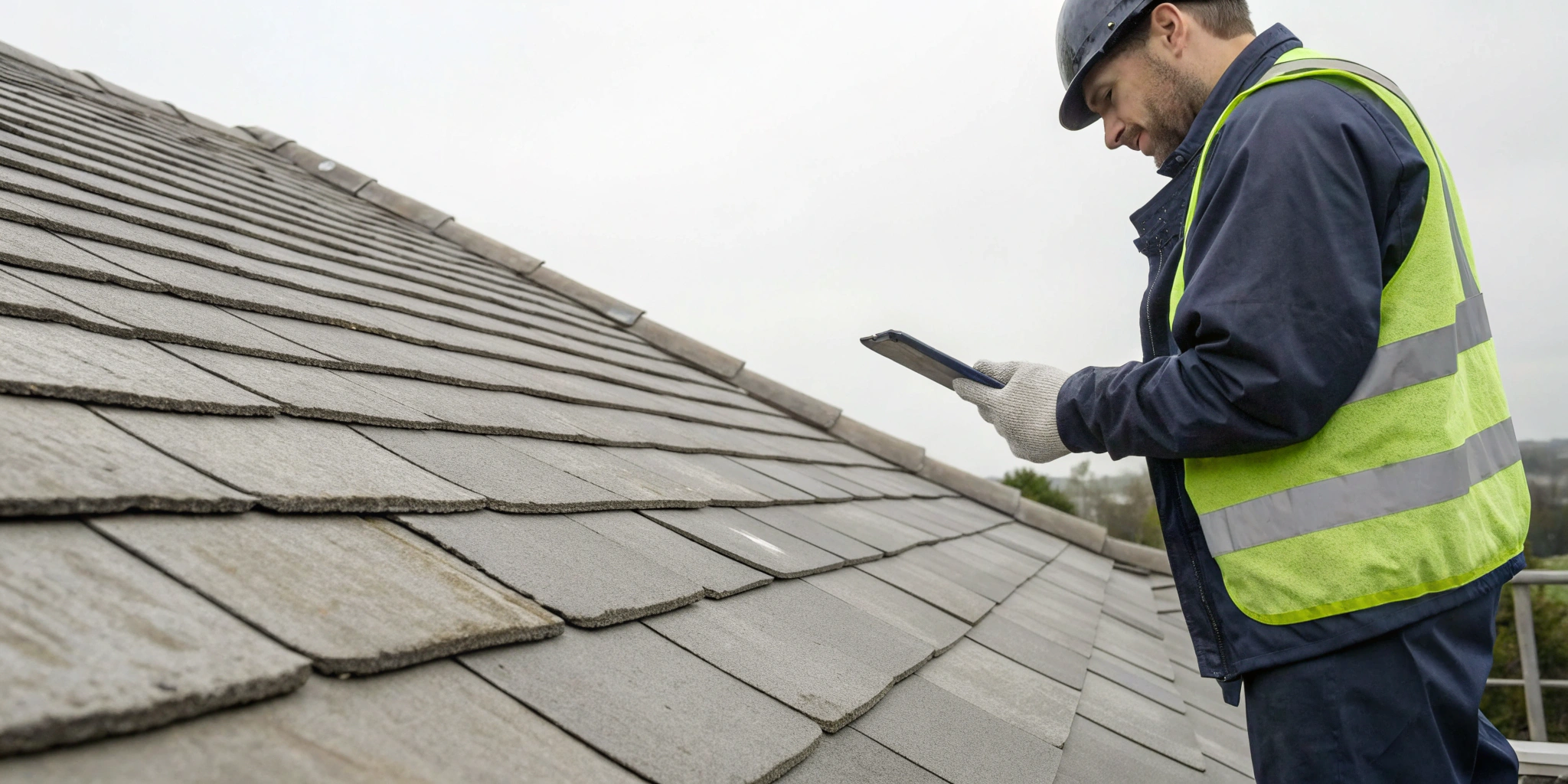
What a Storm Damage Roof Assessment Report Is
A storm damage roof assessment report is a written record of a roof’s condition after a weather event, produced by a trained inspector who was on the roof. It states what was found, where, how severe it is, what caused it, and what the roof needs. Photographs and measurements support each finding.
That is a different document from a contractor’s estimate. An estimate is a price to perform work. An assessment report is evidence. When a carrier questions whether damage came from the storm you named or from ten years of wear, the report is the thing that answers.
What the Inspector Is Looking For
From the ground, a roof that lost its seal looks identical to a roof that did not. Most of what matters after a storm is invisible from the driveway.
- Wind. Missing tabs are the obvious part. The subtle part is creasing and lifted edges where a gust broke the adhesive seal and the shingle settled back down. The seal is gone, the shingle looks fine, and rain now runs under it.
- Hail. Dents, pockmarks and bruising on shingles, flashing, vents and soft metals. Impact knocks the granules off the mat, and those granules are what shield the asphalt from ultraviolet exposure. Size and distribution of the impacts also indicate whether the hail was capable of causing functional damage.
- Water. The attic is where this gets settled. Damp insulation, staining on the underside of the deck, rust on fasteners, mold, a soft or sagging deck. Interior stains get matched back to an entry point on the roof.
- Structure. Impact from a limb, or sustained uplift, can affect rafters, trusses and decking. Deflection and racking are checked separately from the covering.
What Belongs in the Report
A report that will hold up has all of the following.
- Property address, owner name and contact details, inspection date, and the inspector’s name, accreditation and contact information.
- A component by component account of the findings across the covering, flashing, penetrations, drainage, decking and interior.
- High-resolution photographs, annotated, tied to specific locations on the roof.
- A stated cause for each finding, distinguishing storm damage from pre-existing wear.
- Repair recommendations, with the urgent items separated from the rest.
An accredited NRCIA member performs a LeakFREE® Check across five zones, interior, attic, exterior, perimeter and rooftop, and delivers the findings in a LeakFREE® Roof Inspection Report. Working to a published standard is what makes two inspections comparable and gives an adjuster a document structured the way they read.
Before the Inspector Arrives
Three things, in order.
Confirm the site is safe. Walk the exterior from a distance and look for downed lines, the smell of gas, and leaning trees. Inside, watch for sagging ceilings. If any of that is present, leave and call the utility or emergency services. Stay off the roof. Storm-weakened decking gives way, and a wet slope is not a place to be standing.
Photograph everything. Wide shots for context, close shots for detail, inside and out. Ceiling stains, damp drywall, dented gutters, debris on the ground. Do this before any temporary repair, and keep the file timestamps intact.
Call your carrier. Most policies require prompt notice, and some measure it in days. Have your policy number ready, describe what you have observed, and tell them you are arranging an independent inspection. Tarping to prevent further water entry is expected and appropriate. Permanent repairs are not, until the adjuster has seen the roof.
Using the Report in a Claim
Read your policy before you read the report. Know your deductible, whether your roof coverage is replacement cost or actual cash value, and what exclusions apply. Those terms decide what the same set of findings is worth.
Give the adjuster the full report rather than a summary. It replaces phone photos with documented, located evidence, and it lets the conversation run on findings instead of impressions. If the adjuster’s scope and the report disagree, the report is what you point at, item by item, to ask for reconsideration.
Share it with contractors too. Bids written against the same documented scope can actually be compared. Bids written against a walkaround cannot.
Mistakes That Cost People Money
- Waiting. Report the damage as soon as it is safe, ideally within 24 to 72 hours. Delay raises legitimate questions about whether later damage belongs to the same event.
- Climbing up yourself. Falls after storms are common, and an untrained eye cannot separate storm damage from wear anyway.
- Signing with whoever knocks. Crews follow storms. Check licensing and insurance, ask for local references and a physical address, and never sign a contract that assigns your claim proceeds to a contractor without reading it closely.
- Making permanent repairs early. Tarp it, then stop. Repairing before the adjuster inspects removes the evidence your claim depends on.
Get the Roof Assessed
Once repairs are complete, a roof in qualifying condition can be inspected for a LeakFREE® Roof Certification, which records that the roof met the published criteria at that address on that date, for a term set by the findings. The certificate is issued by the accredited individual who performed the inspection and is generated through InspectionPLUS®.
NRCIA sets the standard and trains and accredits members. Members perform the inspections and issue the reports.
Find an accredited NRCIA inspector near you and request a storm damage assessment
LeakFREE®, Forensic ROOF®, Mr. RoofCheck®, InspectionPLUS®, Today’s Inspection… Tomorrow’s Protection®, and Got Leaks?® are registered trademarks of Field Gate FLP, used by permission. RoofGUARD™, ForensicGUARD™, DisasterGUARD™, E3GUARD™, and Think Like a Raindrop™ are trademarks of Field Gate FLP.