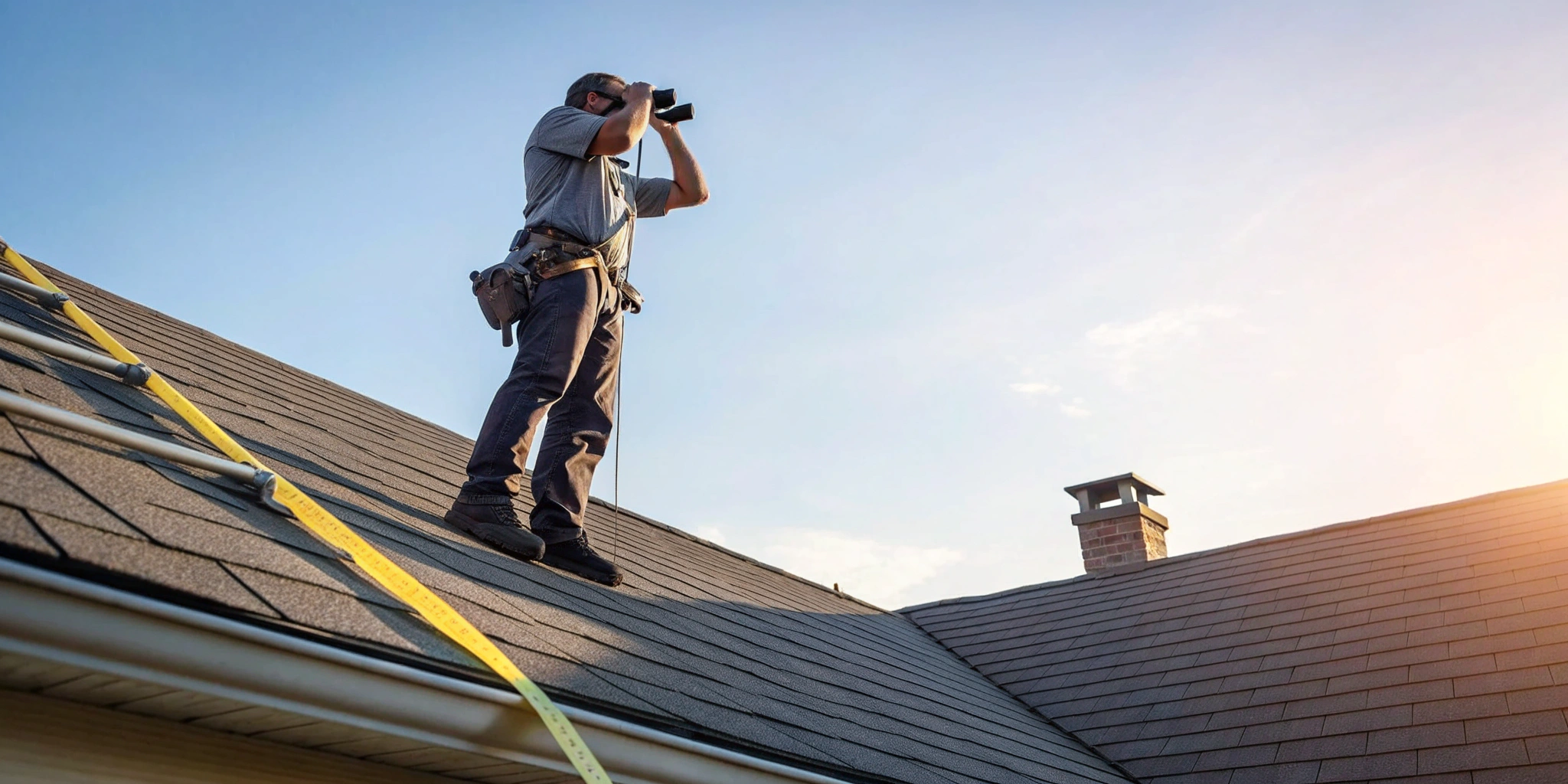
What a Third-Party Roof Inspection Is
A third-party roof inspection is an evaluation of your roof paid for by you and performed by an inspector with no financial interest in the outcome of your insurance claim. The carrier sends its own adjuster. You hire your own inspector. Both walk the same roof, and you end up with two documented opinions instead of one.
That second record matters most in the place where roof claims are usually decided: whether the damage came from a covered event on a specific date, or from age and ordinary wear. Most policies cover sudden, accidental damage. They do not cover deterioration. A hail bruise and a shingle that has simply aged out can look similar in a phone photo and read very differently to a trained eye.
When a Third-Party Roof Inspection Is Worth Paying For
Not every claim needs one. Consider hiring your own inspector when:
- The carrier’s estimate covers noticeably less roof area than the damage you can see.
- The denial letter cites wear and tear, prior damage, or maintenance.
- The roof is under a manufacturer or workmanship warranty and you need the cause of failure documented before anyone touches it.
- The property is a rental, an HOA building or a commercial portfolio, where the board or the owner will want an independent record.
- You are selling, and the buyer wants to know what the claim covered.
What the Inspector Documents
An inspection built for a claim file goes past the obvious missing shingles.
Exterior and rooftop
Impact marks and their pattern, granule displacement, creased or lifted tabs, damaged ridge caps, condition of flashing at chimneys, skylights and wall transitions, dented gutters, vents and soft metals. Soft metal damage is useful because it helps date an event.
Interior, attic and perimeter
Stains on the underside of the deck, wet insulation, daylight at fastener points, and any evidence that water has already moved into the structure. The attic often shows whether a leak is new or has been running for seasons.
Cause and timing
The report should say what the inspector observed, where, and what it indicates about cause and age. Photographs need to be legible, labeled, and tied to the written findings by location. Vague language is what gives a claim file room to argue.
What an Inspector Can and Cannot Do for Your Claim
This distinction protects you, so read it carefully. An independent inspector documents the physical condition of the roof. Negotiating a settlement on your behalf is a separate, licensed activity. In many states, adjusting or negotiating a claim for a policyholder is limited to a licensed public adjuster or an attorney, and rules vary state by state. Ask any inspector what they are licensed to do before you engage them, and keep the roles clean.
An inspector can meet your adjuster at the property and walk the roof with them. That single step resolves a large share of disagreements, because both people are looking at the same slope at the same time and describing what they see out loud.
How to Choose the Inspector
There is no federal license for roof inspectors, and state requirements vary widely. Training and documentation practice are what separate a report that holds up from one that does not. Look for:
- Accredited training you can verify. NRCIA has set the inspection standard since 1995. Members accredited through the RoofGUARD™ program hold the NRCIA Certified Roof Inspector designation, and members working insurance-related evaluations carry DisasterGUARD™ accreditation on top of active ForensicGUARD™ standing.
- Experience with your roof type. Tile, slate, metal, low-slope membrane and asphalt shingle each fail differently and each is inspected differently.
- A standardized process. NRCIA members perform a LeakFREE® Check covering five zones: interior, attic, exterior, perimeter and rooftop. A repeatable method is harder to dismiss than a walkaround.
- A written deliverable. Ask to see a sample LeakFREE® Roof Inspection Report before you book.
What It Costs
Price depends on roof size, slope, complexity, materials, access, region and whether the inspector uses drone or infrared imaging. Get the fee and the scope in writing before the visit, and ask specifically whether a follow-up report review or an on-site meeting with your adjuster is included or billed separately.
How to Prepare
- Pull the roof file. Installation paperwork, material brand and product line, warranty documents, and the install date. This establishes a baseline age.
- Collect repair records. Invoices and dated photos of past maintenance answer the neglect argument before it is raised.
- Save the storm date. Note the date of the event and keep any local weather reporting for it.
- Clear access. Move vehicles and yard obstructions, and make sure the attic hatch is reachable.
- Photograph interior damage yourself before any drying or cleanup, with the date intact.
Using the Report
Send the complete report to your carrier and ask that it be added to the claim file. If the claim was denied, request the reason in writing, then respond to that stated reason point by point using the inspection findings. Most appeals turn on a specific factual disagreement, and a dated, photographed record of the roof is what moves that conversation.
Where the roof is sound, or can be repaired to meet the published criteria, the accredited member who performed the inspection may issue a LeakFREE® Roof Certification through InspectionPLUS®. It records the condition of that roof, at that address, on that date, for a stated term of up to ten years. It is a record of condition, not insurance and not a service contract. Across 6,460 member inspections nationwide, more than 66 percent of roofs either qualified for a LeakFREE® certification or could be repaired to qualify.
Find an accredited NRCIA inspector near you in the member directory.
LeakFREE®, Forensic ROOF®, Mr. RoofCheck®, InspectionPLUS®, Today’s Inspection… Tomorrow’s Protection®, and Got Leaks?® are registered trademarks of Field Gate FLP, used by permission. RoofGUARD™, ForensicGUARD™, DisasterGUARD™, E3GUARD™, and Think Like a Raindrop™ are trademarks of Field Gate FLP.