
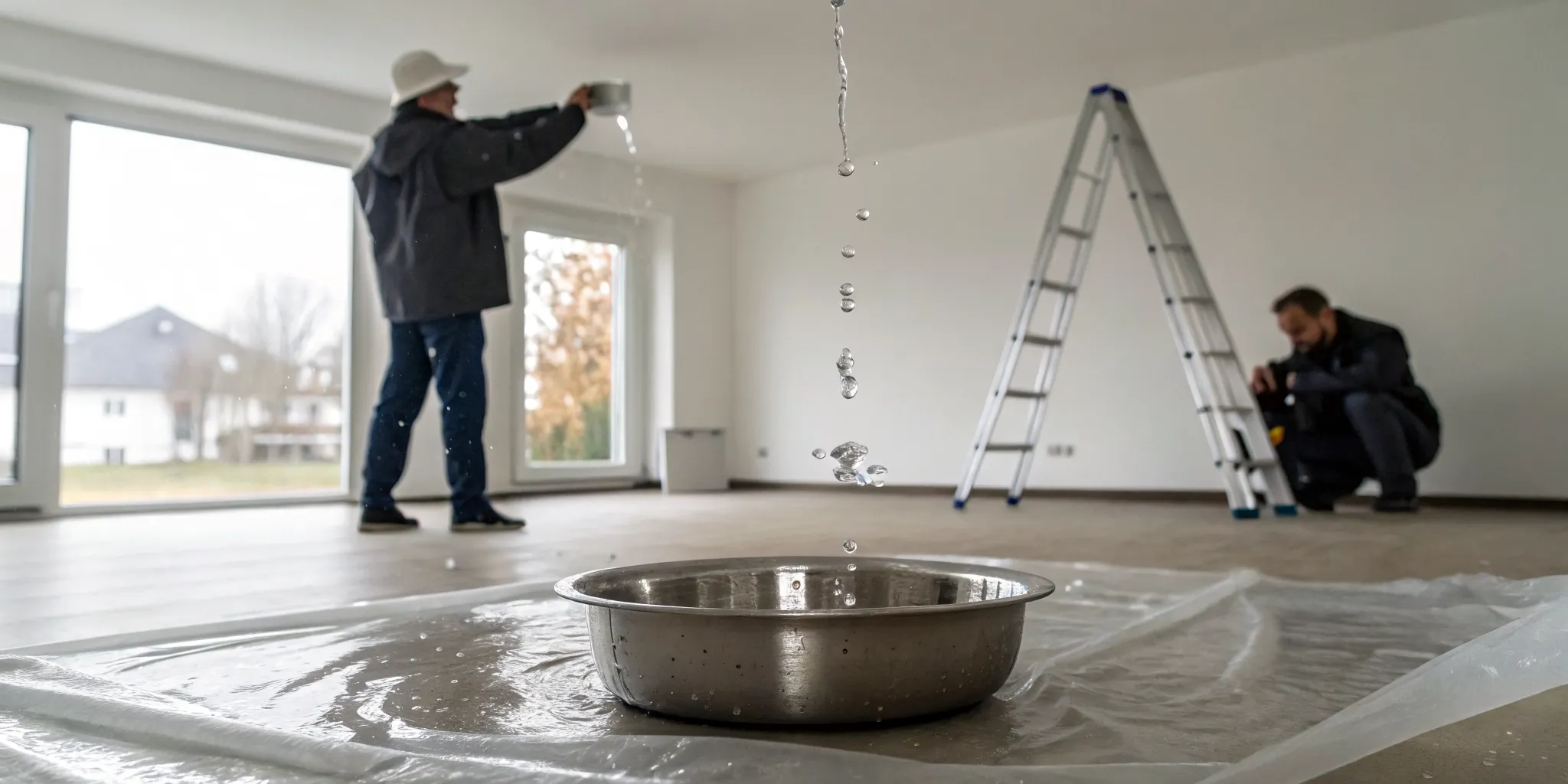
Does a roof warranty cover leaks? It depends entirely on the cause
Does a roof warranty cover leaks? Sometimes, and narrowly. A warranty responds to a defect. If the leak traces to a manufacturing flaw in the material or an error in how the roof was installed, coverage may apply. If it traces to age, weather, impact or skipped maintenance, it usually does not.
That distinction decides who pays. Learn it before you find the stain, not after.
The two warranties sitting on most roofs
Manufacturer warranty: the product
This covers defects in the shingles, tile or membrane. Premature cracking, blistering or granule loss from a manufacturing flaw is what it was written for. Terms are long, commonly quoted between 25 and 50 years.
Read the payout structure carefully. Many manufacturer warranties supply replacement material and nothing else, which leaves you paying to tear off the old roof and install the new one. Many are also prorated, so the value declines each year the roof is in service.
Workmanship warranty: the installation
This comes from the contractor and covers installation error: fasteners in the wrong place, flashing that was never properly tied in, valleys cut badly, layers out of sequence. Terms run shorter, often two to ten years.
Its reliability is the contractor’s reliability. If the company closes, the coverage generally closes with it. That is a real risk on a warranty meant to last a decade.
What a standard warranty leaves out
The exclusions do more work than the coverage. Four of them catch owners repeatedly.
- Normal aging. Sun, rain and thermal cycling wear a roof out on schedule. A warranty answers premature failure caused by a defect, not the end of a service life.
- Weather and impact. Hail, high wind, hurricanes and falling limbs sit outside every standard roofing warranty. That is your homeowners policy’s job.
- Interior damage. This surprises people most. Where a warranty responds at all, it typically pays to repair the roof. Stained ceilings, ruined drywall, soaked insulation and damaged belongings are consequential damages, and they are almost always excluded.
- Neglect and pre-existing conditions. Most warranties require documented upkeep. Debris left in gutters, unaddressed minor damage, or a new roof laid over rotted decking all give an issuer grounds to deny.
Warranty or insurance: who pays for what
These two instruments answer different questions, and owners lose money by confusing them.
A warranty is a promise about quality. It responds when a product or an installation failed to be what it was supposed to be. It says nothing about weather.
A homeowners policy responds to sudden, accidental damage. A limb through the deck, shingles stripped by a windstorm, hail bruising across a slope. In those cases it commonly pays for the roof repair and the interior damage the leak caused.
Neither covers a roof that simply wore out. A carrier will read a slow, age-driven leak as deferred maintenance and deny it, and a manufacturer will read the same leak as normal wear. That is the gap regular inspection is meant to close.
What to do the day you find a leak
- Document before anything is touched. Photograph the interior stain, the affected walls and belongings, and the exterior of the roof if you can do it safely from the ground. Record the date you noticed it and the storm or event that preceded it.
- Call the installing contractor if the roof is young enough to sit inside a workmanship term. They can determine whether the failure is theirs, and they can stop the water in the meantime.
- Pull the warranty documents and read the exclusions before you make a claim. Knowing what the document actually says changes the conversation.
- File with the right party. Defect goes to the manufacturer or the contractor. Storm damage goes to your carrier. An independent inspection report supports either one.
How to read your warranty before you need it
Four sections carry most of the meaning. Find the coverage clause, which names what is covered and whether labor is included. Find the term and proration schedule, since a 50 year warranty can be worth very little in year 30. Find the transfer clause, which matters when you sell. Find the maintenance obligations, because that is the section most often used to deny a claim.
Keep the warranty, the installation invoice, every inspection report and every repair receipt in a single file. That record is what turns a claim into a paid claim.
Where inspection and a LeakFREE® certification fit
An accredited NRCIA member performs a LeakFREE® Check across five zones: interior, attic, exterior, perimeter and rooftop. The findings go into a LeakFREE® Roof Inspection Report. A report on a new roof establishes a baseline and confirms the installation matched the manufacturer’s specification, which is exactly the evidence a defect claim turns on later. A report on an older roof documents that you have maintained it.
Where a roof meets the published criteria, that member can issue a LeakFREE® Roof Certification through InspectionPLUS®. A certificate produced outside that platform is not valid. The certification records that a specific roof at a specific address met the criteria on a specific date. Its term reflects the findings, the slope, the materials and the condition, to a maximum of ten years, and the expiration is printed as a date. It is not insurance, it is not a service contract, and it makes no promise about future weather. Repairs performed by anyone other than an NRCIA member trigger a re-inspection. LeakFREE® is our federally registered trademark. Only NRCIA members can issue a LeakFREE® certification.
Across 6,460 member inspections nationwide, more than 66 percent of roofs either qualified for a LeakFREE® certification or could be repaired to qualify. Most roofs are in better shape than their owners fear. Documentation is usually the missing piece.
Find an accredited inspector near you in the NRCIA member directory.
LeakFREE®, Forensic ROOF®, Mr. RoofCheck®, InspectionPLUS®, Today’s Inspection… Tomorrow’s Protection®, and Got Leaks?® are registered trademarks of Field Gate FLP, used by permission. RoofGUARD™, ForensicGUARD™, DisasterGUARD™, E3GUARD™, and Think Like a Raindrop™ are trademarks of Field Gate FLP.

