What a LeakFREE® Roof Certification is
People search for a LeakFREE® guarantee. What exists is a LeakFREE® Roof Certification, and the difference is worth ten minutes of your time because it changes what you can expect from the document.
A LeakFREE® Roof Certification records that a specific roof, at a specific address, on a specific date, met the published LeakFREE® criteria. It is a dated, independent record of condition. It is generated and registered through InspectionPLUS®, and a certificate produced outside that platform is not valid.
It is not a guarantee that the roof will not leak. It is not insurance, and it is not a service contract. No inspection can speak to a hailstorm next spring or to a solar crew that puts twelve new penetrations through the covering in year three. What the certification can do is establish, in writing, what a trained inspector found on a given day, which is exactly what a buyer, a seller, a lender’s file, an adjuster or opposing counsel needs.
LeakFREE® is our federally registered trademark. Only NRCIA members can issue a LeakFREE® certification.
The five-zone LeakFREE® Check that comes before it
A certification is the outcome of an inspection. An accredited NRCIA member performs a LeakFREE® Check across five zones, in order:
- Interior. Ceilings, wall intersections and finishes, looking for staining, blistering and evidence of past patching.
- Attic. Sheathing, framing, insulation and ventilation, where active moisture usually appears before anything shows downstairs.
- Exterior. Walls, penetrations, attached garages and adjoining structures.
- Perimeter. Grade-level evidence including dry rot, damaged fascia, staining and drainage.
- Rooftop. A visual, non-destructive examination of the covering, flashings, valleys, transitions and terminations.
The sequence matters. What the inspector sees inside and in the attic tells them where to concentrate once they are on the roof. Every covering has its own trouble spots, and members are trained to know which ones belong to tile, to shingle, to metal and to low-slope membrane.
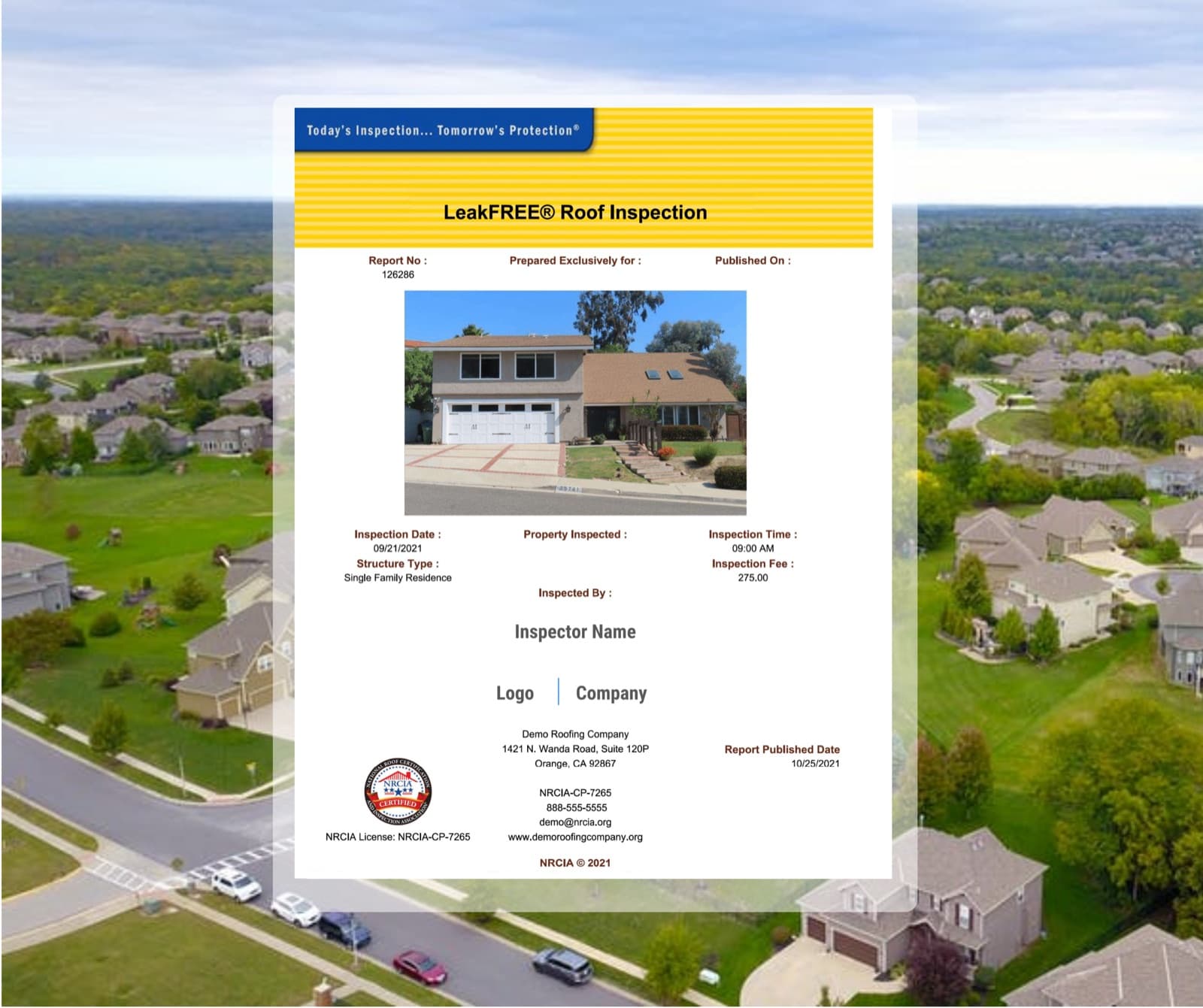
The deliverable is a LeakFREE® Roof Inspection Report. It names the conditions found and what correcting them involves. If the roof already meets the criteria, it can be certified. If it does not, the report tells you what stands between the roof and certification.
Who issues the certification
The certification is issued by the accredited individual who performed the inspection, never by a business entity. That is a deliberate rule. Accountability follows the person who walked the roof, and their accreditation is what stands behind the document.
A roofing contractor who is not an accredited member cannot issue one, regardless of how long they have been in business or how good their work is.
How long it lasts
The term is set by the findings, the slope, the materials and the condition of the roof, to a maximum of ten years. It is written as a date on the certificate.
Term length is never stretched to help close a sale. A roof with twelve years of covering left and clean details supports a longer term than a roof with four years left and a history of patching, and the certificate says so plainly.
One rule catches homeowners out. If repair work is performed on the roof by anyone other than an NRCIA member, a re-inspection is triggered. Before you hire someone for a small fix, call the member who issued the certification and ask.
What happens if a leak appears during the term
Notify the accredited member who issued your certification. Not a general contractor, not the manufacturer, and not NRCIA. The member who issued the document is the one who responds.
That member performs a priority leak inspection for a nominal service call fee, with the goal of establishing proximate cause, meaning where the water entered and why rather than where the stain appeared. Water travels along framing and decking before it drops, so those two locations are frequently far apart.
If the cause is normal wear and tear, or an error on the part of the inspector, the steps needed to stop the leak are taken at no additional cost to the certificate holder. If the cause is something else, such as a storm event, work performed by someone outside the association, or damage from a later trade on the roof, the member explains what happened and what the options are.
Why the wording is this careful
Language that promises a roof will never leak sounds reassuring and collapses the moment weather disagrees with it. A dated record of condition holds up. It tells a buyer what was true at close of escrow. It gives an adjuster a baseline to compare against. It gives an attorney something an expert can testify to.
Across 6,460 member inspections nationwide, more than 66 percent of roofs either qualified for a LeakFREE® certification or could be repaired to qualify. Most roofs are in better shape than the owner fears. They need a documented list of corrections and a record that the corrections were made.
Get the roof documented
Find an accredited NRCIA inspector near you: /member-directory/
LeakFREE®, Forensic ROOF®, Mr. RoofCheck®, InspectionPLUS®, Today’s Inspection… Tomorrow’s Protection®, and Got Leaks?® are registered trademarks of Field Gate FLP, used by permission. RoofGUARD™, ForensicGUARD™, DisasterGUARD™, E3GUARD™, and Think Like a Raindrop™ are trademarks of Field Gate FLP.