
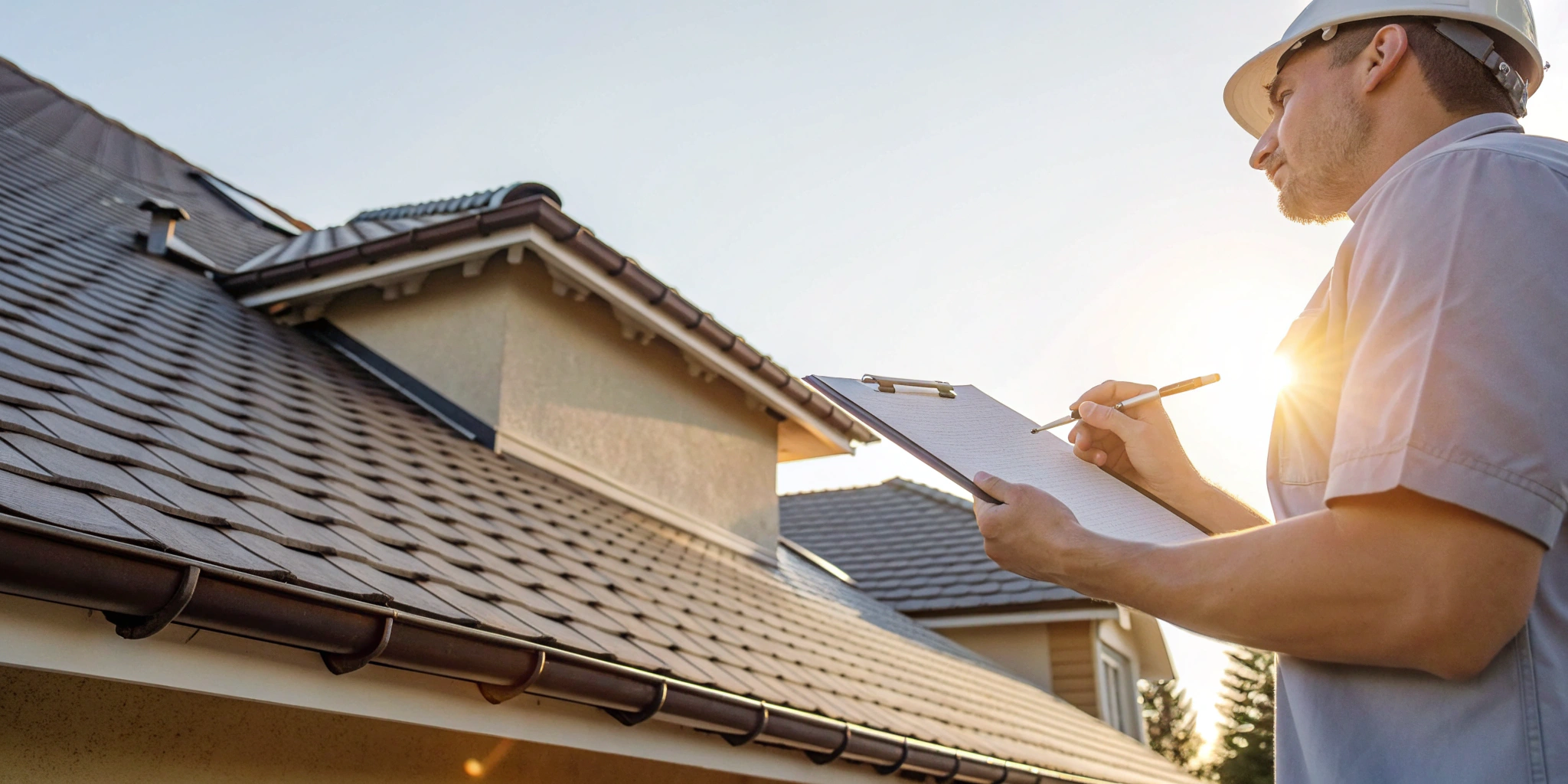
What a roof certification for homeowners insurance actually is
A roof certification for homeowners insurance is a dated record of a roof’s condition, written by a qualified inspector and handed to your carrier as evidence. It states the roofing material, the defects found, the repairs made, and a professional assessment of remaining service condition. Carriers ask for one because roof claims are expensive and roof age is the variable they can least afford to guess at.
A certification is a snapshot. It describes a roof on the day it was inspected. It is not insurance, not a service contract, and it makes no promise about how the roof will perform next season.
Why carriers ask for a roof certification for homeowners insurance
Underwriting is a pricing exercise. A carrier looking at an undocumented twenty-year-old roof in a hail region has to assume the worst case. A carrier looking at a dated inspection report and a current certification is pricing a known quantity.
That difference shows up in three places:
- Placement. Some carriers decline to write, or decline to renew, on roofs past a certain age without documentation.
- Terms. A roof with no record is more likely to draw a roof exclusion or a separate wind and hail deductible.
- Claims. When a claim is filed, the argument usually comes down to whether the damage was sudden or pre-existing. A certification predating the storm answers that.
Whether documentation lowers a specific premium depends on the carrier and the state. Ask your agent what your carrier does with a roof certification for homeowners insurance before you assume a discount.
What the inspection covers
NRCIA members work a five-zone LeakFREE® Check: interior, attic, exterior, perimeter and rooftop.
Roof surface
Field condition of shingles, tile or membrane. Missing, cracked, curled or displaced material. Granule loss, blistering, ponding on low-slope sections, and evidence of prior repair.
Flashing and drainage
Flashing at chimneys, vents, skylights and wall junctions, plus drip edge, gutters and downspouts. These joints are where a large share of leaks start, and they fail long before the field of the roof wears out.
Attic and interior
Intake and exhaust ventilation, damp or compressed insulation, staining on the underside of the deck, rusted fasteners, and ceiling or wall staining inside the living space. Poor ventilation shortens the life of everything above it.
The report
The deliverable is a LeakFREE® Roof Inspection Report: findings by zone, labeled photographs, and specific repair recommendations where the roof falls short of the published criteria. If the roof meets those criteria, the member who performed the inspection can issue a LeakFREE® Roof Certification through InspectionPLUS®. Certificates are generated and registered through that platform, and a certificate created outside it is not valid.
How long a certification lasts
The term is set by the findings, the slope, the materials and the condition, up to a maximum of ten years. It is never extended to win a sale. The expiration prints on the certificate as a date, so there is nothing to interpret.
Because the term reflects the roof rather than a standard schedule, a newer roof in a mild climate and an older roof in a hail belt will not carry the same term even if both pass. Re-inspection is also triggered when repairs are performed by anyone other than an NRCIA member.
Finding an inspector your carrier will accept
There is no federal license for roof inspectors. That single fact explains why credentials matter so much here, and why a carrier treats two reports on the same roof very differently.
NRCIA accredits individuals, never companies. A Certified Roof Inspector has completed RoofGUARD™ training and follows a documented method. Members handling insurance-related evaluations hold DisasterGUARD™ accreditation, and cause-and-origin work belongs to ForensicGUARD™ members. LeakFREE® is our federally registered trademark. Only NRCIA members can issue a LeakFREE® certification.
Beyond accreditation, confirm the practical items. Ask about state or local licensing where it applies to the work being performed, ask for proof of liability coverage, and ask to see a sample report before you book. A roofer selling replacement and an inspector documenting condition are doing different jobs, and your carrier can tell which one wrote the document.
What it costs and what drives the number
There is no single national price, and NRCIA does not set what members charge. The figure on your quote reflects the work involved:
- Roof size and the number of separate roof planes.
- Slope and access. Steep or high roofs take longer and require more equipment.
- Complexity: dormers, valleys, skylights, solar arrays, multiple materials on one structure.
- Age and current condition, which determine how much documentation the findings require.
- Region and travel distance.
- The length of the term being requested.
Ask what is included before you book. A quote covering the five-zone inspection, the written report and the certificate is a different product from a quick visual pass.
Three assumptions worth correcting
A certification is permanent. It is not. It records a date, and roofs change. Recertification on a sensible cycle is how the record stays useful.
A good-looking roof is a sound roof. Failed underlayment, backed-out fasteners, blocked ventilation and improper flashing are all invisible from the curb.
A roof certification for homeowners insurance obligates the carrier. It does not. It is evidence you bring to an underwriting or claims decision, and your maintenance obligations under the policy continue either way.
Across 6,460 member inspections nationwide, more than 66 percent of roofs either qualified for a LeakFREE® certification or could be repaired to qualify. For most owners the question is not whether the roof can be documented. It is when.
Find an accredited NRCIA inspector near you
LeakFREE®, Forensic ROOF®, Mr. RoofCheck®, InspectionPLUS®, Today’s Inspection… Tomorrow’s Protection®, and Got Leaks?® are registered trademarks of Field Gate FLP, used by permission. RoofGUARD™, ForensicGUARD™, DisasterGUARD™, E3GUARD™, and Think Like a Raindrop™ are trademarks of Field Gate FLP.

