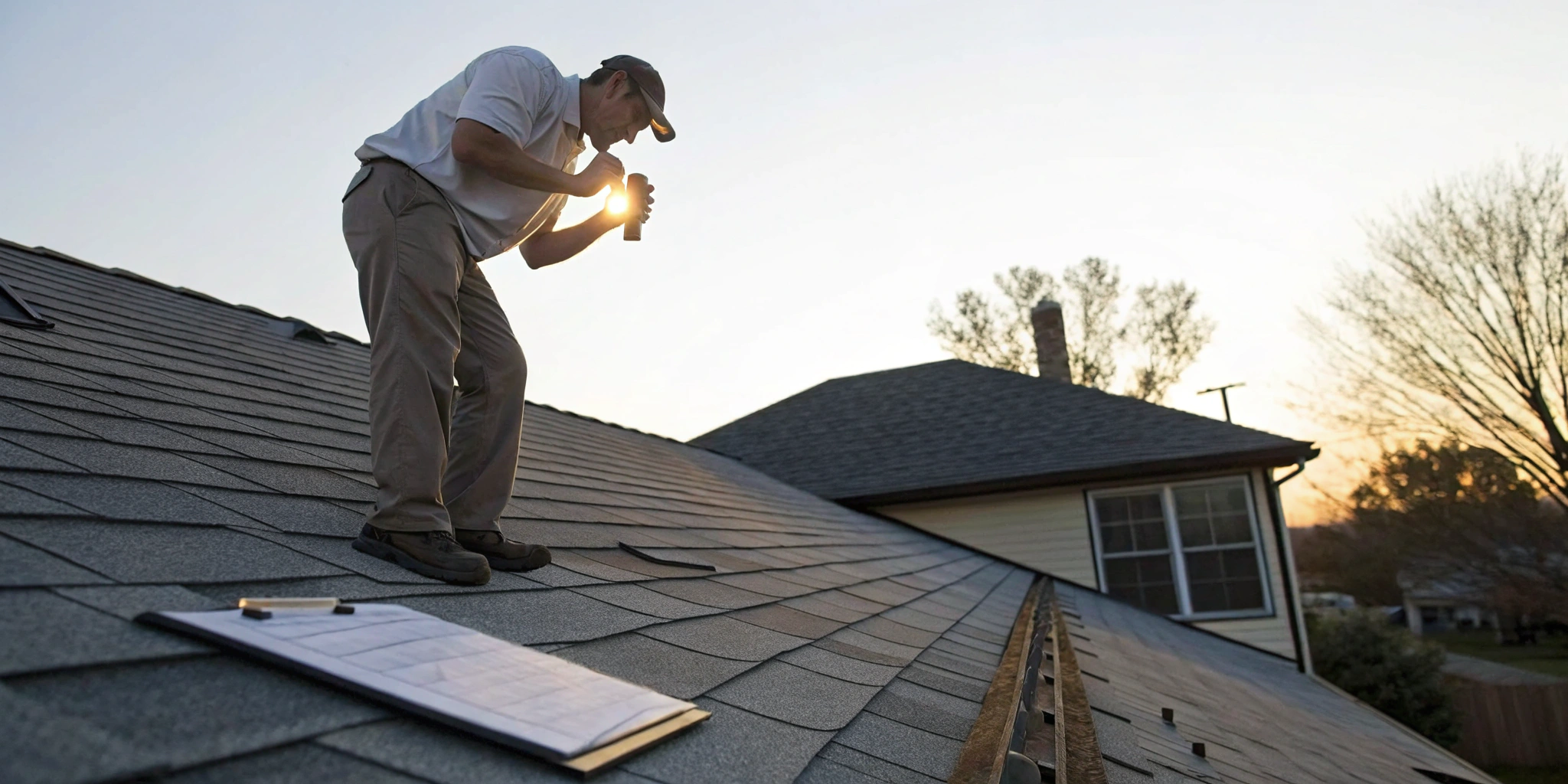
What an unbiased roof damage assessment is
An unbiased roof damage assessment is an evaluation of your roof’s condition performed by someone with no financial stake in the repair. The inspector is paid for the inspection and the report. Nothing else. That single arrangement changes what you get told.
Compare that with a free inspection from a company that also sells roofs. The visit costs you nothing because the report is a sales document. Plenty of contractors are honest about it. The structure still points one direction.
Why an unbiased roof damage assessment protects your money
Three situations turn on the quality of that report.
Insurance claims. Carriers cover sudden events. Wind, hail, fire. They do not cover age, wear or deferred maintenance. Documentation from an independent inspector, with dated photographs and plain descriptions of what failed and why, is third-party evidence. It carries weight precisely because the person who wrote it does not profit from the outcome.
Repair versus replacement. A written scope of work lets you send the same document to three contractors and compare identical bids. Without it you are comparing three different opinions about three different jobs, priced three different ways.
Buying and selling. A dated condition report removes the loudest unknown from a transaction. Buyers stop guessing. Sellers stop absorbing a price cut based on someone’s estimate from the driveway.
Who should look at the roof
Look for an accredited inspector who does not perform the repairs. NRCIA members are trained and accredited to a published standard, follow a code of ethics, and work a defined method rather than improvising. NRCIA sets that standard and maintains the member directory. The inspection itself is performed by the member, not by the association.
A roofing contractor is a different professional doing a different job, and a good one is worth keeping. Bring them in after you know what needs doing, with a document in hand that defines the work.
Questions to ask before you hire
- Are you affiliated with any roofing or contracting company?
- What accreditation do you hold, and who issued it?
- Can you send a current certificate of liability insurance?
- Which areas do you inspect, and do you get on the roof?
- What does the written report include, and when will I have it?
- What is the total price, and are there other fees?
An inspector who answers all six without hesitation is telling you something useful about how they work.
What happens during the inspection
An NRCIA member performs a LeakFREE® Check across five zones: interior, attic, exterior, perimeter and rooftop. Water does not respect the boundary between them, so the inspection does not either. A stain on a bedroom ceiling can start twenty feet away at a failed flashing detail.
Expect a physical inspection rather than a look from the ground. Moisture meters find damp inside the assembly. Thermal imaging shows temperature differences that suggest trapped water. Drones cover steep or fragile surfaces safely. Every finding should arrive with a photograph attached.
You can help. Clear access to the attic hatch, move vehicles away from ladder points, and gather what you have on the roof’s age, past repairs and any manufacturer warranty paperwork.
Reading the report
A LeakFREE® Roof Inspection Report is a record of condition on a specific date. Work through it in order of urgency.
Urgent items are active water entry, structural sagging, or anything that will cause damage before the next storm passes. Recommended repairs are conditions that will worsen predictably: cracked flashing, lifted shingles, failed sealant. Maintenance items are worth scheduling, not worth panicking about.
If a finding is unclear, call the inspector and ask. A report you do not understand cannot help you.
When to get a second opinion
Get one when a full replacement is recommended without photographic evidence of why. Get one when the assessment took fifteen minutes. Get one when a free inspection turns into an urgent quote with a deadline attached, particularly in the weeks after a storm, when out-of-area crews follow the weather.
Lay two reports side by side and look for agreement on the specifics. Do both identify the same locations? Do both show the same photographs of the same details? A report that says the roof needs replacing tells you far less than one that documents six points of failure and explains each.
What comes after
Use the report as your scope of work. Get written bids from licensed, insured contractors against that scope. If you are filing a claim, read your policy before you call the carrier, then submit the report with it.
Across 6,460 member inspections nationwide, more than 66 percent of roofs either qualified for a LeakFREE® Roof Certification or could be repaired to qualify. A roof that looks alarming from the driveway is frequently repairable. Knowing which one you have is the point of the exercise.
Find an accredited NRCIA inspector near you for an independent assessment
LeakFREE®, Forensic ROOF®, Mr. RoofCheck®, InspectionPLUS®, Today’s Inspection… Tomorrow’s Protection®, and Got Leaks?® are registered trademarks of Field Gate FLP, used by permission. RoofGUARD™, ForensicGUARD™, DisasterGUARD™, E3GUARD™, and Think Like a Raindrop™ are trademarks of Field Gate FLP.