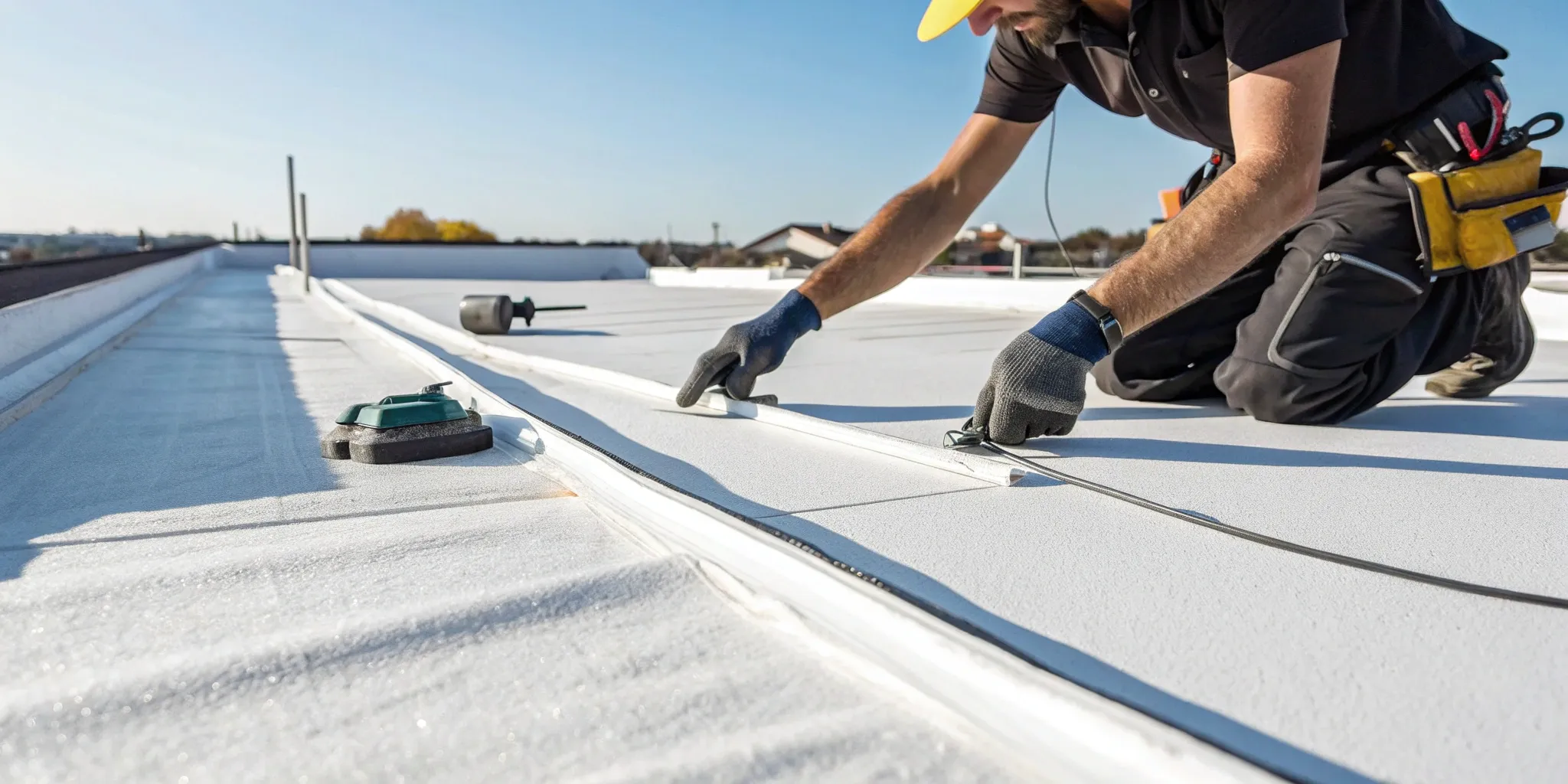
What TPO is, and why the credential matters
TPO stands for thermoplastic polyolefin, a single-ply membrane used across low-slope commercial roofs. Sheets are rolled out, mechanically fastened or adhered, then joined with hot air. The weld is what keeps water out, and the weld is a skill. That is why TPO roofing certification classes exist, and why manufacturers care whether you have taken one.
For a contractor or an inspector, the credential does two practical things. It qualifies you for approved-installer status with a manufacturer, which is usually what unlocks that company’s longer warranty terms. It also gives building owners a reason to believe you understand the whole assembly, down to the accessories and the terminations.
Who offers TPO roofing certification classes
Training comes from two directions. They are not interchangeable.
Manufacturer programs
Carlisle SynTec runs workshops through its Continuing Roofing Education and Workshops program. Johns Manville teaches low-slope installation at the JM Roofing Institute. Holcim Elevate delivers coursework through an online portal. GAF maintains its own installer track. Each goes deep on a single system: that company’s membrane, that company’s accessories, that company’s details. Completing the course is often a prerequisite for approved-installer status, and approved-installer status is what lets you write the manufacturer’s better warranty.
The trade-off is scope. What you learn transfers in part, not in full. Termination and flashing details differ from brand to brand.
Association and trade programs
Associations teach across brands. The National Roofing Contractors Association publishes technical guidance covering low-slope assemblies generally, and its coursework builds the foundation a manufacturer class assumes you already have. Many experienced commercial roofers carry both: a brand credential for the warranty, a broad credential for the judgment.
What you practice in the class
A class worth the tuition puts a welder in your hand. Expect the bench work to cover:
- Hot-air welding, including temperature, speed, nozzle angle, and how each shifts with ambient conditions
- Probing and testing seams, then reading what a failed probe is telling you
- Flashing at penetrations, curbs, drains, parapets and terminations
- Membrane attachment methods and where each one belongs
- Repair and detail work on an existing membrane
- Fall protection and safe movement across a low-slope deck
Classroom time covers membrane chemistry, scrim reinforcement and accessory compatibility. The bench work is what the instructor grades.
How to choose a program
Four questions sort the options quickly.
What are the prerequisites? Some classes assume no low-slope background at all. Others expect documented commercial experience or a prior course. Read the entry requirements before you book travel.
How much of the day is hands-on? Ask for the split between classroom and bench. A provider who cannot answer has given you the answer.
What keeps the credential current? Manufacturer approvals can lapse when product lines change or annual requirements go unmet. Association credentials usually carry continuing education. Know the renewal terms before you enroll.
What is the full cost? Some manufacturers cover tuition and materials for partner contractors while you cover travel and lodging. Others charge a course fee. Add the days you spend off the job, and you have the real number.
Where roof inspection accreditation fits
Installing a membrane and evaluating one are separate disciplines. An installer builds the assembly. An inspector documents its condition without a stake in the repair that follows. Owners, agents and insurers rely on that separation.
NRCIA sets the standard for roof inspection and accredits the professionals who perform it. The RoofGUARD™ program leads to the NRCIA Certified Roof Inspector designation, with Senior standing at 500 inspections and Master standing at 1,000. Members trained to the standard perform the LeakFREE® Check, a multi-zone inspection covering the interior, the attic, the exterior, the perimeter and the rooftop, and they issue the LeakFREE® Roof Inspection Report.
Where a roof meets the published criteria, the accredited member who performed the inspection can issue a LeakFREE® Roof Certification through InspectionPLUS®. LeakFREE® is our federally registered trademark. Only NRCIA members can issue a LeakFREE® certification. That certification records that a specific roof, at a specific address, on a specific date, met the published criteria. It carries a printed expiration date set by the findings, the slope, the materials and the condition. It is not insurance, and it does not promise a roof will never leak.
TPO knowledge feeds straight into that work. On a commercial low-slope roof, the seams, the terminations and the drains are where the report gets written.
Review the RoofGUARD program and start accreditation
LeakFREE®, Forensic ROOF®, Mr. RoofCheck®, InspectionPLUS®, Today’s Inspection… Tomorrow’s Protection®, and Got Leaks?® are registered trademarks of Field Gate FLP, used by permission. RoofGUARD™, ForensicGUARD™, DisasterGUARD™, E3GUARD™, and Think Like a Raindrop™ are trademarks of Field Gate FLP.