
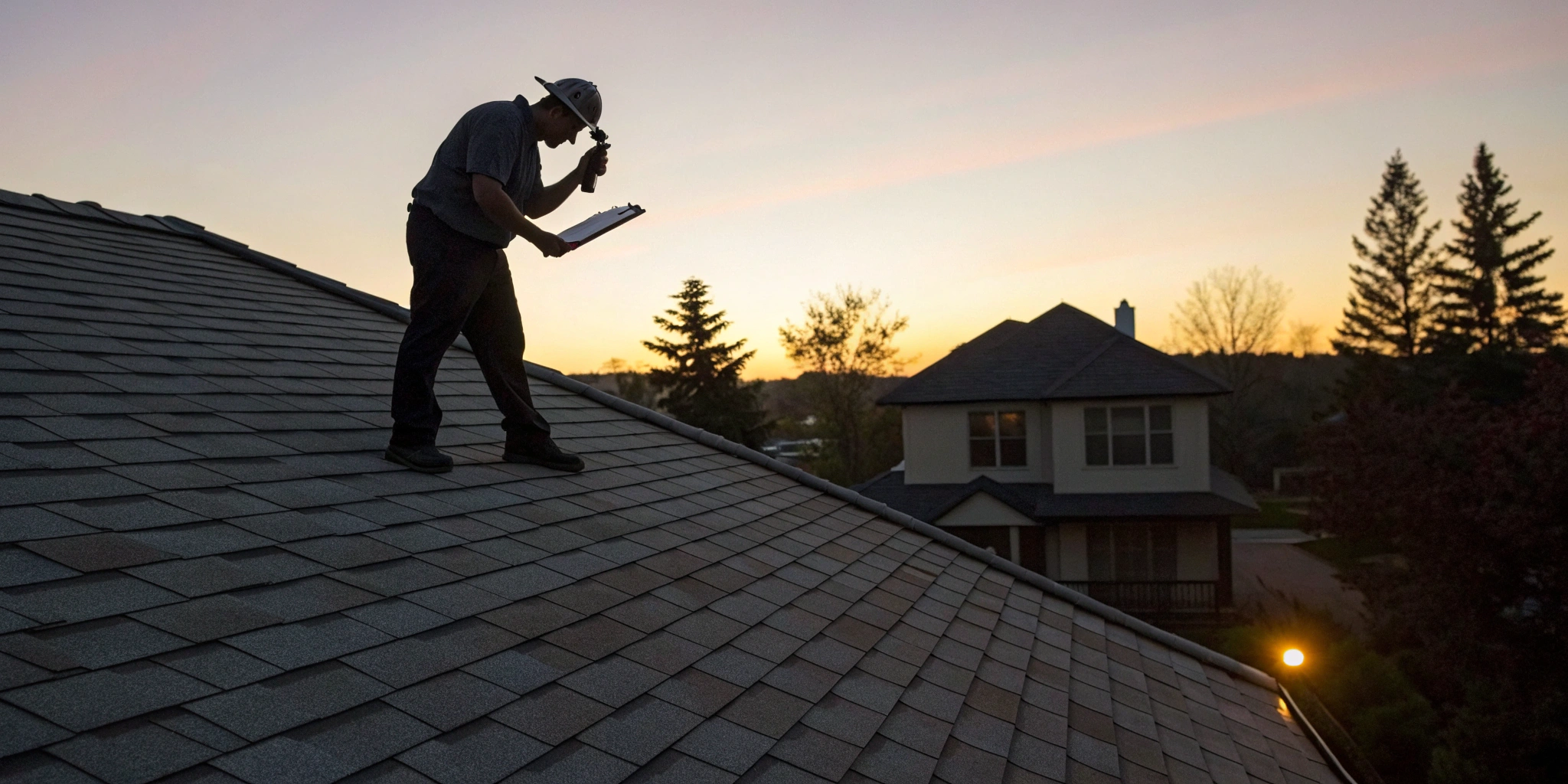
There is no such thing as an insurance approved roof inspection
No carrier issues a badge that says insurance approved. No licensing board awards one. When a company advertises an insurance approved roof inspection, what they are describing is a reputation: an inspector whose documentation is thorough enough, and neutral enough, that adjusters take it seriously without a fight.
That is worth knowing before you hire anyone, because the phrase gets used loosely. Ask what standard the inspector works to and what their report contains. Those two answers tell you far more than the marketing does.
Why your carrier may ask for an inspection
Carriers underwrite risk, and a roof is the single largest weather-exposed component of a building. Many policies now trigger an inspection requirement as a roof reaches roughly fifteen to twenty years of age, and many require one after a named storm before a claim moves forward. Requirements vary by carrier, by policy and by state, so confirm yours directly with your agent rather than assuming.
The practical consequence is the same in every case. Someone has to document the roof’s condition, and the quality of that documentation shapes what happens next.
What makes an inspector credible to an adjuster
Verifiable training
There is no federal license for roof inspectors in the United States, and state rules vary widely. Accreditation from a national standards body fills that gap. Ask which program the inspector completed, what designation they hold, and whether it is currently active.
Licensing, bonding and coverage
State licensing where it applies, general liability insurance, workers’ compensation, and errors and omissions coverage. A professional will hand over certificates without being asked twice.
Independence from the repair
An inspection report and a repair estimate serve different purposes. The report describes condition. The estimate proposes work and prices it. Adjusters read a report differently when the person who wrote it is also bidding the job, so understand which document you are being given.
Documentation that holds up
Located, high-resolution photographs. Measurements. Dated observations. Findings separated by cause, so weather damage is distinguished from ordinary wear. Reports that read as opinion invite dispute; reports that read as evidence usually settle the question.
What happens during the inspection
Scheduling and preparation
Clear vehicles, patio furniture and grills from the perimeter so the inspector can set a ladder safely. Secure pets indoors. Unblock the attic hatch. Gather what you have: previous reports, repair invoices, material warranties, and your current policy.
On site
A complete inspection is not a walk on the covering. NRCIA members work the LeakFREE® Check across five zones: interior, attic, exterior, perimeter and rooftop. Interior and attic evidence often identifies a leak path that the rooftop alone would never reveal, and ventilation problems visible from inside explain premature aging that looks inexplicable from above.
The report
You should receive a dated document containing photographs tied to locations, written findings component by component, a severity rating on each item, roof specifications and approximate age, and a prioritized scope of recommended work. NRCIA members generate LeakFREE® Roof Inspection Reports through InspectionPLUS®, which keeps the structure consistent nationwide regardless of who performed the inspection.
What a weak report costs you
Claims are usually contested on cause and extent, not on whether damage exists. A vague report gives an adjuster room to attribute damage to age or deferred maintenance, both of which most policies exclude. That leads to three familiar outcomes: a slow claim while documentation goes back and forth, a settlement that covers less than the actual scope, or a denial you then have to appeal with better evidence than you had at the start.
The same weakness affects underwriting. When a carrier cannot tell from the paperwork whether a roof is sound, the safe assumption on their side is that it is not.
Questions to ask before you hire
- What national standard do you inspect to, and what accreditation do you hold?
- May I see a sample report with the client details removed?
- Do you inspect the attic and interior, or the roof surface alone?
- Will you be available to answer an adjuster’s follow-up questions?
- Are you also bidding the repair work?
An inspector who answers all five without hesitation is usually the one whose report will hold.
Where LeakFREE® certification fits
When a roof meets the published criteria, an accredited NRCIA member can issue a LeakFREE® Roof Certification through InspectionPLUS®. It records that a specific roof, at a specific address, met those criteria on a specific date, and it carries a printed expiration date set by the findings, the slope, the materials and the condition, to a maximum of ten years.
Be clear about what that is and is not. It documents condition against a national standard. It is not insurance, not a service contract, and not a promise that the roof will never leak. What it gives you is a dated, verifiable record from an accountable professional, which is exactly the kind of evidence that is difficult to assemble after a storm and simple to produce when you already have it.
LeakFREE® is our federally registered trademark. Only NRCIA members can issue a LeakFREE® certification.
Find an accredited inspector
Search the NRCIA member directory before your carrier asks.
LeakFREE®, Forensic ROOF®, Mr. RoofCheck®, InspectionPLUS®, Today’s Inspection… Tomorrow’s Protection®, and Got Leaks?® are registered trademarks of Field Gate FLP, used by permission. RoofGUARD™, ForensicGUARD™, DisasterGUARD™, E3GUARD™, and Think Like a Raindrop™ are trademarks of Field Gate FLP.

