Start With the Thing Nobody Tells You
There is no federal license for roof inspectors. Anyone asking how to become a certified roof inspector should sit with that fact for a moment, because it explains the shape of the whole career. No agency stops an untrained person from climbing a ladder and calling themselves an inspector. Your credential is what separates you from that person, and it is the reason an agent, an adjuster or an attorney will call you back.
Some states and municipalities do license contractors, and a few set requirements for specific inspection categories. Check your own jurisdiction before you print anything. Accreditation and licensure are separate questions, and you may need both.
What the Work Actually Involves
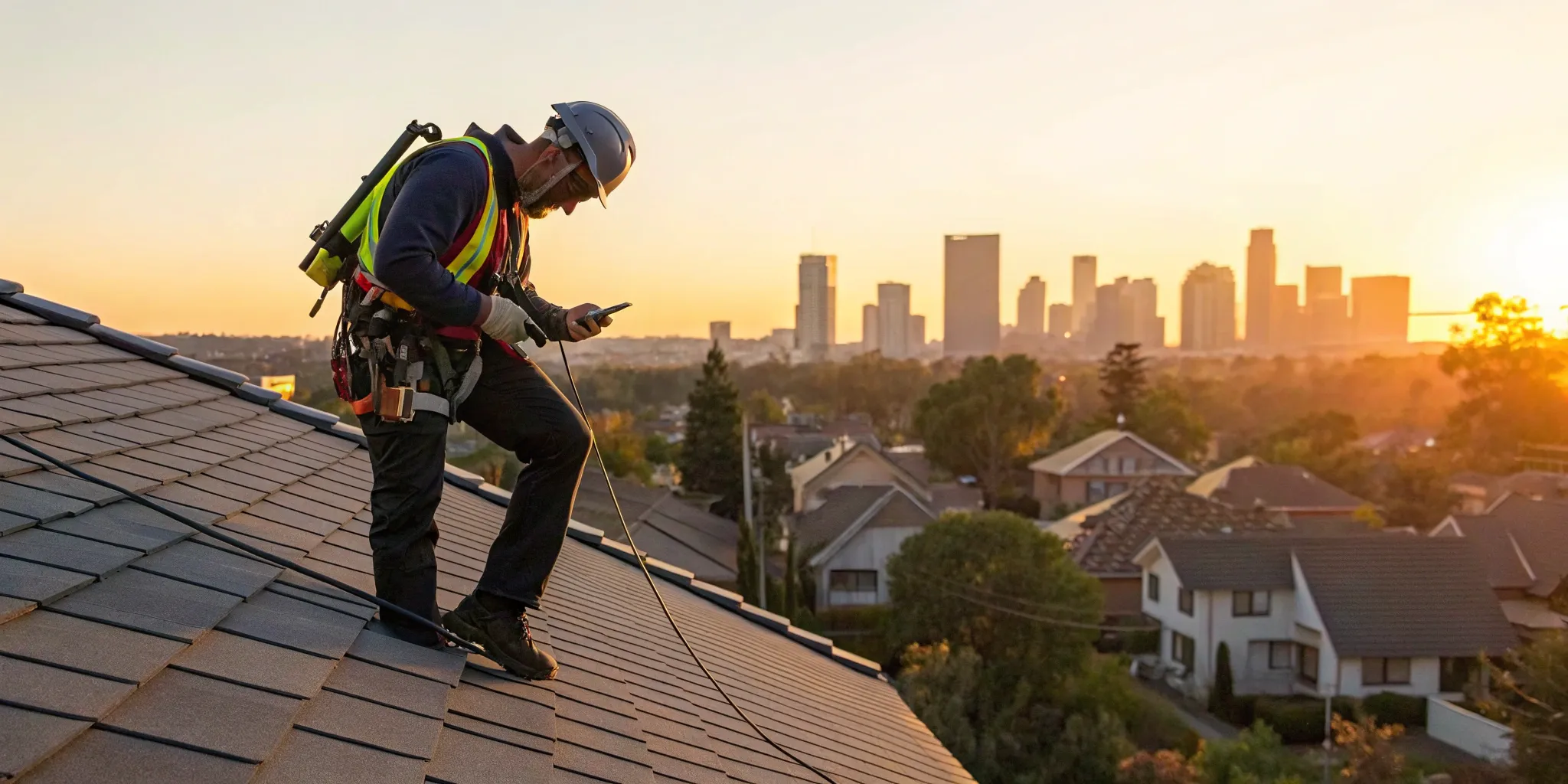
A roof inspector evaluates the condition of a roof system and documents it in a form other people can act on. The field portion is a fraction of the job. The rest is scheduling, client conversation, photography discipline, writing, and the follow-up call where you explain a finding to someone who is upset about what it will cost.
NRCIA members work through a LeakFREE® Check, which covers five zones: interior, attic, exterior, perimeter and rooftop. Water enters at one place and appears somewhere else entirely, so a survey limited to the rooftop misses the evidence that explains the complaint. The deliverable is a LeakFREE® Roof Inspection Report documenting each zone with dated photographs.
How to Become a Certified Roof Inspector, Step by Step
1. Take stock of what you bring
A high school diploma is the usual baseline. Prior roofing, construction or building trades experience is a genuine advantage, because you will already know how assemblies go together and where installers cut corners. Coming in without that background is workable. It means the training has more ground to cover and your early field time matters more.
2. Complete a structured training program
NRCIA trains and accredits members through defined programs rather than a single course. RoofGUARD™ produces the NRCIA Certified Roof Inspector designation, which is where most inspectors begin. ForensicGUARD™ is the flagship, accrediting members as NRCIA Forensic Roof Inspectors for defect and litigation work. E3GUARD™ covers exterior elevated elements, meaning decks, balconies, walkways, patios and staircases, and carries no prerequisite program. DisasterGUARD™ handles insurance-related evaluations and is added to an active ForensicGUARD™ accreditation, or to E3GUARD™ for members already doing disaster work.
Coursework covers roofing systems and materials, failure modes, inspection sequence, safety protocol, documentation standards and report writing. Other organizations offer roof inspection coursework as well. Compare curriculum depth, field requirements and what happens after you pass, rather than comparing certificates.
3. Pass the examination
The exam confirms you can apply the material, not that you memorized it. Treat it as the checkpoint it is. A credential that is easy to obtain is worth what it costs to obtain.
4. Get real roofs under you
Classroom knowledge tells you what a failed termination looks like in a photograph. Fifty roofs tell you what it looks like at four in the afternoon in glare, half covered by a satellite dish mount. Work alongside an experienced inspector if you can. Take supervised inspections. Ask to review reports written by someone further along than you and notice how they phrase a finding they cannot fully explain.
5. Maintain the credential
Accreditation is renewed annually, and renewal means completed continuing education, adherence to the code of ethics and current membership in good standing. Codes change. Materials change. Diagnostic tools change. A credential nobody maintains stops meaning anything, which is why the maintenance requirement exists.
Advancing After Accreditation
Within RoofGUARD™, an NRCIA Certified Roof Inspector advances to Senior Roof Inspector at 500 documented inspections and Master Roof Inspector at 1,000. ForensicGUARD™ follows the same progression through Senior and Master Forensic Roof Inspector. The counts come from your record, so the reporting habits you build in year one determine how quickly you move.
The Skills That Separate Working Inspectors
- Systems knowledge. Knowing how each material ages and fails, not just how to name it.
- Safety discipline. Fall protection on steep slope, ladder placement, hazard awareness. Non-negotiable, every time, including the quick look.
- Photography. Establishing shot, then context, then the detail. A close-up with no reference point proves nothing later.
- Plain writing. Translating delamination into language a homeowner and an adjuster both understand on one read.
- Restraint. Saying what you observed and what it indicates, and stopping there.
Your Toolkit
Measuring tools and a pitch gauge. A moisture meter. An infrared camera for finding thermal anomalies that suggest trapped water. A strong flashlight and inspection mirrors for attic and soffit work. A ladder rated for your working load, a harness and lanyards for steep slope, hard hat, eye protection and non-slip footwear. Reporting software you can operate on a roof with gloves on, and a stocked medical kit in the vehicle that you have actually checked.
Where Inspectors Specialize
Certification issuance is one path. Only NRCIA members can issue a LeakFREE® certification, and LeakFREE® is our federally registered trademark. The certification records that a specific roof, at a specific address, on a specific date, met the published LeakFREE® criteria. Its term is set by the findings, the slope, the materials and the condition, to a maximum of ten years, and the expiration prints as a date. It is a documented record, not insurance and not a promise about future weather. Explaining that accurately to a client is part of the job.
Insurance and claims work is a second path, and it rewards documentation discipline above everything else. Commercial and multifamily portfolios are a third, with larger assemblies and property managers who buy on schedule rather than on emergency.
Exterior elevated elements are a fourth and a growing one. California’s SB 721 required initial inspections of balconies and similar elements at multifamily rental properties of three or more units by January 1, 2026, with re-inspection every six years. SB 326, covering condominium and HOA associations, had a January 1, 2025 deadline and a nine-year re-inspection cycle under a narrower professional pool. Both deadlines have passed, which shifted the work from a rush toward compliance into a standing cycle of re-inspections, late compliance and enforcement follow-up. Penalties are commonly cited at 100 to 500 dollars per day, plus a possible building safety lien. E3GUARD™ carries state tracks named for the statute, including CA-SB721 and CA-SB326.
Building the Business
Your referral network is real estate agents, insurance agents, property managers, attorneys and roofing contractors who need a diagnostician they can trust to stay out of the repair. Introduce yourself in person. Bring a sample report with client details removed, because the report is your product and it argues better than you do. Set your own pricing based on roof size, slope, complexity, region, term and purpose. NRCIA does not prescribe what members charge, where they work or how they sell.
Start Your Accreditation
Review the RoofGUARD™ program and begin accreditation.
LeakFREE®, Forensic ROOF®, Mr. RoofCheck®, InspectionPLUS®, Today’s Inspection… Tomorrow’s Protection®, and Got Leaks?® are registered trademarks of Field Gate FLP, used by permission. RoofGUARD™, ForensicGUARD™, DisasterGUARD™, E3GUARD™, and Think Like a Raindrop™ are trademarks of Field Gate FLP.