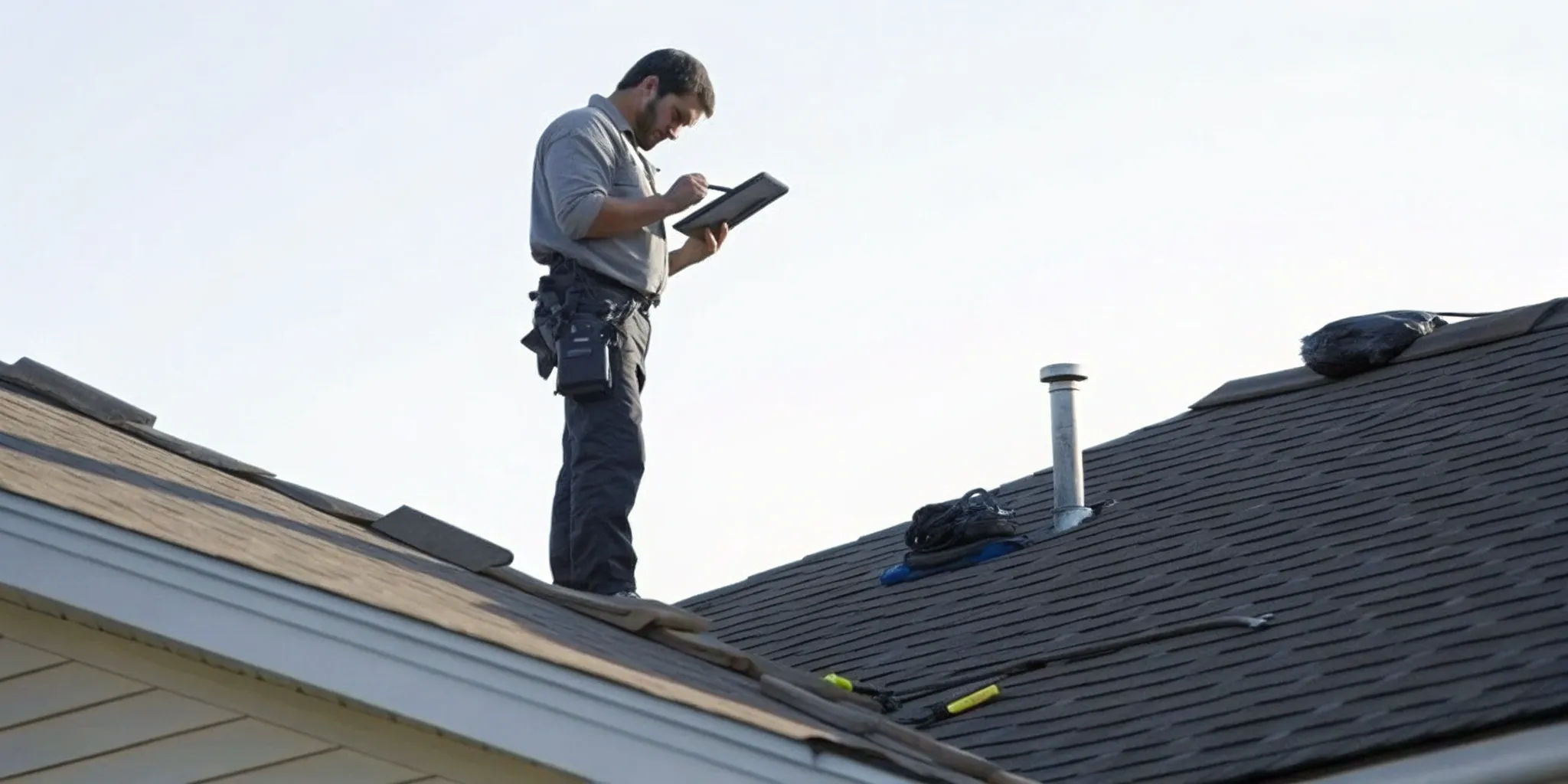
When you need a roof damage expert
Photographs taken from the ground with a phone rarely settle anything. A carrier evaluating a storm claim, a buyer negotiating a repair credit, or an attorney building a construction defect case all want the same thing: a dated, methodical record produced by someone qualified to make it. Hiring a roof damage expert is how you get that record.
The situations that call for one are consistent. Hail or wind has come through and you need the damage documented before it weathers. A claim has been denied or paid at a figure that does not match the repair. A contractor’s work has failed and the parties disagree about why. A roof is entering a transaction and nobody wants the condition to become a surprise at closing.
Verify the credential, because there is no federal license
There is no federal license for roof inspectors. None. Nothing stops anyone from printing “certified inspector” on the side of a truck, and that single fact should reshape how you hire.
Ask what the credential required. NRCIA members trained through the RoofGUARD™ program earn the NRCIA Certified Roof Inspector designation and work to published criteria, advancing to Senior at 500 inspections and Master at 1,000. Members accredited through ForensicGUARD™ earn the NRCIA Forensic Roof Inspector designation, which is built for causation analysis and documentation that will be read by opposing parties. Where storm and insurance work is the issue, DisasterGUARD™ is the add-on accreditation for insurance-related evaluations.
NRCIA has set the standard for roof inspection and certification since 1995. We do not inspect roofs and we do not write reports. We publish the criteria, train and accredit the members who do that work, and maintain the directory where you can look them up.
License, insurance and who carries the risk
Before anyone climbs your ladder, ask for and actually read three things:
- General liability coverage. A current certificate, not a verbal assurance.
- Workers compensation coverage. This is what stands between you and a claim if someone falls on your property.
- State or local licensing. Requirements vary widely by jurisdiction, so check what applies where the property sits.
A professional expects to be asked and has the documents ready. Hesitation at this question is itself an answer.
What a roof damage assessment should cover
A serious assessment works the whole system in a set order rather than photographing whatever is obvious. The LeakFREE® Check covers five zones: interior, attic, exterior, perimeter and rooftop. Each zone informs the next, and the attic often explains what the rooftop cannot.
Expect the examiner to cover the covering itself, the flashing at every penetration and transition, the valleys, the terminations, the drainage path, the deck condition where it can be seen, the ventilation, and the interior evidence of past and present water entry. Where the surface is steep or fragile, drone imagery supplements a physical walk rather than replacing it. Where hidden moisture is suspected, infrared scanning identifies suspect areas and a moisture meter confirms them.
What the written report needs to contain
The report is the deliverable. If it arrives as a phone call and an estimate, you did not buy an assessment.
- The date of inspection and the address, stated plainly
- The examiner’s name, designation and accreditation
- Scope and method, including what was not accessible and why
- Photographs keyed to locations, not a loose gallery
- Condition findings component by component
- Measurements, moisture readings and material identification
- Cause of the damage where the evidence supports a conclusion, stated with its limits
- Recommended corrective work, described by scope rather than as a sales quote
NRCIA members generate and register reports through InspectionPLUS®, which means the record exists in a system rather than in one company’s filing cabinet. That matters two years later when the person who wrote it has moved on.
Using the report on an insurance claim
An independent report gives an adjuster something specific to respond to. It will not decide the outcome, and no honest examiner will tell you it does. Coverage turns on your policy language, the reported date of loss and the carrier’s own evaluation.
What documentation does is narrow the argument to facts. File promptly, keep the report and the claim correspondence together, and if the carrier’s position conflicts with the findings, ask for the reasoning in writing. Where a claim moves toward litigation, a forensic examiner with testimony experience becomes the relevant hire.
Warning signs worth walking away from
- Someone at the door after a storm who was not invited
- Pressure to sign a contract or an assignment of benefits on the spot
- An offer to absorb or waive your deductible, which is restricted or prohibited in many states
- No written report, or a report that is really a replacement quote
- Refusal to show proof of insurance or licensing
- An examiner who will also be bidding the repair, which puts the finding and the fee on the same side of the table
Getting ready for the appointment
Clear driveway and side yard access, unlatch gates, and move stored items away from the attic hatch. Write down what you have observed and when: the date of the storm, when the stain appeared, where the smell is strongest. Have your policy number, any prior roof paperwork and past repair invoices in one place. An examiner who arrives to a prepared property spends the time on the roof instead of on logistics.
Find an accredited NRCIA inspector near you in the member directory and get the damage documented while the evidence is fresh.
LeakFREE®, Forensic ROOF®, Mr. RoofCheck®, InspectionPLUS®, Today’s Inspection… Tomorrow’s Protection®, and Got Leaks?® are registered trademarks of Field Gate FLP, used by permission. RoofGUARD™, ForensicGUARD™, DisasterGUARD™, E3GUARD™, and Think Like a Raindrop™ are trademarks of Field Gate FLP.