
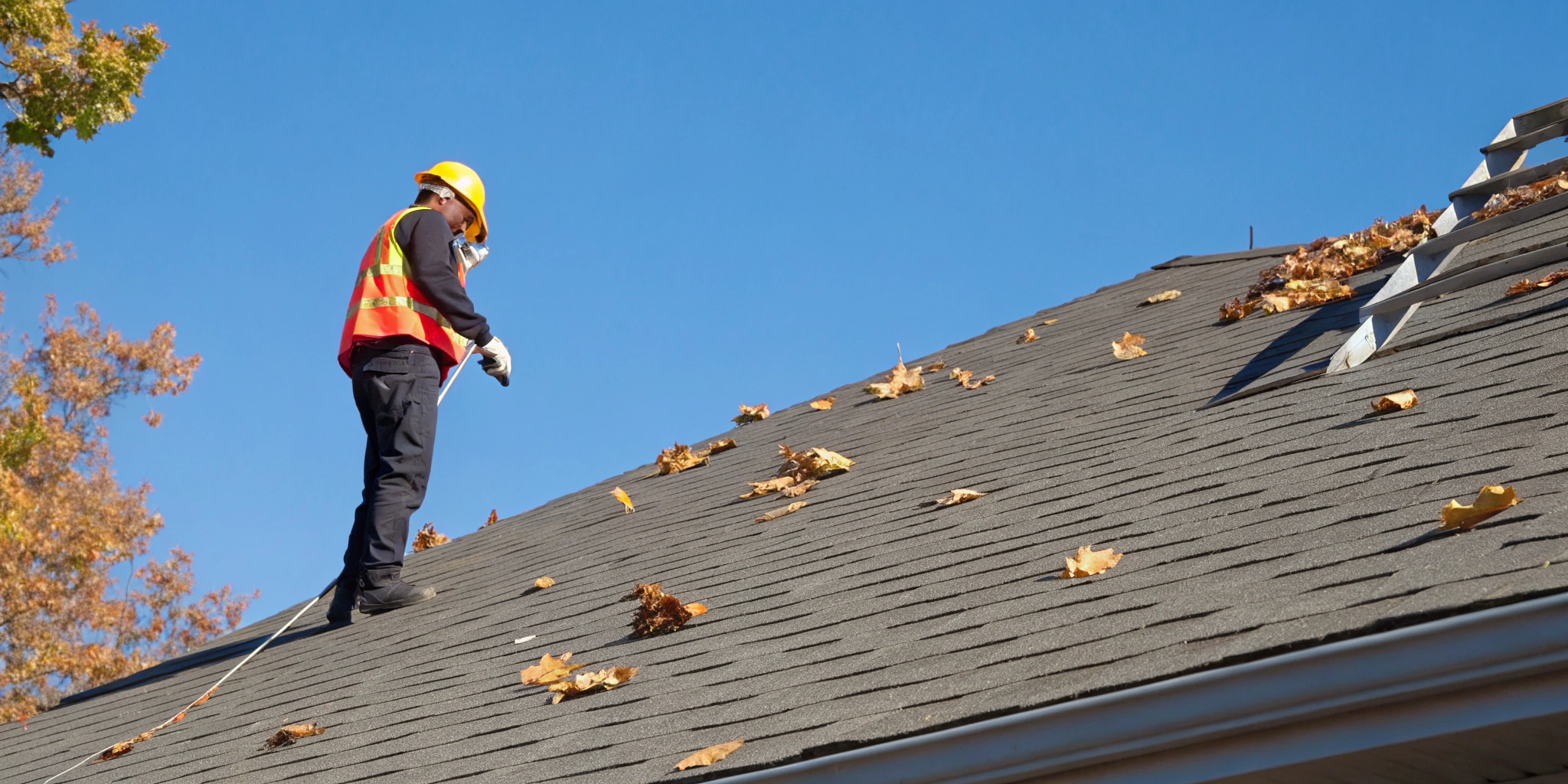
What hail actually does to a roof
The damage that costs you money is usually the damage you cannot see from the driveway. A hail damage roof inspection exists because functional damage and cosmetic damage look nearly identical from ground level, and carriers pay for one of them.
Hail bruises an asphalt shingle by fracturing the mat underneath and knocking away the granules that shield it from ultraviolet light. The spot may feel soft, like a bruise on fruit. From there the shingle ages faster than the ones around it, and water eventually finds the weak point. Wood shingles split. Metal panels dent, and a dent that breaks the coating starts corroding. Clay and slate crack or shatter outright.
The strike pattern is random, which is part of why untrained eyes miss it. Damage on one slope tells you nothing reliable about the slope facing the other way.
What you can check yourself, safely
Stay on the ground. A roof after a storm is slick, and nothing you find up there is worth a fall.
- Walk the perimeter. Dents on gutters, downspouts, metal flashing, vent caps and the air conditioning condenser are the clearest hail evidence at eye level.
- Look in the gutters and at the drip line. A heavy deposit of granules means the shingle surface took a beating.
- Check siding, window wraps and screens for impact marks that date the event.
- Go inside. New ceiling or wall staining, and in the attic, damp insulation or daylight through the deck.
Photograph everything with the date attached. This is preliminary evidence, not a diagnosis.
Why the claim needs a hail damage roof inspection
An adjuster is deciding whether a covered event caused functional damage. That decision runs on documentation. Your phone photos help. A written assessment from a trained third party carries further, because it describes the damage in the terms the claim will be evaluated in.
An accredited NRCIA member performs a LeakFREE® Check across five zones: interior, attic, exterior, perimeter and rooftop. Findings go into a LeakFREE® Roof Inspection Report with images, measurements and a technical description of each condition. Having that report in hand before the adjuster arrives lets you compare findings item by item rather than react to a summary weeks later.
There is no federal license for roof inspectors. Anyone can knock on your door after a storm claiming expertise, which is why the training behind the person writing your report matters more than the truck they arrived in.
What happens during the inspection
Expect a systematic examination rather than a walk-around. The inspector examines shingles, flashing, penetrations, vents and gutters on the roof, then checks the attic for leaks, ventilation problems and structural signs.
For hail specifically, many inspectors document using test squares, commonly a 10 foot by 10 foot area marked on each slope. Within each square they count strikes that caused functional damage: fractures in the shingle mat, meaningful granule loss, punctures. Adjusters use the same method, so the counts translate directly.
The report should be readable. Structure, materials, interior, then a plain summary and specific recommendations. If you cannot understand what the inspector found, the document will not help you in a claim conversation either.
Filing the claim, in order
- Record the storm. Date, time, and any local weather report or radar record confirming hail at your address.
- Document from the ground and keep receipts for any temporary measures you take to stop further water entry.
- Get the independent inspection before the adjuster visit, not after.
- Notify your carrier and ask what the policy requires and by when. Policies commonly limit the window for storm claims, in many cases to a year from the date of loss, and the terms sit in your own documents.
- Be present for the adjuster with your report, your photos and your timeline organized. Ask questions. Give them a copy.
Where the adjuster’s findings differ from your report, you have something specific to discuss rather than a disagreement about impressions. Ask your agent how a weather claim is treated in your state and by your carrier before you file, since practice varies.
Choosing who inspects the roof
Storm chasers work fast and leave faster. A few questions separate them from the professionals.
- What accreditation do you hold, and who issued it?
- Can you provide references from hail claims in this area?
- How do you document damage for an insurance claim?
- Will you tell me if there is no functional damage?
That last question matters. A good inspector will confirm whether legitimate damage exists before you open a claim, because a claim filed on cosmetic marks helps nobody. The goal is an accurate picture of the roof, not a sale.
After the repairs
Once the work is done, the roof’s condition is worth documenting again. Where a roof meets the published criteria, an accredited member can issue a LeakFREE® Roof Certification through InspectionPLUS®. A certificate produced outside that platform is not valid.
The certification records that a specific roof at a specific address met the criteria on a specific date, issued by the individual who performed the inspection. Its term reflects the findings, the slope, the materials and the condition, to a maximum of ten years, with the expiration printed as a date. It is not insurance and it is not a service contract. Repairs performed by anyone other than an NRCIA member trigger a re-inspection. LeakFREE® is our federally registered trademark. Only NRCIA members can issue a LeakFREE® certification.
Across 6,460 member inspections nationwide, more than 66 percent of roofs either qualified for a certification or could be repaired to qualify. After a hailstorm, that record is worth holding for the next storm, the next carrier and the next buyer.
Find an accredited inspector near you in the NRCIA member directory.
LeakFREE®, Forensic ROOF®, Mr. RoofCheck®, InspectionPLUS®, Today’s Inspection… Tomorrow’s Protection®, and Got Leaks?® are registered trademarks of Field Gate FLP, used by permission. RoofGUARD™, ForensicGUARD™, DisasterGUARD™, E3GUARD™, and Think Like a Raindrop™ are trademarks of Field Gate FLP.

