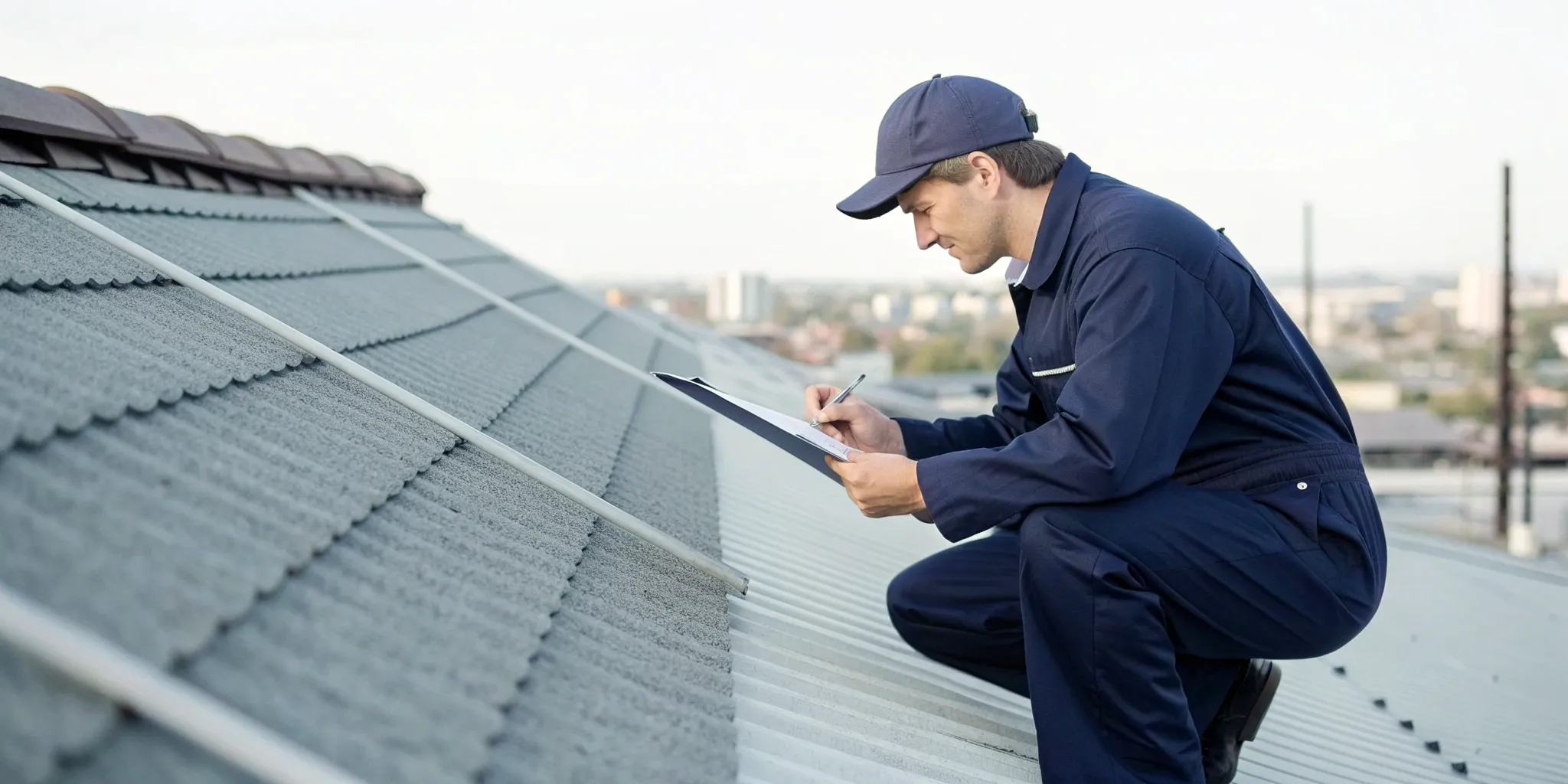
What commercial roof inspector training covers
Commercial roof inspector training teaches you to evaluate low-slope and flat roofing systems on occupied buildings, which behave nothing like a shingled house. The membrane is the waterproofing. Drainage is engineered rather than gravity-assisted. Rooftop equipment, curbs, and hundreds of feet of seam give water more places to enter than a residential roof ever offers.
The technical core is straightforward to list and slow to master. Single-ply systems including TPO, PVC, and EPDM. Modified bitumen and built-up assemblies. Metal panel roofs. Insulation, vapor retarders, and cover boards. What each material looks like when it is aging normally, and what it looks like when something has gone wrong.
Beyond materials: the skills that separate inspectors
Method
Walking a 100,000 square foot roof without a system means missing something. Training gives you a repeatable sequence: interior, attic or plenum space, exterior, perimeter, rooftop. NRCIA members work these five zones on every LeakFREE® Check. The sequence is the point. It removes the judgment call about where to start and makes gaps visible.
Diagnostics
Visual assessment gets you most of the way. The rest comes from moisture surveys, infrared scanning, core sampling where it is authorized, and knowing when each is appropriate. Training should also cover their limits, because an infrared scan read at the wrong time of day produces confident nonsense.
Safety and code
Fall protection, ladder placement, hatch and skylight hazards, and OSHA requirements for working at height. Add local building code and the specifications a roof was installed under. Verifying that a system was built to its own plan is a large part of commercial work.
Reporting
A property manager, a CFO, and a broker will read your report. None of them will be on the roof with you. Training in documentation, photographic evidence, and plain-language findings does more for a commercial inspection practice than another material class. The deliverable is the product.
Commercial versus residential: what changes
- Scale. Square footage turns a two-hour job into a full day, and it changes how you sample and record.
- Decision makers. You are reporting to boards, asset managers, and lenders who need a capital planning answer alongside the repair list.
- Consequence. A leak over a tenant space is a business interruption claim, so documentation standards run higher.
- Access. Coordination, badging, and tenant notice are part of the work.
Credentialing, and what it is worth
There is no federal license for roof inspectors. Some states license through contractor or building inspector boards, many do not, and the requirements vary considerably by market. That gap is exactly why accreditation carries weight with commercial clients. When there is no statutory bar to clear, a client looks for a national standard instead.
NRCIA has set that standard since 1995. NRCIA does not perform inspections. NRCIA trains and accredits the members who do, maintains the member directory clients search, and administers the LeakFREE® certification system. Accredited members earn the NRCIA Certified Roof Inspector designation through RoofGUARD™, advancing to Senior at 500 inspections and Master at 1,000. Members focused on damage causation and litigation support take ForensicGUARD™. Those working exterior elevated elements such as decks, balconies, and walkways take E3GUARD™, which has no prerequisite program.
What accreditation changes in practice
Accredited members inspect to the LeakFREE® Check, deliver the LeakFREE® Roof Inspection Report, and generate certificates through InspectionPLUS®. A certificate produced outside that platform is not valid. LeakFREE® is our federally registered trademark, and only NRCIA members can issue a LeakFREE® certification.
Across 6,460 member inspections nationwide, more than 66 percent of roofs either qualified for a LeakFREE® Roof Certification or could be repaired to qualify. For a commercial inspector, that ratio is the business case. Most buildings you assess have a path forward, and the report is what makes the path specific enough for an owner to fund.
How to start
Get comfortable on low-slope systems before you sell commercial work. Shadow experienced inspectors. Read the manufacturer specifications for the systems common in your region. Then pick a program with a defined method, a reporting standard, and a credential a client can verify. Training you complete alone builds knowledge. Accreditation inside a national standards body builds a practice.
Review the RoofGUARD™ program and start accreditation
LeakFREE®, Forensic ROOF®, Mr. RoofCheck®, InspectionPLUS®, Today’s Inspection… Tomorrow’s Protection®, and Got Leaks?® are registered trademarks of Field Gate FLP, used by permission. RoofGUARD™, ForensicGUARD™, DisasterGUARD™, E3GUARD™, and Think Like a Raindrop™ are trademarks of Field Gate FLP.