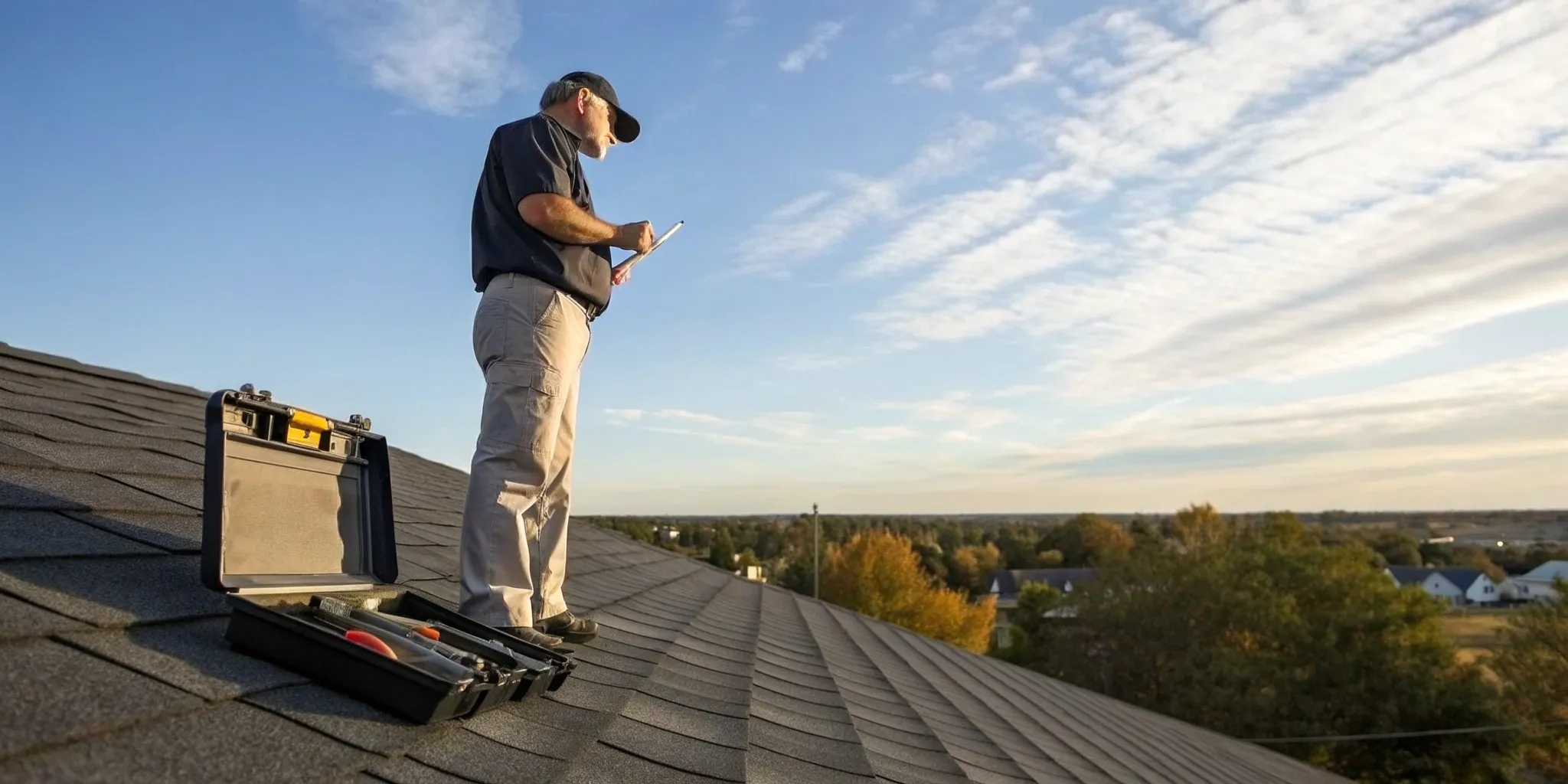
How to compare roof inspector training programs
A credential is worth whatever the market will honor. Before you spend money on any of the roof inspector training programs available to you, look hard at four things: the curriculum, the exam, the field experience requirement, and what the credential lets you do the day after you pass. Programs that stop at the certificate are selling paper. Programs that carry all four build a practice.
Ask for the course outline in writing. A serious outline covers roofing systems by material, water intrusion pathways, safety on slope, applicable building codes, photo documentation, and report writing. Then ask two follow-up questions that separate real programs from the rest. How many supervised inspections do I have to log? What does renewal require, and how often?
What the credential should do after the exam
Training ends. The business does not. The value of an accreditation shows up in the months after you finish, so weigh what comes with it.
- Reporting tools. A structured platform keeps every report consistent and defensible.
- A published directory listing. Property owners, agents and adjusters have to be able to find you.
- A designation ladder. A credential that advances with volume gives you something to sell at year five that you could not sell at year one.
- Continuing education. Codes change. Materials change. Your training should keep up.
- Peers. A network of working inspectors is where the hard questions get answered.
NRCIA accreditation and the designations it leads to
NRCIA has set the standard for roof inspection and certification since 1995. NRCIA does not inspect roofs. Accredited members do. Membership is built from two pieces: a Program, which is the training accreditation you earn, and a Package, which is the annual benefits set you choose. Packages run Silver, Gold, Platinum and Enterprise.
Four Programs sit under that structure:
- RoofGUARD™ produces the NRCIA Certified Roof Inspector (CRI). The designation advances to Senior Roof Inspector at 500 inspections and Master Roof Inspector at 1,000.
- ForensicGUARD™ is the flagship. It produces the NRCIA Forensic Roof Inspector (FRI), advancing to SFRI and MFRI. This is the track for cause-and-origin work, construction defect matters and expert witness engagements.
- E3GUARD™ covers exterior elevated elements: decks, balconies, walkways, patios and staircases. It carries no prerequisite program and includes state tracks such as CA-SB721 and CA-SB326.
- DisasterGUARD™ covers insurance-related evaluations. It is an add-on that requires an active ForensicGUARD™ accreditation, or E3GUARD™ for members already working disaster claims.
The deliverable side matters as much as the training. A member performs a LeakFREE® Check across five zones: interior, attic, exterior, perimeter and rooftop. The findings become a LeakFREE® Roof Inspection Report. Where the roof meets the published criteria, the member can issue a LeakFREE® Roof Certification, generated and registered through InspectionPLUS®. LeakFREE® is our federally registered trademark. Only NRCIA members can issue a LeakFREE® certification.
Be precise about what that certification is. It records that a specific roof, at a specific address, on a specific date, met the published LeakFREE® criteria. It is issued by the accredited individual who did the inspection, never by a company. It is not insurance and not a service contract. The term is set by the findings, the slope, the materials and the condition, and it tops out at ten years.
Volume tells you something about the work ahead. Across 6,460 member inspections nationwide, more than 66 percent of roofs either qualified for a LeakFREE® certification or could be repaired to qualify.
Other programs worth knowing
Most working inspectors end up holding more than one credential. These are the ones you will hear about most.
InterNACHI
The International Association of Certified Home Inspectors runs a membership model with a large self-paced online library, including roofing coursework. It suits inspectors building general home inspection breadth on their own schedule.
HAAG
HAAG trains damage assessment: separating a specific weather event from installation error, manufacturing defect and ordinary wear. The course is an intensive multi-day format, and the credential requires a re-examination each year. It is common among adjusters and inspectors doing storm work.
CCPIA
The Certified Commercial Property Inspectors Association offers an online course focused on low-slope and flat commercial roofs, where drainage, membrane seams and ponding drive most of the failures.
Manufacturer training
Programs such as GAF CARE teach a specific manufacturer’s systems and installation requirements. Product-level knowledge is useful, and it is narrower by design than a system-wide inspection credential.
Certification and licensing are two separate things
There is no federal license for roof inspectors. None. A credential proves your training was tested against a published standard. A license, where your state issues one, is legal permission to work. Some states license contractors who perform inspections, some do not, and requirements shift at the city level. Call your state contractor licensing board before you enroll anywhere, and make your training decision with that answer in hand.
Budgeting the real number
Tuition is the visible line. Add the exam fee, travel for any in-person session, safety equipment, a camera you can trust on a roof, reporting software, annual dues and the renewal cost. Total those across three years, then compare that figure against the work the credential opens up. Ask each program for its renewal schedule in writing, because that number repeats and the tuition does not.
Timelines vary as widely as prices. Intensive formats run days. Self-paced formats run months. Field experience requirements run on their own clock, since logged inspections depend on how much work you can put in front of yourself.
A short checklist before you enroll
- Does the curriculum name the roofing systems common in your region?
- Is there a supervised field experience requirement, and how many inspections?
- What does the credential let you issue that you cannot issue today?
- What is the renewal cycle, and what does it cost?
- Are you listed anywhere a client can find you?
- What does your state licensing board require on top of it?
Become accredited. Review NRCIA membership and start your Program.
LeakFREE®, Forensic ROOF®, Mr. RoofCheck®, InspectionPLUS®, Today’s Inspection… Tomorrow’s Protection®, and Got Leaks?® are registered trademarks of Field Gate FLP, used by permission. RoofGUARD™, ForensicGUARD™, DisasterGUARD™, E3GUARD™, and Think Like a Raindrop™ are trademarks of Field Gate FLP.