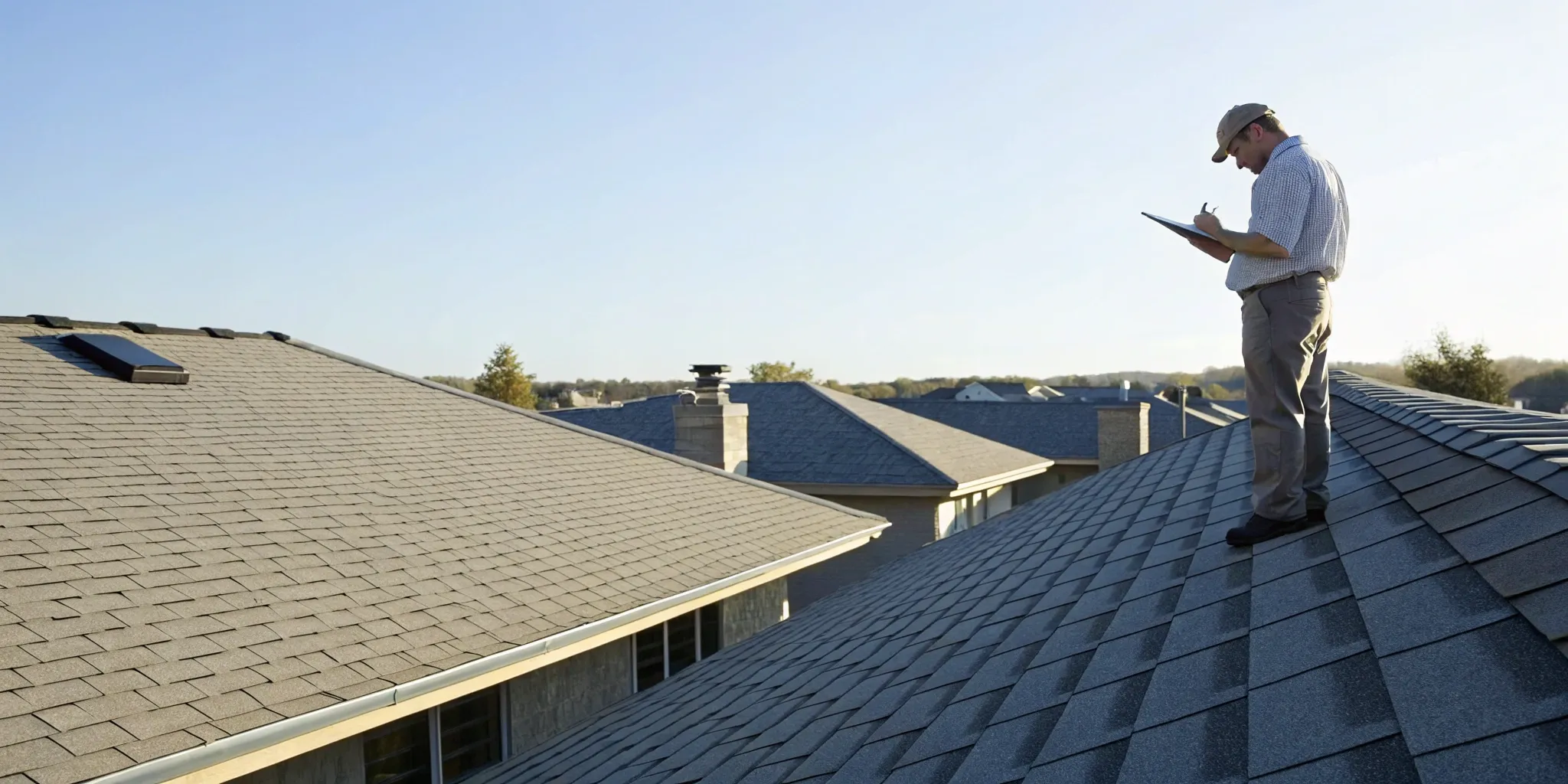
What a roof report template actually does
A roof report template is the structure you inspect against, not the paperwork you fill in afterward. Used properly, it drives the order of the walk: interior, then attic, exterior, perimeter, rooftop. The document comes out of the sequence rather than being reconstructed from memory in the truck.
That matters because the report outlives the inspection. It gets attached to a claim file, a purchase contract, a board packet, occasionally a complaint. Whatever you wrote is what you will be held to.
The sections every roof report template needs
1. Cover and identification
Property address, client name, date of inspection, and the inspector’s own name and credential. Certifications are issued by the accredited individual who performed the inspection, never by a business entity, so the person belongs on the front page.
2. Roof specifications
Covering material, slope, approximate age, layer count, drainage design, and every penetration on the deck. This section gives the reader the context to understand everything that follows. A ponding note on a low-slope membrane means something different from ponding on a 6:12 shingle roof.
3. Conditions on the day
Temperature, cloud cover, wind, whether the surface was wet, and any storm event in the preceding weeks. Cold tile is brittle. A wet membrane hides a lot. Recording conditions tells a later reader what the inspection could and could not see.
4. Findings by zone
Work the five zones of a LeakFREE® Check in order and write each one up separately: interior, attic, exterior, perimeter, rooftop. Zone-by-zone reporting is what stops an inspector from writing four pages about shingles and one line about the attic, where the water evidence usually lives.
5. Photo documentation
Number the photographs and reference the numbers in the findings text. Wide shot for location, close shot for the defect, annotation for anything a client might not see. Photos that float in a gallery at the back of the report do half the work of photos tied to a specific finding.
6. Limitations and access
Say what you could not inspect. Snow cover, a locked attic hatch, a second-story section with no safe access, an area under a solar array. This is the section inspectors skip and later wish they had written.
7. Recommendations
Prioritized, specific, and separated from your findings. Repair the counterflashing at the east chimney. Clear the north gutter run. Re-evaluate the west valley after the repair. A recommendation a client can act on is worth more than a general warning about deferred maintenance.
Writing so a non-roofer can act
Two people read your report: someone who knows roofs and someone who does not. Write for the second one and the other will still follow you. Define a term at its earliest use. Counterflashing is the metal that laps over base flashing at a wall or chimney to shed water away from the joint. One clause, and now the sentence works for everybody.
Keep paragraphs short. Put the severity rating next to the finding, not in a legend on page eleven. Avoid describing a roof as sound, safe, or protected. Describe what you observed and on what date.
Digital reporting, and why the platform matters
Handwriting, loose photos, and a PDF assembled at midnight are how details get lost. Digital capture in the field puts the photograph, the location, and the note together at the moment you make the observation. NRCIA members generate and register certificates through InspectionPLUS®, and a certificate produced outside that platform is not valid. That single rule is what keeps a national credential meaning the same thing in every market.
A template is a standard, not a shortcut
Downloading a form gets you a page layout. What makes a report credible is the method behind it, the zones covered, the language used, and the accreditation of the person signing it. NRCIA has set that standard since 1995 and trains members to it. Across 6,460 member inspections nationwide, more than 66 percent of roofs either qualified for a LeakFREE® Roof Certification or could be repaired to qualify, and the report is what tells an owner which of those two they are looking at.
LeakFREE® is our federally registered trademark. Only NRCIA members can issue a LeakFREE® certification, and the certification records the condition of one roof at one address on one date. It is not a promise about future performance, and no report should be written as though it were.
Review the RoofGUARD™ program and start accreditation
LeakFREE®, Forensic ROOF®, Mr. RoofCheck®, InspectionPLUS®, Today’s Inspection… Tomorrow’s Protection®, and Got Leaks?® are registered trademarks of Field Gate FLP, used by permission. RoofGUARD™, ForensicGUARD™, DisasterGUARD™, E3GUARD™, and Think Like a Raindrop™ are trademarks of Field Gate FLP.