What a professional roof inspection covers
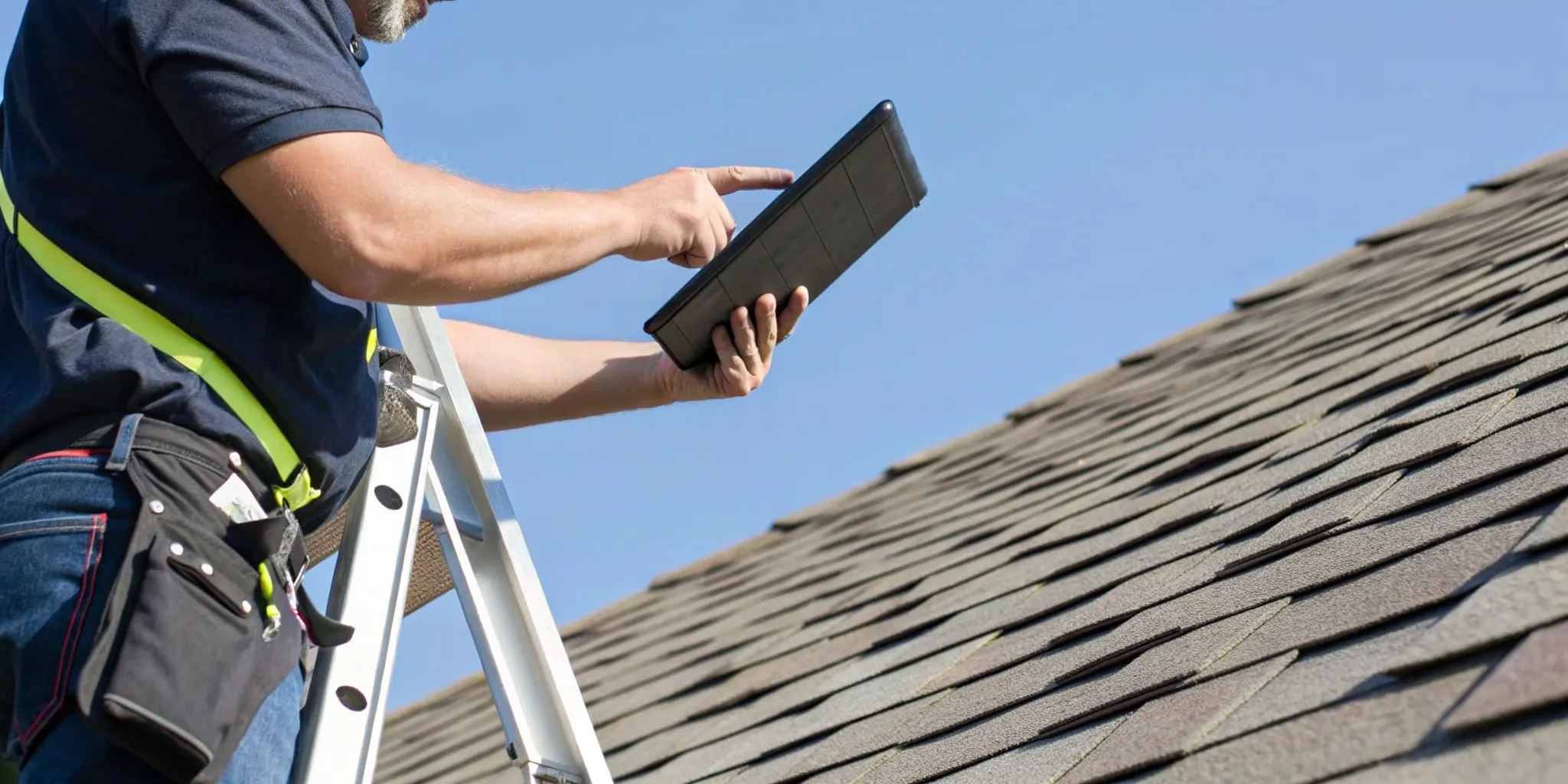
A professional roof inspection is a documented examination of the whole roofing system by a trained inspector, not a look from the driveway. It produces a written report: what was found, where, with photographs, and what to do about it in what order. The point is to find the small failure while it is still small.
Most roofs give warning before they leak. A lifted shingle tab. Sealant that has pulled away from a vent collar. Granules collecting at the bottom of a downspout. None of that is visible from the ground, and all of it is cheap to fix in the year it appears.
The five zones
NRCIA members inspect to a five-zone method called the LeakFREE® Check. Water travels, so an inspection that stops at the roof surface misses the evidence.
- Interior. Ceiling and wall staining, discoloration at light fixtures, anything that reads as past or active water.
- Attic. The underside of the deck, insulation condition, rot, mold, and whether ventilation is doing its job. Trapped heat and moisture shorten the life of a covering from the inside.
- Exterior. Covering condition, granule loss, cracking, blistering, curling, and every penetration: chimneys, skylights, vents, mechanical curbs, solar attachments.
- Perimeter. Edge metal, fascia, soffits, gutters and downspouts, and where the water actually goes once it leaves the roof.
- Rooftop. Walking the planes where it is safe, checking for soft spots underfoot, sagging along ridges, ponding, and the condition of flashing at every transition.
Think Like a Raindrop™ describes the whole method. Water finds every weakness. The inspection is built to find it first.
When to schedule a professional roof inspection
Once a year as a baseline, the same way you service a furnace.
After a storm that brought hail or sustained wind, even with nothing visible from the ground. Wind breaks the seal between shingle courses without moving them. Hail bruises the mat under the granules. Both are invisible from below and both shorten the life of the roof.
Before buying or selling. A roof is one of the largest single line items in any property, and it is the item most likely to reopen a negotiation in the last week before closing.
When you see a sign. Ceiling stains, dark streaks, a damp smell in a closet, shingle granules in the gutter, a shingle in the yard after a windy night.
What it costs
HomeAdvisor reports a typical range of roughly 120 to 321 dollars for a residential roof inspection. Treat that as a reference point and nothing more, because the number that matters is the one quoted for your roof.
What moves the price: roof size, slope, and how many planes and transitions it has. Accessibility and height. The covering material, since slate and tile carry a real risk of breakage underfoot and take longer to walk. The type of inspection, and whether the finding needs to support an insurance claim or a legal matter. Turnaround, if you need it this week for a closing.
NRCIA does not set member prices. Members set their own, so it is reasonable to ask two or three what their fee covers and what the deliverable looks like.
Choosing the inspector
There is no federal license for roof inspectors. That single fact should shape how you hire, because it means the title is available to anyone and the credential behind it is the thing worth checking.
Ask for the designation by name. NRCIA accredits individuals through named programs: RoofGUARD™ produces the NRCIA Certified Roof Inspector (CRI), and ForensicGUARD™ produces the Forensic Roof Inspector (FRI) for findings a carrier or a court may review. The accreditation belongs to a person, so look that person up in the NRCIA member directory rather than trusting a logo on a truck.
Then ask for proof of general liability and workers’ compensation coverage before anyone puts a ladder against your house. A working professional produces both without friction.
LeakFREE® is our federally registered trademark. Only NRCIA members can issue a LeakFREE® certification.
What the report gives you, and what it does not
A LeakFREE® Roof Inspection Report tells you the condition of the roof on the day it was inspected, with photographs tied to locations and repairs listed in priority order. Take it to a contractor for quotes. Take it to your carrier if you are filing a claim. Keep it in the file if you are selling.
Where the roof meets the published criteria, the member can issue a LeakFREE® Roof Certification through the InspectionPLUS® platform. A certification records that the roof met those criteria on that date, with a term set by the findings and a maximum of ten years. It is a record of condition. It is not insurance, and it does not promise that a leak will never appear.
Across 6,460 member inspections nationwide, more than 66 percent of roofs either qualified for a LeakFREE® certification or could be repaired to qualify. The likely outcome of an inspection is a manageable list, not a replacement quote.
What you can handle yourself
Stay on the ground and stay useful. Walk the perimeter a few times a year and after weather. Look for missing or lifted shingles, sagging lines along the ridge, and staining on exterior walls below the roofline.
Keep gutters clear, because water backing up under the shingle edge is one of the most common causes of rot at the eave. Trim back anything that touches or overhangs the roof, since a limb rubbing in wind strips granules off a shingle in a single season. After heavy rain, check ceilings and closet corners inside.
Leave the roof surface to someone trained and insured. Falls are the reason this work has a safety standard, and a cracked tile or torn shingle from an untrained step turns an inspection into a repair.
NRCIA sets the standard, trains and accredits members, administers the LeakFREE® certification system, and maintains the member directory. The inspection and the report come from the accredited member you hire.
Find an accredited NRCIA inspector near you in the member directory.
LeakFREE®, Forensic ROOF®, Mr. RoofCheck®, InspectionPLUS®, Today’s Inspection… Tomorrow’s Protection®, and Got Leaks?® are registered trademarks of Field Gate FLP, used by permission. RoofGUARD™, ForensicGUARD™, DisasterGUARD™, E3GUARD™, and Think Like a Raindrop™ are trademarks of Field Gate FLP.