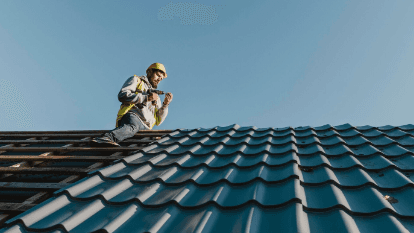
Why Roofing Safety Standards Belong in the Inspection Process
A roof inspection puts a trained person on a sloped, elevated, sometimes brittle surface with weather moving in and a client watching from the yard. Roofing safety standards exist so that the inspection produces a report instead of an incident. They also protect the work itself: an inspector who is worried about footing is not looking closely at the flashing.
A checklist helps, and it is not the whole job. Every roof presents its own combination of slope, material, condition and access, and the inspector has to read that before the ladder comes off the truck.
Before the Ladder Comes Off the Truck
Most of the risk gets managed on the ground.
- Check the weather window. Wet, icy, frosted or high wind conditions are a reschedule, not a challenge. A dry roof also shows its true condition, so you get a better inspection out of the wait.
- Confirm access and permission. Call ahead, confirm the time, and on commercial or multifamily property make sure building management knows who is on the roof and when. Adjoining areas below the work should be clear.
- Survey from the ground. Walk the perimeter. Note power lines, tree limbs, skylights, satellite mounts, soft spots visible from below and where the drip edge is failing. Binoculars or a drone pass gives you a plan before you commit to the climb.
- Clear the staging area. Move hazards, set your ladder base on firm level ground, and give yourself a clean path for tools and debris.
Gear and Fall Protection
OSHA requires fall protection for construction work at heights of six feet or more above a lower level under 29 CFR 1926.501. On a residential inspection that usually means a personal fall arrest system with a properly anchored tie off point, and it means checking the anchor before trusting it.
The rest of the kit is straightforward and non-negotiable: hard hat, safety glasses, gloves, and boots with slip resistant soles that grip the material you are about to walk on. Nails, torn metal and broken glass turn up on roofs regularly, so gloves stay on and foot placement stays deliberate.
Ladders have their own rules. Under 29 CFR 1926.1053, a ladder used to access an upper landing surface must extend at least three feet above the landing, and it must be secured or held. Set the base at roughly a four to one ratio, one foot out for every four feet of height, and inspect the rails and feet before each use.
On the Roof
Walk the flattest available path. Stay off the edges and away from skylights, which are a fall hazard whether or not they look like one. Step over ridges rather than on them where the material is fragile. Tile and slate carry their own breakage risk, and aged asphalt over a compromised deck can feel solid right up until it is not.
Move at a pace that lets you look. Rushing a roof produces both incidents and thin reports.
Know when to stay off. Structural deflection, a soft or spongy deck, standing water over an unknown assembly, brittle material in cold weather, or a slope beyond what your equipment handles are all reasons to inspect from a ladder, a lift or a drone and to say so in the report. Documented limitations are part of a professional record.
Documentation Is Part of the Standard
What you record protects the client and it protects you.
- Photograph every finding, and photograph the context around it so a reader can place it on the roof.
- Record the date, time and weather conditions at the time of inspection.
- Note any area you could not access safely, and why.
- Write findings in language the client will understand, then review them with the client before you leave the site.
An accredited member documents all of this in a LeakFREE® Roof Inspection Report covering the five zones of a LeakFREE® Check: interior, attic, exterior, perimeter and rooftop. Working the same zones in the same order every time is itself a safety practice, because a consistent sequence keeps you from doubling back across a roof you have already crossed.
Practical Habits That Keep the Job Clean
- Use a standardized checklist. It catches what fatigue misses at the end of a long day.
- Stage your tools once. Every extra trip up the ladder is another exposure.
- Ask for a second opinion. An unfamiliar assembly or an odd failure pattern is a good reason to call a peer or an NRCIA instructor before you write a conclusion.
- Debrief the near misses. A loose anchor or a slipped ladder that hurt nobody is still information for the next job.
Train to the Standard
Roofing safety standards get easier to hold when the whole process is standardized around them. That is what accreditation is for: a defined inspection sequence, a defined report format, and training that treats access, fall protection and documented limitations as part of the work rather than paperwork around it.
Review the RoofGUARD program and start your accreditation.
LeakFREE®, Forensic ROOF®, Mr. RoofCheck®, InspectionPLUS®, Today’s Inspection… Tomorrow’s Protection®, and Got Leaks?® are registered trademarks of Field Gate FLP, used by permission. RoofGUARD™, ForensicGUARD™, DisasterGUARD™, E3GUARD™, and Think Like a Raindrop™ are trademarks of Field Gate FLP.