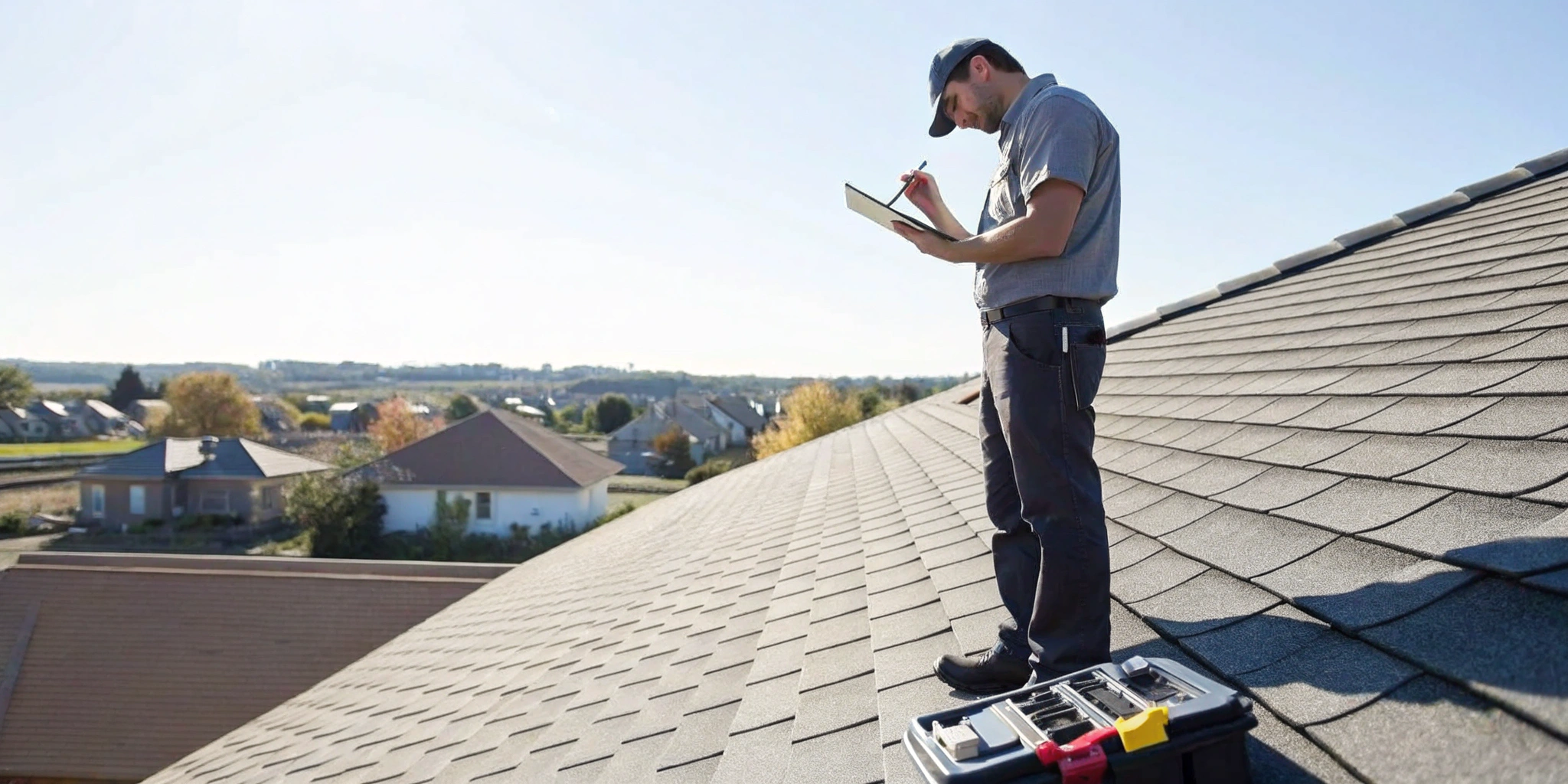
What a roof inspector does that a home inspector does not
A general home inspection covers the whole house, and the roof gets a portion of a few hours. A roof inspector spends that time on the roof alone. Bringing in a roof inspector during a real estate transaction is how a line item like “roof appears serviceable” turns into a documented, dated record of condition that both sides can act on.
Home inspectors are generalists by design, and many are limited by their own standards of practice to what can be seen safely, sometimes from a ladder at the eave. A specialist walks the surface where it is safe to do so, examines the attic, and reads the details where roofs actually fail: flashing, valleys, penetrations, terminations and drainage.
Before you list, or during the inspection period
For sellers, the case for going early is about timing. A pre-listing inspection lets you learn what the buyer’s inspector will find, on your schedule, with time to get competing repair bids instead of accepting the one quote available on a five-day deadline. Problems found in week one are maintenance. The same problems found three days before closing become a price negotiation you are conducting from behind.
For buyers, order the roof inspection as soon as the contingency period opens. Roof access depends on weather, and a rained-out appointment can eat a week you do not have.
What the report should give you
A usable report contains the inspection date and address, the inspector’s name and designation, the scope and method, photographs keyed to locations, a component-by-component condition record, attic findings, and a clear statement of remaining service life with the reasoning behind it. Repair recommendations should be described by scope so you can price them with more than one contractor.
NRCIA members trained through the RoofGUARD™ program perform the LeakFREE® Check, a five-zone examination covering interior, attic, exterior, perimeter and rooftop. The deliverable is a LeakFREE® Roof Inspection Report, generated and registered through InspectionPLUS®, so the record survives the transaction and stays retrievable later.
The findings that stall deals
- Structural movement. A sagging ridge, cracked or leaning rafters, or soft decking. These move a conversation from repair to engineering.
- Active or historic water entry. Stains on the deck underside, compressed insulation, rot at the eaves. Buyers price this at the worst plausible interpretation unless someone documents the actual extent.
- Failed flashing. Rusted, loose or improperly lapped metal at chimneys, skylights and walls. Small money to fix, large money if ignored.
- Covering at the end of its service life. Bald, curled or cracked shingles, broken tile, split shake.
- Inadequate ventilation. Blocked soffits or missing exhaust shorten the covering’s life and can affect a manufacturer warranty.
- Mold or persistent moisture in the attic. Almost always a symptom of something else, and worth tracing before anybody quotes remediation.
Most of these are fixable. Across 6,460 member inspections nationwide, more than 66 percent of roofs either qualified for a LeakFREE® certification or could be repaired to qualify. A bad first look is usually a scope of work, not a dead deal.
What a certification adds to the file
A LeakFREE® Roof Certification states that a specific roof, at a specific address, on a specific date, met the published LeakFREE® criteria. The term is set by the findings, the slope, the materials and the condition, up to a maximum of ten years, and the expiration is printed as a date. It is issued by the accredited individual who performed the inspection, never by a business entity, and generated through InspectionPLUS®. A certificate produced outside that system is not valid.
Be precise about what it is. It records a verified condition on a date. It is not insurance, not a service contract, and not a promise that the roof will never leak. What it gives a transaction is a common set of facts, established by someone with no stake in the sale price, so the roof stops being the part of the deal that everyone is guessing about.
Some lenders and insurers ask for documentation of roof condition before closing or before binding a policy. What each one accepts varies, so confirm the requirement in writing with that specific lender or carrier rather than assuming.
LeakFREE® is our federally registered trademark. Only NRCIA members can issue a LeakFREE® certification. NRCIA has set the standard for roof inspection and certification since 1995. We do not inspect roofs and we do not issue certificates. We train and accredit the members who do, and we maintain the directory where you can find them.
How to choose the inspector
- Check the accreditation and what it required. There is no federal license for roof inspectors, so the word “certified” carries whatever meaning the printer gave it.
- Match the experience to the roof. Tile, slate, wood shake, standing seam metal and low-slope membrane each fail differently and are walked differently.
- Ask for a sample report. If it is a page of photographs and a price, keep looking.
- Confirm liability and workers compensation coverage. Ask for the certificates before anyone goes up.
- Keep the inspection separate from the repair. An inspector who is also bidding the work has a stake in what the report says.
What it costs, and what moves the number
Quotes vary by market and by roof. Size, number of planes, slope, height, covering material, access, and whether the scope includes infrared scanning or a certification all move the figure. Get two or three quotes and compare the scope and the sample report rather than the price alone.
Set against the cost of a roof discovered after closing, the inspection is a rounding error. Set against a stalled escrow, it is cheaper still.
Find an accredited NRCIA inspector near you in the member directory before your contingency clock starts.
LeakFREE®, Forensic ROOF®, Mr. RoofCheck®, InspectionPLUS®, Today’s Inspection… Tomorrow’s Protection®, and Got Leaks?® are registered trademarks of Field Gate FLP, used by permission. RoofGUARD™, ForensicGUARD™, DisasterGUARD™, E3GUARD™, and Think Like a Raindrop™ are trademarks of Field Gate FLP.